Weekend Lie-Ins Throw Your Body Clock Into Chaos

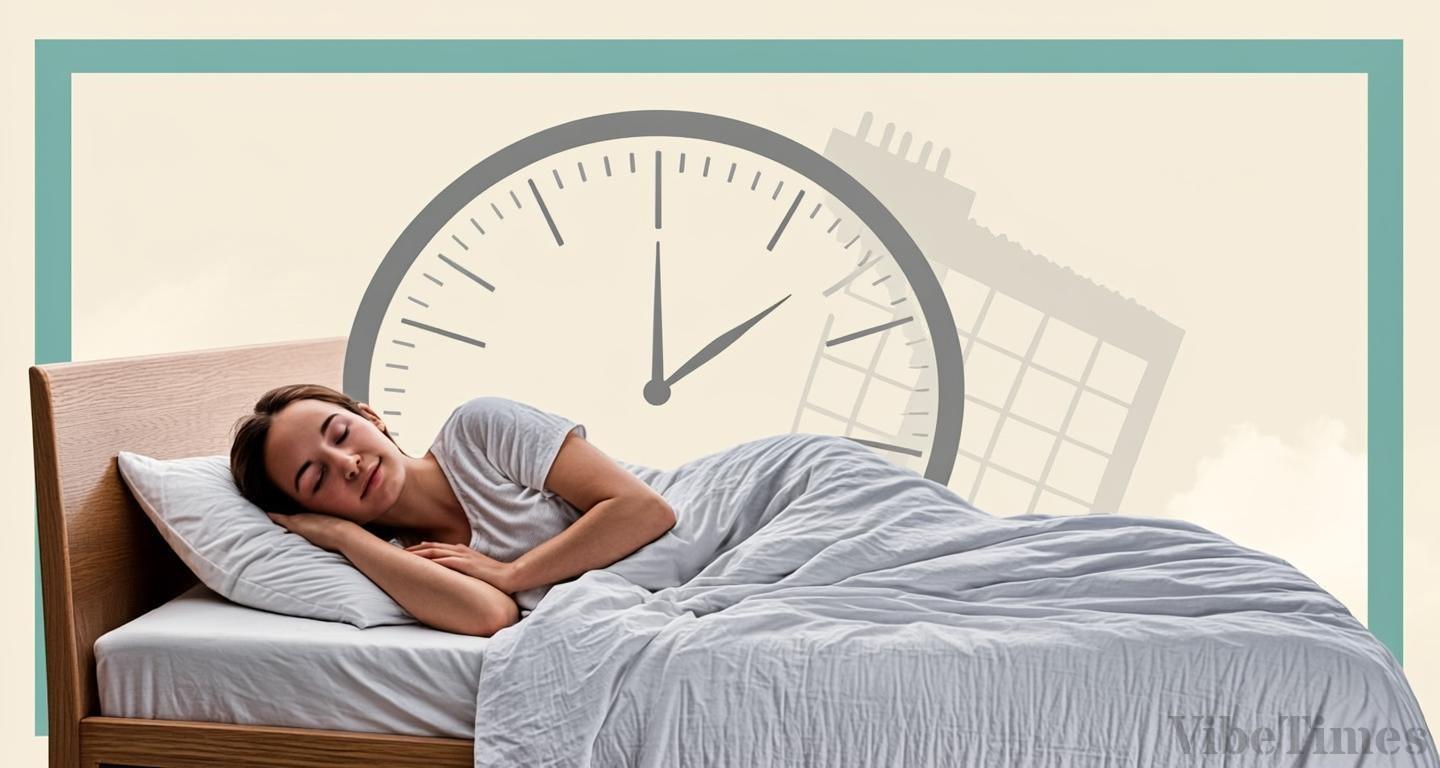
Sleeping in every weekend makes Monday mornings even harder. "Social jetlag," a term coined in 2006 by Professor Till Roenneberg of Ludwig Maximilian University of Munich, refers to the mismatch between the hours society demands—work and school start times—and the sleep schedule our internal biological clock requires. Waking up more than two hours later on weekends than on weekdays triggers a biological effect in the body equivalent to flying across two or three time zones. According to Roenneberg, Monday's crushing fatigue is not a matter of mood but the result of a physiological failure to adapt to the time shift.
How Weekend Lie-Ins Create 'Social Jetlag'
What Is Social Jetlag?
Social jetlag is the phenomenon of producing, from your own bed and without any flight, the same state of maladjustment you experience when traveling to a country in a different time zone. During the week you force yourself out of bed early, but on weekends you go to sleep late and wake up late as your body desires—leaving your body clock reeling as if you had lived in another time zone and returned. This mismatch is most pronounced in people who wake up more than two hours later on weekends than on weekdays.
Your Internal Clock Drifts in Just Two Days
The human circadian clock runs on a cycle of roughly 24.2 hours and is recalibrated to 24 hours through exposure to morning light each day. Sleeping in on weekends delays this morning light exposure, causing a "phase delay" that pushes the internal clock backward. When you open your eyes on Monday morning, your body clock still thinks it's around 4 or 5 a.m. Waking during a deep sleep stage adds sleep inertia on top, bringing on severe grogginess—and since it takes one to two days for the lagging clock to shift forward again, your condition doesn't recover until Tuesday or Wednesday, repeating the vicious cycle.
33% Higher Obesity Risk Per Hour… The Body's Warning Signs
The Toll on Obesity, Metabolism, and Mental Health
According to Professor Roenneberg's research (2012, Current Biology), each additional hour of social jetlag raises the risk of obesity by roughly 33%. Numerous studies have found that people with greater social jetlag also face significantly higher risks of depression, metabolic syndrome, and cardiovascular disease. The problem is that although sleeping in extends time in bed, overall sleep quality becomes less stable, limiting any restorative effect.
More Than Double the Strain on the Heart
A 2023 study presented at the European Society of Cardiology (ESC) found that the group with the greatest social jetlag had more than twice the risk of cardiovascular disease. A 2018 study from Stockholm University in Sweden also confirmed that people with significant social jetlag had elevated heart rates and increased secretion of stress hormones. This means weekend lie-ins are not merely a lifestyle habit issue but an actual burden on the heart.
Reducing Social Jetlag to Transform Your Monday Mornings
Keep Your Wake-Time Gap Within One Hour
There is one core principle: keep the difference between your weekday and weekend wake-up times within one hour. If you wake up at 6 a.m. on weekdays, you should be up by 7 a.m. on weekends as well. According to Professor Charles Czeisler of Harvard Medical School, fixing your wake-up time is more effective for adjusting the circadian clock than fixing your bedtime. In other words, go to bed early when you're sleepy, and get up at the same time even on weekends.
Light Is the Most Powerful Tool for Resetting Your Clock
Exposing yourself to bright light within 30 minutes to an hour of waking can advance your internal clock. A walk in the sunlight is ideal, but if that's not feasible, a 10,000-lux light box also works. Conversely, in the evening, block blue light from smartphones and TVs starting two hours before bed, and preserve nighttime darkness with a sleep mask or blackout curtains. Because external cues—light, meals, and activity—recalibrate the circadian clock on a daily cycle, a Monday morning routine of getting early light exposure, eating breakfast on time, and waking the body with light activity is highly effective.
Repay Sleep Debt in Installments, Not in One Long Sleep
If weekday sleep deprivation is the root cause, the proper approach is to gradually move your weekday bedtime earlier by 15 to 30 minutes over at least a week. Shifting it abruptly by two to three hours can actually cause insomnia. If you're severely drowsy, compensate with a 20-to-30-minute nap before 3 p.m. A 2019 University of Colorado study (Current Biology) showed that even sleeping more than 10 hours on weekends fails to fully restore cognitive function and metabolism, with reduced insulin sensitivity and weight gain observed. Unrestricted marathon sleeping offers only short-term satisfaction while re-triggering social jetlag on Monday.
Supporting Lifestyle Strategies
Caffeine has a half-life of about five to six hours, so avoid it after 2 p.m. Alcohol makes it easier to fall asleep but disrupts sleep architecture, so use caution. Regular exercise helps regulate the clock when done in the morning or early afternoon, and finish dinner at least three hours before bed. If you're a natural night owl, consider staggered or flexible work schedules; if that's not an option, the realistic compromise is to manage your light exposure even more carefully.
Key Takeaway: Reduce Jetlag Through Rhythm, Not Willpower
Three Things to Remember
Keep your weekend wake-time gap within one hour; make up lost sleep with naps and earlier bedtimes rather than marathon sleeping; and remember that morning light exposure is the most powerful tool for adjusting your circadian clock. As Francis Bacon put it, those who refuse to embrace new remedies must expect new ills. If every Monday keeps wearing you down, the problem is not your willpower but your disrupted body clock. And if severe fatigue, extreme daytime sleepiness, or snoring and breathing pauses persist for more than three weeks, it's safest to get a polysomnography test at a sleep clinic.