Political Sparring Comes Before Finding the Truth in the DMZ Mine Incident

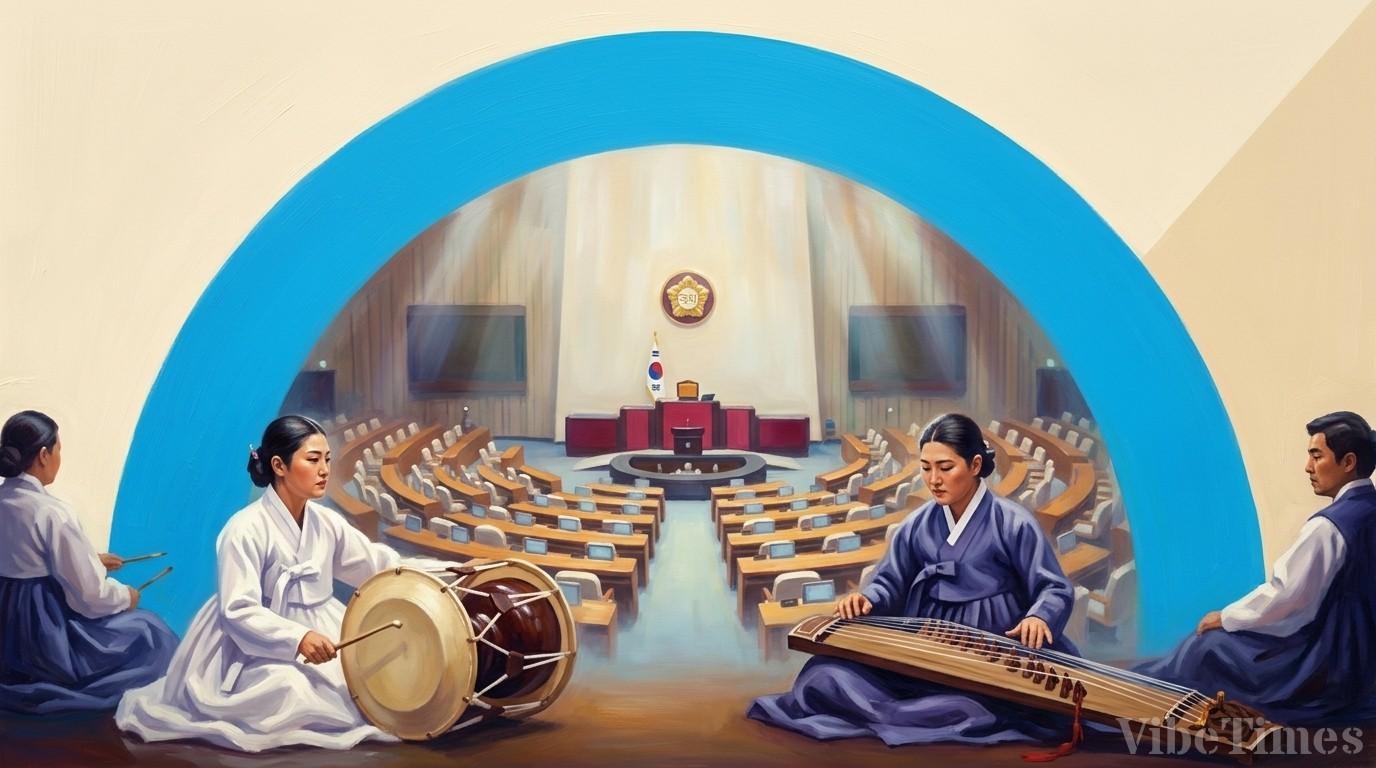
A single landmine explosion in the DMZ has turned the National Assembly into a battleground over national security.
At a Cabinet meeting held at the presidential office on September 29, 2026, President Lee Jae-myung ordered military authorities to conduct a swift and transparent investigation into the incident, while also warning against baseless conspiracy theories. That same day, the People Power Party pressed from the opposite direction, with the president telling them to "be ashamed of yourselves" for attacking only the opposition while sidestepping the issue of mines likely planted by North Korea. A fixed pattern is taking shape in which the ruling and opposition parties clash over where to point the finger of blame, rather than on the fundamental task of determining the cause of the accident.
The Partisan Gap Over the Incident
Democratic Party Rep. Kim Byung-joo of the National Defense Committee announced a field investigation into the DMZ mine incident on the 28th, publicly revealing the People Power Party's notice of non-participation. He dismissed claims that the mines would "be washed away in the rain" as superstition, stressing the scientific grounds for an on-site examination. Meanwhile, People Power Party Rep. Jang Dong-hyuk unleashed fiery rhetoric, likening President Lee to a "wooden-box landmine" threatening South Korea's security. Rep. Na Kyung-won also called for a National Assembly-level probe, and former party leaders Han Dong-hoon and Lee Jun-seok have joined the discussion, keeping up pressure from across the opposition camp.
The dispute hinges on two main questions: judgments about the origin of the mines and North Korea's intentions, and accountability for whether the government and military responded appropriately. Rep. Na Kyung-won characterized President Lee's reconciliation overtures toward the North as an act of self-harm that weakens the rationale for stationing U.S. Forces Korea and undermines the nation's security framework. Critics point to the Lee government's earlier preemptive goodwill gestures toward Pyongyang, including halting anti-North Korean leaflet launches and shutting down loudspeaker broadcasts. The ruling party counters that such arguments are a political offensive that obscures the essence of the incident.
Falling Approval Ratings Intensify the Fight
Behind the politics lies the trajectory of President Lee's approval rating. With his approval having fallen to the 30-percent range barely a year into his term, security issues have become a burden for the ruling camp. For the People Power Party, it is a favorable moment to capitalize on public sentiment during the Chuseok holiday to highlight security failures. Rep. Jang Dong-hyuk's escalation of his offensive, invoking Chuseok public opinion, should be read in this context.
President Lee's response proceeds on two tracks. Externally, he has stressed his commitment to robust security, urging speed on the construction of nuclear-powered submarines and advanced missile technology such as hypersonic weapons. Domestically, his approach is to block the spread of conspiracy theories and restore trust through a fact-based investigation. However, tensions over the judiciary stemming from Chief Justice Cho's refusal to appoint justices, along with the ruling and opposition parties' clashes over a special prosecutor bill for fabricated indictments, have left national politics mired in a war of attrition. As the Democratic Party continues its offensive against Chief Justice Cho Hee-dae, the opposition is pushing back with rallies against the special prosecutor bill.
Outlook and Ripple Effects
In the short term, whether the opposition takes part in the National Defense Committee's field investigation will likely determine the direction of future sparring. If the People Power Party stays away, the investigation risks being reduced to a ruling-party-only affair, likely triggering another dispute over the credibility of its findings. Conversely, if the opposition joins in, whether the mines came from North Korea, the military's state of readiness, and the adequacy of the government's initial response will all come under scrutiny.
In the medium term, the political calendar ahead of next year's local elections is a variable. With polling in metropolitan races showing the ruling party ahead in most regions except North Gyeongsang, the People Power Party needs the security issue to revive conservative unity, and some observers detect a conservative consolidation trend in the Yeongnam region. For the ruling camp, a prolonged security spat amid 30-percent approval ratings risks mounting attrition. Unless the investigation reaches a swift conclusion grounded in scientific evidence, the incident risks being remembered not as a military accident but as a political event. In the end, evidence, not slogans, will decide the contest. As the observation goes that the greatest enemy blocking progress is the illusion of knowledge, so the most dangerous thing in a security debate is spreading unverified conviction as if it were fact.