National Assembly Data Analysis: Joo Ho-young Was More Moderate Than Commonly Believed

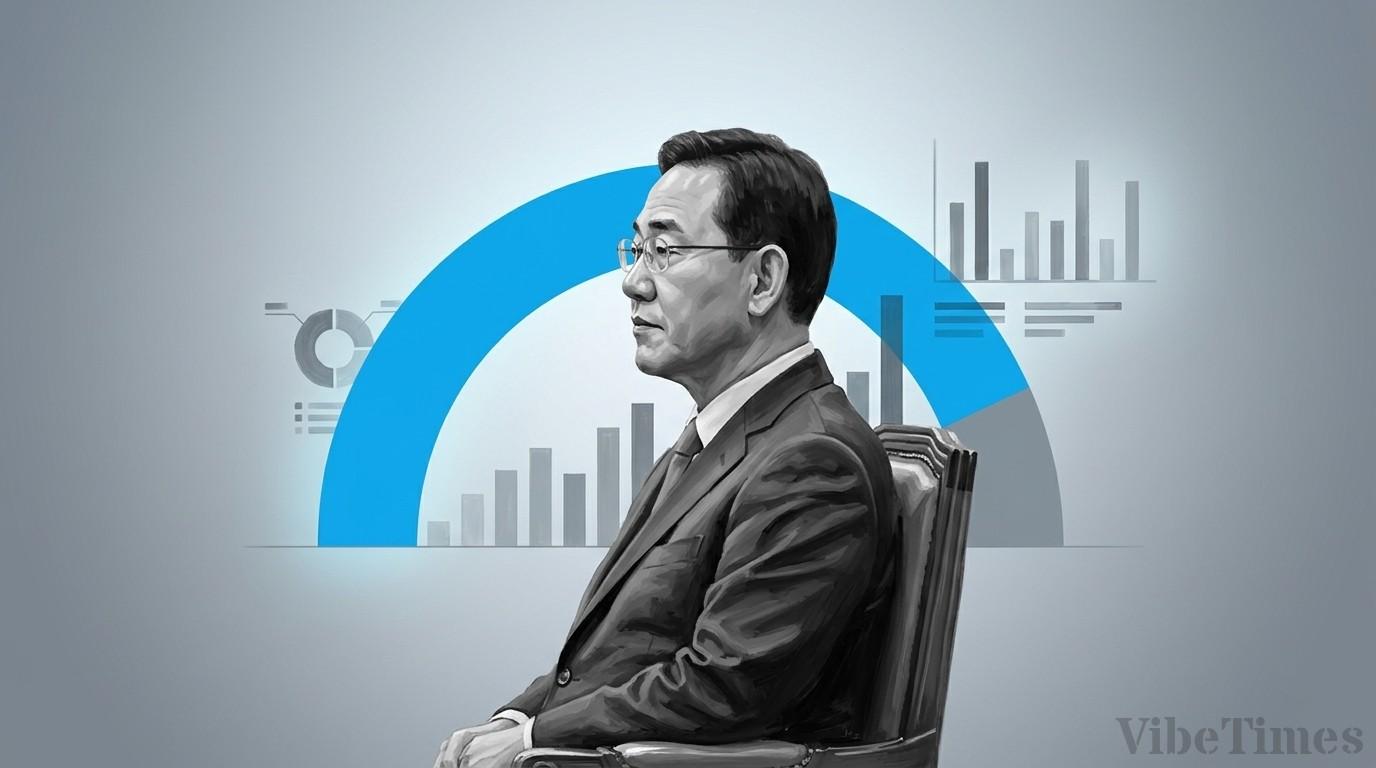
Joo Ho-young's Position as Drawn by Voting Records
The bill sponsorship and voting records of People Power Party lawmaker Joo Ho-young paint him as a centrist conservative considerably more moderate than the average member of his party. Numerically, he comes across as slightly right-wing on economic issues, while on social issues he leans closer to the progressive side. It is a picture that contrasts with the common profile of a four-term veteran and former floor leader known as a hard-line conservative.
These coordinates are not his self-declared political leanings, but values calculated by analyzing the content of the bills he sponsored and the votes he cast, applying a weighted average, and then calibrating against the average positions of lawmakers from the two major parties. In other words, it is a yardstick showing "where he stands relative to the party average." By this measure, Joo Ho-young sits relatively close to the center even within the People Power Party on economic matters, and on social and cultural issues his share of progressive votes within the conservative camp stands out.
What a 2.4% Rate of Breaking From Party Lines Says
His rate of voting against the party line is 2.4%. By that measure, he is by no means a frequent dissenter across either party. Yet the very fact that there were dissenting votes is worth reading into. It means that even in a role where upholding the party's position is fundamental as a member of the party leadership, there are records of him either abstaining or siding with the opposition.
Viewed alongside the data showing his progressive leanings on social issues, the picture becomes a bit clearer. One interpretation is that he is a lawmaker who, on certain issues, has made individual judgments that cross his party's line. Of course, this indicator is built solely on sponsorship and voting behavior, so it may differ from the public image shaped by his media appearances and political rhetoric.
The Gap Between Conventional Wisdom and Data
The most intriguing point is precisely this gap. A career in the party's top leadership as floor leader conjures an image of strong party-government unity. But the figure revealed by the voting data is someone economically center-right and socially willing to venture as far as the midpoint between the two parties. It is an example of how a leadership post is a role representing the party, but does not dictate an individual's legislative behavior.
From a cross-pressure perspective, Joo Ho-young can be seen as a case of a conservative party member who, depending on the issue, cast votes closer to the ruling party's conclusions. Such lawmakers are often regarded as well suited to mediating between the two sides in negotiations. No public disclosures related to conflicts of interest were found.
The Significance of a Centrist-Conservative Seat
The value of such coordinates in the future National Assembly landscape is likely to grow. In a standoff where the ruling and opposition parties are evenly matched, the influence of centrist lawmakers who can swing votes increases relatively. A stance that is right-wing on economics but flexible on social issues is also a useful trait for finding common ground in interparty negotiations.
That said, data is not everything. Sponsorship and voting are only one facet of a lawmaker's activities, and the real influence created through committee work and political speech must be assessed separately. What the voting data reveals is, at most, "Joo Ho-young in front of a bill." And that Joo Ho-young stood far closer to the center than conventional wisdom would suggest.
Lawmakers Mentioned in This Article
| Lawmaker | Party | Ideological Leaning | Notes |
|---|---|---|---|
| Joo Ho-young | People Power Party | Economic right · Social progressive | Subject of article |