Ruling and Opposition Leaders Visit Hospital Bed of Fasting Union Chief Together

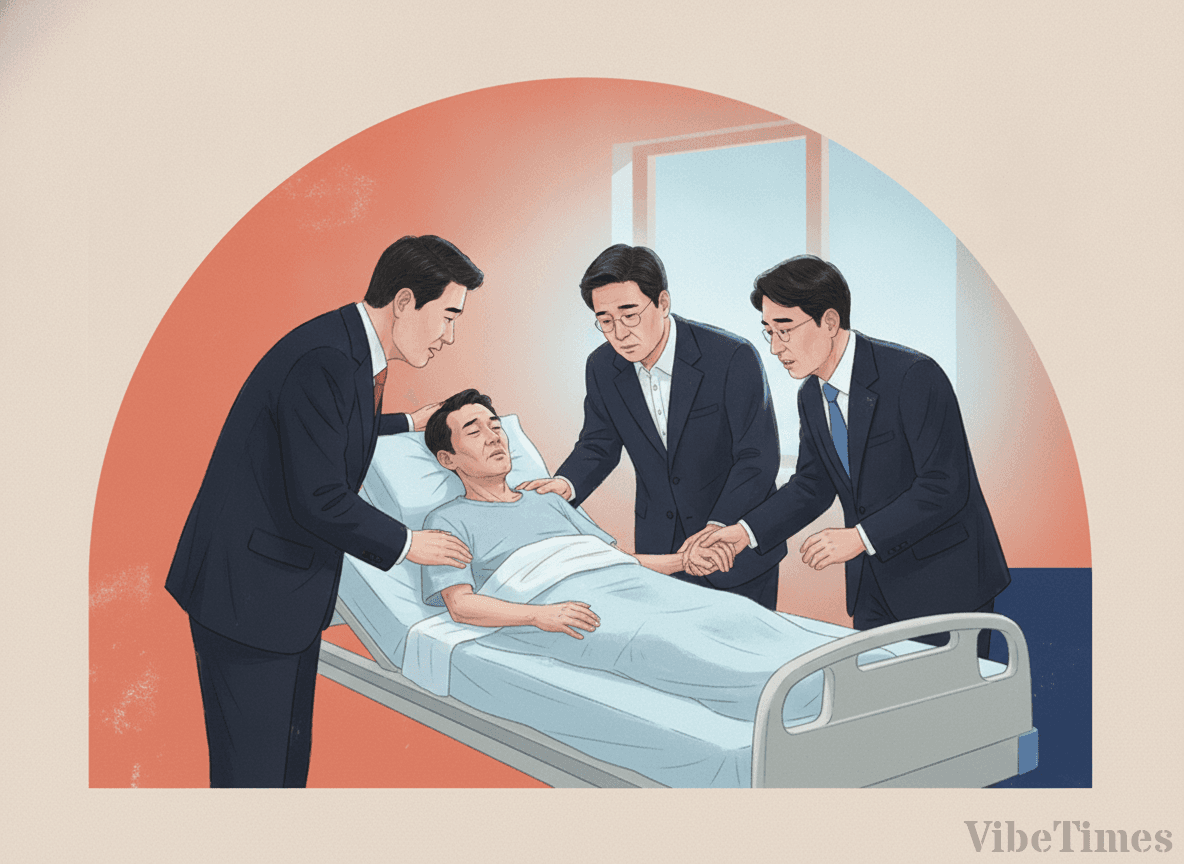
The leaders of South Korea's ruling and opposition parties stood together for the first time at the bedside of a union chief who has been on hunger strike.
With the regular National Assembly session resuming after the holiday, the hunger strike by the head of the Korean Federation of Public Sector Unions has grown into the biggest political flashpoint. The union chief has continued the strike in protest against the government's refusal to engage in collective bargaining and its plans for public sector restructuring, and was recently moved to a hospital in Seoul after his health deteriorated. On the 4th, the ruling and opposition leaders visited the hospital one after another, jointly declaring that "the National Assembly will work toward a resolution."
Why the Ruling and Opposition Parties Moved Together Now
It is an unusual scene for the leaders of the ruling and opposition parties to visit a patient on exactly the same day. Parties that have clashed sharply have delivered the same message on a single labor issue. Public opinion lies in the background. As the hunger strike dragged on and public sympathy for the worker grew, both sides calculated that ignoring it could invite accusations of turning their backs on labor, analysts say.
After the hospital visits, both party leaders told reporters that the National Assembly would play a mediating role to bring negotiations back to the table. However, they did not mention a specific timeline for resuming talks or whether legal enforcement mechanisms would be introduced. Observers note that while they succeeded in a symbolic show of unity, no substantive agreement on a solution was reached.
The Political Shockwaves of the Hunger Strike
The significance of this hospital visit goes beyond labor-management conflict itself. The public sector union federation has complained that it has been unable to secure even a channel for collective bargaining with the government. The union's argument has been that conflict cannot be resolved when its counterpart refuses to recognize it, and the hunger strike was its last resort.
If a strike the worker is staking his life on ends as nothing more than a political photo op, the cost will come straight back as a verdict at the next election.
Both parties are aware of this point, though their approaches differ. The ruling party faces the burden of calibrating how strongly to press the government to resume talks, while the opposition is caught in a dilemma: it wants to strengthen ties with labor unions while guarding against being framed as aligned with militant labor activism.
Three Paths the National Assembly Could Take
A solution is expected to narrow down to three broad options. First is an agreement between the ruling and opposition parties to reactivate tripartite dialogue among labor, management, and the government. Second, legislation such as mandating collective bargaining in the public sector could be introduced in the National Assembly. Finally, the Assembly could arrange direct contact between the relevant ministry and the union.
The key question is whether the agreed principles will translate into an actual bargaining table. Even if talks cannot resume just one day after the hospital visits, the prevailing view is that the political pressure generated by the simultaneous visits by both party leaders could prompt a change in the government's stance.
The health of the striking union chief remains a wild card. Should the strike drag on longer, bipartisan discussion of a solution will only have to accelerate. Whether the unity shown by the ruling and opposition parties in this hospital visit becomes a starting point for resolving the conflict rather than a one-off event will be decided in the coming weeks.