November 17 Legislative Report: Byun Sang-beom Spans Two Committees

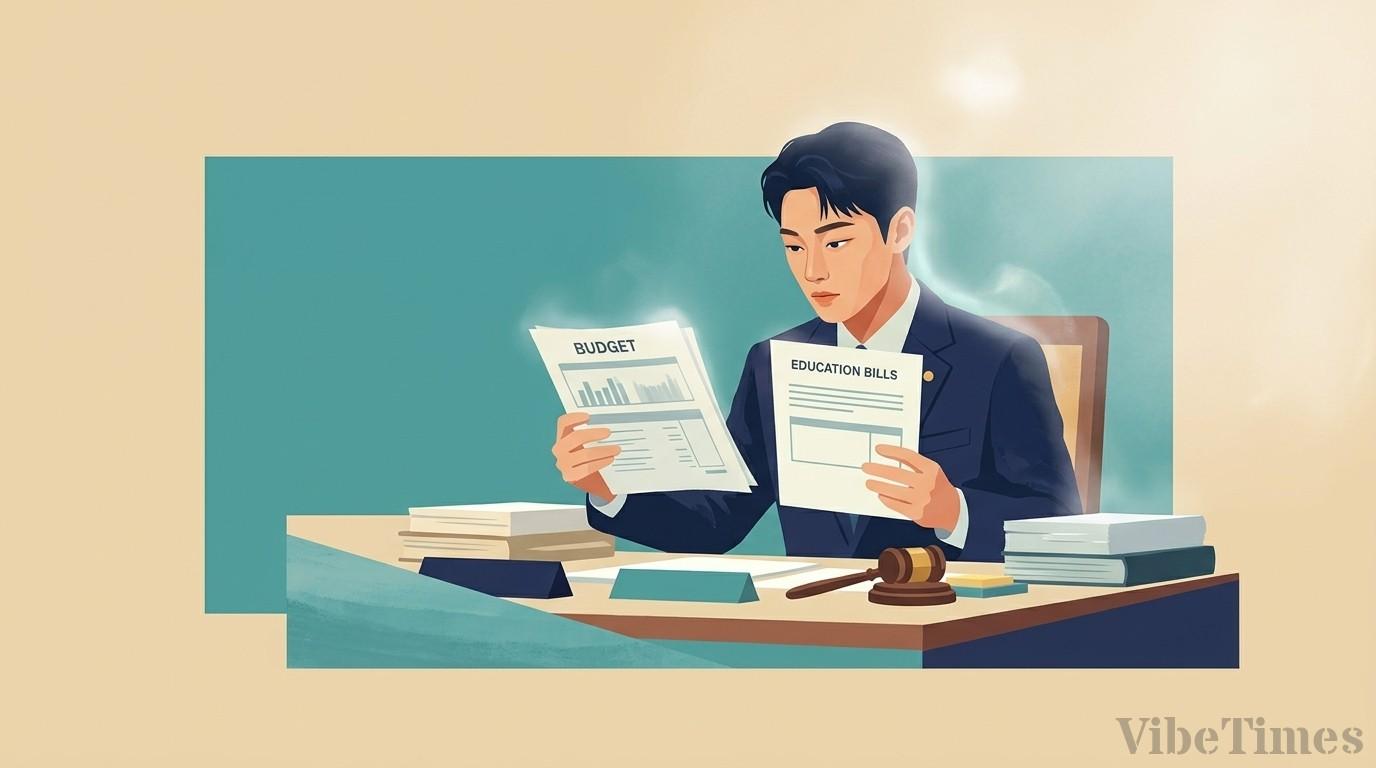
Rep. Byun Sang-beom of the Rebuilding Korea Party is tending to both the Special Committee on Budget and Accounts and the Education Committee at the same time.
Legislative Activity Across Two Committees
According to publicly available National Assembly information, Rep. Byun has been designated a member of the Special Committee on Budget and Accounts in the 22nd National Assembly, where he participates in the review of the national budget. The budget committee is a key body that scrutinizes the government's budget bill and decides on increases and cuts. Since a change to a single budget figure can shake an entire ministry's plans for the coming year, the scrutiny of even one committee member carries significant weight.
At the same time, he has served as a member of the Education Committee for the first half of the session, taking part in inspections of the Ministry of Education and its affiliated agencies. He also handles the review of various education-related bills at the committee. In effect, he holds both budget review and bill review in his hands. Other Rebuilding Korea Party lawmakers, including Park Jae-hyun, Ku Na-young, Lee Jong-ho, Woo Kang-hoon, Han Joon-soo, and Kwak Dae-jong, also sit on the Education and Budget Committees, suggesting that, given the party's small negotiating bloc, it has deployed its members densely in the education and budget arenas.
Pressing Issues Facing the Education Committee
The Education Committee, where Rep. Byun is active, is grappling with one of the most contentious issues of the moment. Just three days before the college entrance exam (CSAT), cheating using AI has erupted into a social problem. Indeed, ruling and opposition parties rushed to introduce related bills around the 17th.
Rep. Kim Moon-soo of the Democratic Party of Korea led the introduction of a bill the same day that would raise the maximum suspension of exam eligibility for cheating on college admissions tests using AI smart glasses or similar devices from the current one year to up to five years, and would require the Ministry of Education to manage records of such misconduct and share them with universities. Rep. Lee Jun-seok of the Reform Party also unveiled a prototype of 'KoriyoSCAN', a radio-detection app designed to prevent AI cheating, the day before the CSAT, and proposed government-level verification. The ruling party has even moved forward with a special law requiring at least one dedicated AI-cheating monitor at every test site.
The direct trigger for this legislative competition was a string of cheating incidents involving AI devices in the certified tax accountant exam and some universities' early-admission essay tests. Critics had long pointed out that current law merely suspends offenders' exam eligibility for one year the following year, which falls short as a deterrent. As Education Committee members are the ones who will review these contentious bills, their prior experience in inspections and reviews is expected to directly inform their legislative judgment.
Budget Review and Education Finance Intersect
The budget committee's proceedings are not unrelated to the Education Committee. The National Assembly's Special Committee on Budget and Accounts began substantive deliberations on increases and cuts to next year's budget bill this week, and the ten standing committees are reported to have requested net increases totaling roughly 25 trillion won. Given the share of education in the national budget, the role of a budget committee member with Education Committee experience can only grow.
His partymate Rep. Woo Kang-hoon, for example, took part in introducing a bill mandating video recording of prosecutorial interrogations. The Rebuilding Korea Party is active in bill sponsorship independent of its committee work, pursuing a strategy of 'dual-committee placement' combined with 'high-profile bill sponsorship' as a survival strategy for a minor party.
Outlook and Implications
For the time being, the intersection of the Education and Budget Committees is expected to feature two strands: legislation to strengthen penalties for AI-enabled cheating and the allocation of next year's education budget. For the legislative race just before the CSAT to become a genuinely effective institution rather than mere symbolism, implementation timing and securing funding for supervisory personnel and equipment must be resolved simultaneously. The role of committee members who see bills through both the legislative and budget review processes will accordingly grow heavier.
Test fairness in the AI age cannot be completed with a single line of legal text. Just as one should not lower the curtain while the window is open, the new loopholes created by technology must be plugged by legislation and budget together—a task now before the 22nd National Assembly's Education and Budget Committees.
