October 7 Legislative Report: Lee Jun-seok Takes Aim at Government Accountability

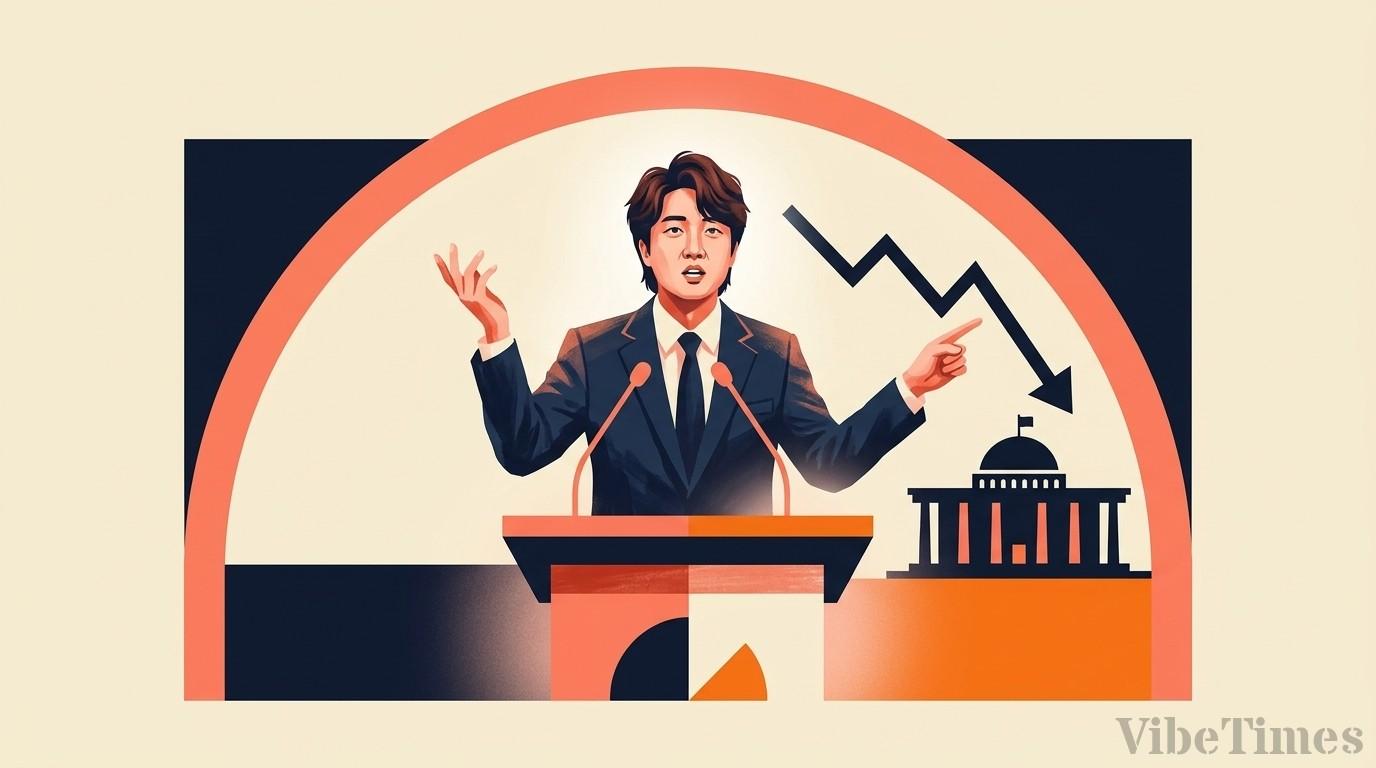
At the National Assembly audit hearings, Lee Jun-seok's questioning was sharply directed at the government.
Criticism of Finance and Tax Policy Flows at Strategy and Finance Committee Audit
On October 6, Reform Party lawmaker Lee Jun-seok took the floor during the National Assembly Strategy and Finance Committee's audit of the Ministry of Economy and Finance. There, he raised the question of accountability for the leveraged ETF (exchange-traded fund, a financial product that tracks a stock market index with amplified price swings) turmoil and the issue of cryptocurrency taxation, criticizing the government forcefully regardless of party lines. Going beyond criticism of the established parties, he took issue with the government itself for its supervisory responsibilities.
The leveraged ETF episode unfolded as the premium (the gap between actual asset value and market price) formed by concentrated retail buying collapsed rapidly, spreading losses. Lee pointed to the financial authorities' lack of proactive response as the core of the accountability question. On cryptocurrency taxation, he reportedly raised the concern that taxes were being collected before investor protection mechanisms had been put in place.
The Logic Behind Opposing the Merger of the Four Port Authorities
On port policy as well, Lee staked out a clear position of opposition. Regarding the push to merge the four port authorities, he questioned the rationale for integration, saying, "All four port authorities are currently posting solid operating profits and have no management failures." If the goal were to restore management to health, failing companies should be merged; instead, well-functioning organizations are being artificially bundled together, he noted, making the case weak.
This aligns with conservative concerns about the impact on regional economies and employment. A port authority merger could lead to workforce relocations and the downsizing of regional hubs, placing an even heavier burden of proof on the government to demonstrate that the benefits of integration outweigh the costs. Read alongside Lee's October 6 audit remarks criticizing administrative district restructuring, which he said had been reduced to farce—"interpreted as if Pyeongtaek, Dongtan, and Hwaseong were going to disappear"—a clearer picture emerges of his pushback against central government policies that fail to reflect local realities. His office had previously cited a transportation perception survey it commissioned from the Reform Research Institute, which found that 74% of commuting and school destinations for residents of Dongtan 9-dong lie within Gyeonggi Province, as grounds for this criticism.
The Legislative Landscape of the 22nd National Assembly and the Role of Minor Parties
Lee Jun-seok's audit-season activity illustrates the strategic position held by minor parties in the 22nd National Assembly. In a landscape where the ruling Democratic Party and the main opposition People Power Party are at odds, the Reform Party is seizing the mantle of "government oversight" by criticizing both sides. The placement of multiple Rebuilding Korea Party lawmakers on the Special Committee on Budget and Accounts and the Education Committee, where they are participating in budget review and audits, is notable in the same context.
Voting patterns in the Assembly's plenary sessions also reveal a loosening of party discipline. In the October 1 vote on the amendment to the Act on the Special Account for Rural Development, the Democratic Party split 86 in favor to 16 against, with 16 members including Kim Jeong-ho, Park Ji-won, and Chung Chung-rae breaking from the party line. On the same bill, the People Power Party was effectively opposed at 4 in favor to 40 against, though 4 members including Kim Yong-tae and Kwon Young-se voted in favor. In the alternative vote on the Emergency Medical Services Act as well, 10 People Power Party members including Park Soo-young and Lee Jong-bae stopped at opposition, exposing internal splits. Three People Power Party members voted against the party line on the Broadcasting Act amendment, and 3 did so on the alternative vote for the Eco-Friendly Agriculture and Fisheries Promotion Act.
Pressure to Establish Policy Accountability Expected to Intensify
Future developments are expected to unfold along two tracks. First, legislative discussions are likely to gain momentum on bills to strengthen listing requirements for leveraged-ETF-like products and to establish investor protections in the financial investment sector. Legislative attempts to adjust the cryptocurrency taxation schedule are also likely to be driven by the criticisms raised during the audits. Second, the port authority merger will struggle to secure legislative consent itself unless the government, as the driving force, can demonstrate its financial and administrative merits with concrete figures.
Tax reform discussions are also under way, with reports that the two major parties have found common ground on overhauling outdated tax codes. The point that deduction and tax-exemption thresholds have failed to keep pace with rising prices and asset values could translate into bill proposals as it moves through audits and plenary sessions—something to watch. As the saying goes, leaders must learn lessons along the way; whether the questions exchanged at the audit hearings leave any lessons behind will ultimately be proven by the number and content of the bills proposed afterward. In today's National Assembly, where a minor party's frontal criticism overlaps with defector votes within both major parties, government policy will be judged by the number of votes cast against it just as much as by the outcomes that pass.