Leg Exercise Before Getting Up Is the Answer to Orthostatic Hypotension

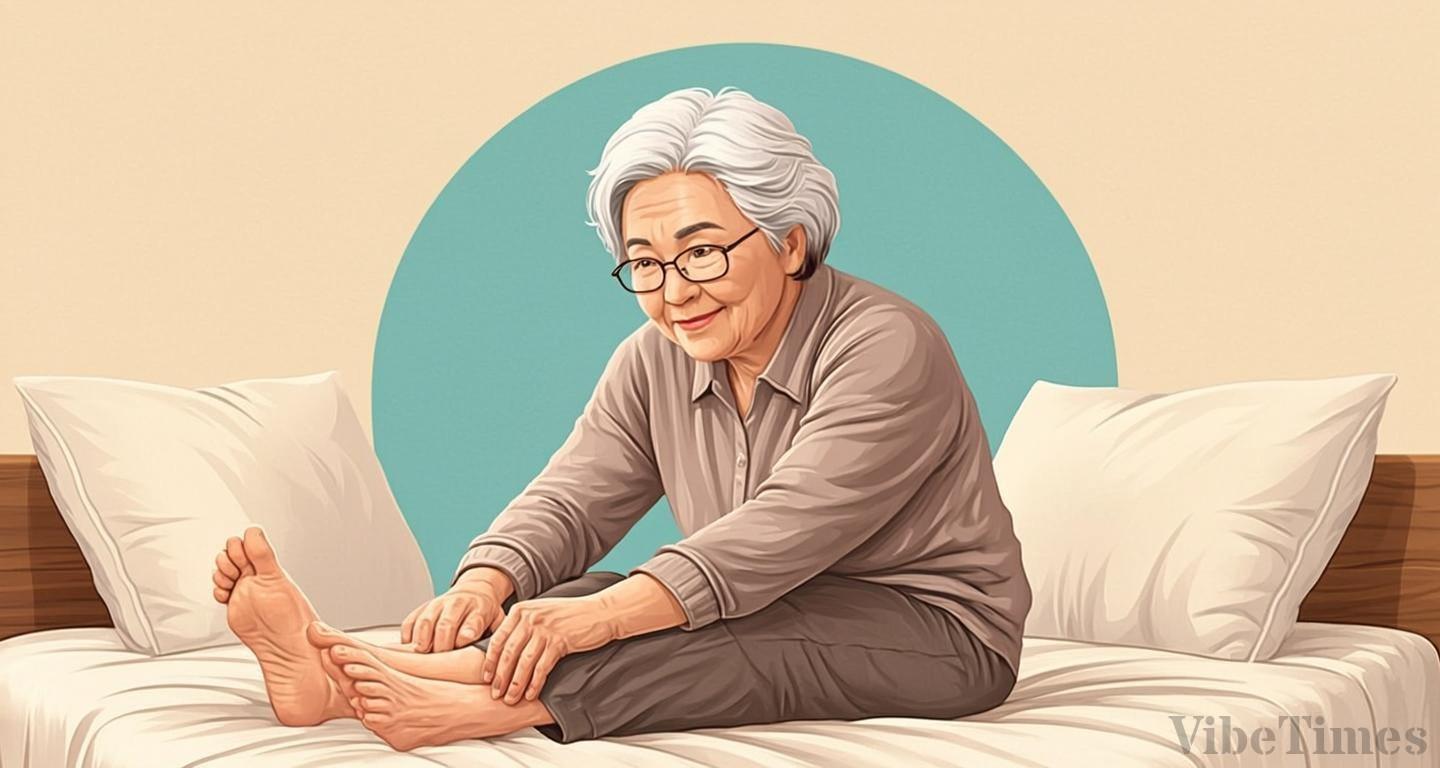
Spending just 5 to 10 minutes moving only your ankles while still lying in bed is the first shield against morning fainting and falls.
The orthostatic hypotension guidelines of the American Heart Association (AHA) and the European Society of Cardiology (ESC) recommend leg exercise before getting up as a first-line treatment for controlling symptoms without medication. This is because contracting the calf and thigh muscles while lying down sends blood that has pooled in the legs back to the heart, preemptively easing the sudden drop in blood pressure that occurs at the moment of standing.
Why Mornings Are Especially Dangerous
Blood Redistributed Overnight, Blood Pressure Collapsing Uncontrollably Right After Waking
Orthostatic hypotension refers to a condition in which systolic blood pressure drops by 20 mmHg or more, or diastolic pressure by 10 mmHg or more, upon standing after lying down. In this condition, diagnosed under American Academy of Neurology criteria, fainting and falls occur most commonly right after getting up in the morning.
The reason is clear. Lying down all night shifts 500 to 1,000 mL of blood from the legs toward central circulation, and around the time of waking, fluid is lost through urination, reducing total blood volume. On top of that, the sympathetic nervous system's blood pressure regulation responds relatively slowly in the morning. All three adverse conditions overlap at once in the morning.
The Meaning of the 20 mmHg Figure
A 20 mmHg drop in systolic blood pressure is not merely a change in numbers—it is a level that directly threatens blood flow to the brain. Vision darkens, dizziness sets in, and in severe cases, consciousness is lost. For elderly patients, a single fainting episode can lead to fractures, making prevention all the more critical.
The Muscle Pump — How the Legs Act as a Second Heart
The Mechanism by Which the Calf Squeezes Venous Blood
Contracting the leg muscles while lying down activates the 'muscle pump.' The gastrocnemius and soleus muscles of the calf press on the veins, pushing pooled blood up toward the heart. As the volume of blood returning to the heart increases, blood pressure and cerebral perfusion are secured before getting up, and the magnitude of the blood pressure drop upon standing is reduced accordingly.
A Non-Drug Treatment Endorsed by Guidelines
The ESC's 2018 orthostatic hypotension guidelines and the AHA view these pre-rising postural exercises as a scaled-down form of tilt training and present them as a cornerstone of non-pharmacological treatment. Neurologists likewise emphasize 'ankle exercises before rising and graduated standing' as the basics in patient education. Rehabilitation medicine specialists report that lower-body strengthening exercises such as recumbent cycling or swimming, done at least three times a week, improve autonomic nervous system responses over the long term.
Three-Step Pre-Rising Exercises You Can Do Right in Bed
Step 1: Ankle Pumps — 15 to 20 Reps × 3 Sets
While lying down, pull your toes toward your knees (dorsiflexion) and then point them straight away (plantarflexion). Repeat slowly, holding each movement for 2 to 3 seconds, doing 15 to 20 reps per set for 3 sets. The intensity is low, so even the elderly or those with limited mobility can do it without strain, and it is a basic movement with fast-acting results. Adding ankle circles—10 clockwise and 10 counterclockwise with your toes—helps stimulate the calf muscles more evenly.
Step 2: Knee and Thigh Contractions — Maximizing Venous Return
With both knees together, tighten the inner thighs and buttocks for 5 to 10 seconds, then release; repeat 10 times. Isometric contractions—such as placing one leg over the other and pushing them against each other (exerting force without moving the joints)—produce the same effect. The strength of this step is its immediate blood-pressure-raising effect, but excessive exertion can spike blood pressure, so the rule is to breathe naturally without holding your breath. If your fitness allows, adding 8 to 10 bridges—knees bent, lifting the hips for 5 seconds—stimulates large muscle groups like the glutes and hamstrings, maximizing circulation. You may also include slowly pulling each knee toward your chest and extending it, 10 times per side.
Step 3: Graduated Rising — Sitting for 30 to 60 Seconds Is Key
After finishing the exercises, roll onto your side, swing your legs off the bed, and sit for 30 to 60 seconds. Only after confirming there is no dizziness should you stand up slowly. Following the 'three-step rising principle' of lying-down exercise, sitting and waiting, then standing is the final and most important step. Standing up immediately can render all the exercise benefits meaningless in an instant.
Lifestyle Management to Boost the Exercise Effect and When to See a Doctor
The Triangle of Fluids, Salt, and Compression
Drinking 500 mL of water right after waking is a basic habit. The ESC guidelines recommend a daily fluid intake of 2 to 3 liters. Salt intake can be increased to 6 to 10 grams of sodium per day, but patients with hypertension or heart failure must consult a doctor first. Raising the head of the bed by 10 to 15 degrees reduces nighttime urination and blood redistribution, easing the morning burden.
Compression stockings are also worth trying. Studies published between 2020 and 2022 reported that abdominal compression is more effective than lower-limb compression for maintaining blood pressure, and compression garments, including abdominal binders, are expected to work synergistically when combined with exercise. Adjusting the timing of morning medications should be discussed with a doctor, and strenuous activity immediately after breakfast is best avoided, as it can trigger postprandial hypotension.
When Exercise Alone Is Not Enough
If you have lost consciousness from fainting, if symptoms do not improve despite exercise and fluid intake, or if falls recur in elderly patients, a visit to a neurology or cardiology clinic is needed. A specialist evaluation should also come first for those with underlying conditions such as Parkinson's disease, diabetic neuropathy, heart disease, or adrenal insufficiency. At this stage, drug treatments such as midodrine, fludrocortisone, or droxidopa are considered under specialist prescription.
Precautions and Closing Thoughts
If Any of These Signals Appear During Exercise, Lie Down Again Immediately
If dizziness, chest pain, palpitations, or blurred vision occur during exercise, lie down again immediately. Those with a history of deep vein thrombosis in the legs should consult a doctor before starting ankle exercises. Hyperventilating or straining (the Valsalva maneuver) during isometric exercise can sharply raise blood pressure and should be avoided.
George Bernard Shaw said that as long as you have your health and something to pursue, happiness is beside the point. For orthostatic hypotension patients, that path begins each morning with 5 to 10 minutes of ankle pumps in bed and a three-step rising routine. As this small routine accumulates, the certain reward appears to be mornings free of fainting.