President Lee Jae-myung Warns Against Politicization of Energy Policy

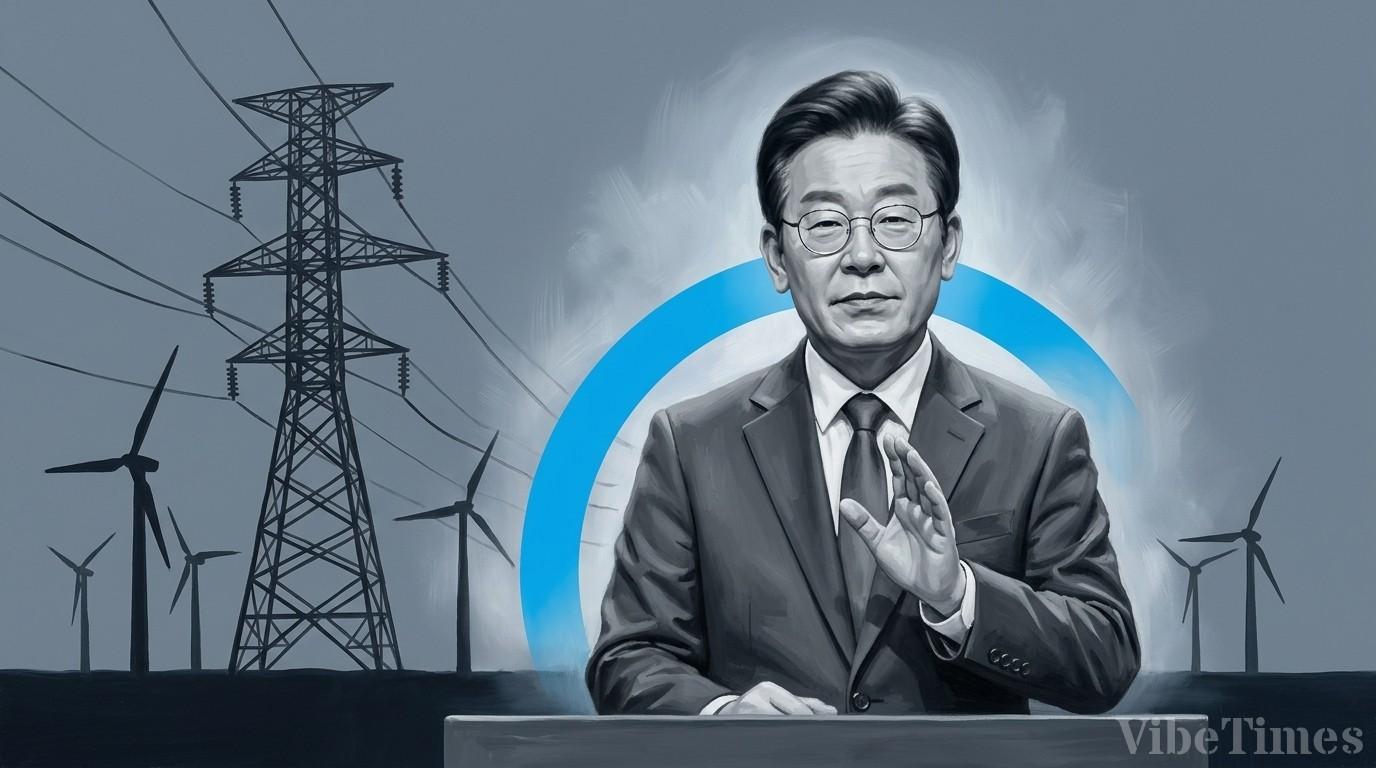
President Lee Jae-myung warned that energy policy must not degenerate into a matter of political contention. Speaking at a public forum on the Korean Green Transformation (K-GX) strategy held at a conference venue in Seoul on the 7th, President Lee emphasized the need for consistent implementation of energy policy, saying, "Curiously enough, the area of national policy most subject to political influence is the energy sector." He said flatly, "The politicization of policy — this is truly dangerous."
In response to concerns about policy uncertainty, President Lee offered a concrete assessment. He noted that "government policy on the solar power industry has swung back and forth like a pendulum, and at one point there were even policy changes that amounted to near-repression." As a result, he assessed, South Korea's green transformation (GX) has been significantly delayed by several years.
Behind this lies the wide swings in energy policy following changes of administration. The Yoon Suk-yeol government shifted energy policy toward a nuclear-centered approach, lowering the target share of renewable energy generation from the existing plan's 30.2% to 21.6%, and during the Moon Jae-in administration, solar power projects were labeled as rife with corruption, prompting sweeping audits and investigations.
President Lee also offered his diagnosis of the nature of the debates surrounding nuclear power and solar energy. "The controversy over nuclear power seems closer to a political dispute than an academic one," he said, "and I don't know why, but there is a certain atmosphere of aversion or hostility toward the solar power industry." He stressed that since the green transition is a global trend, abrupt policy shifts like those of the past must not be repeated.
He also acknowledged the limits of political actors themselves. "Policy always has a political element," President Lee said. "But when political parties talk about it, it only leads to fighting." He added, "If third parties somewhat removed from that arena — particularly respected academics or civic leaders with expertise and public trust — routinely speak out on these issues, it would greatly help ease policy instability."
These remarks underscore the ripple effects that removing uncertainty in energy policy can have on corporate investment and the pace of the green transition.