President Lee Jae-myung declares war on random acts of violence

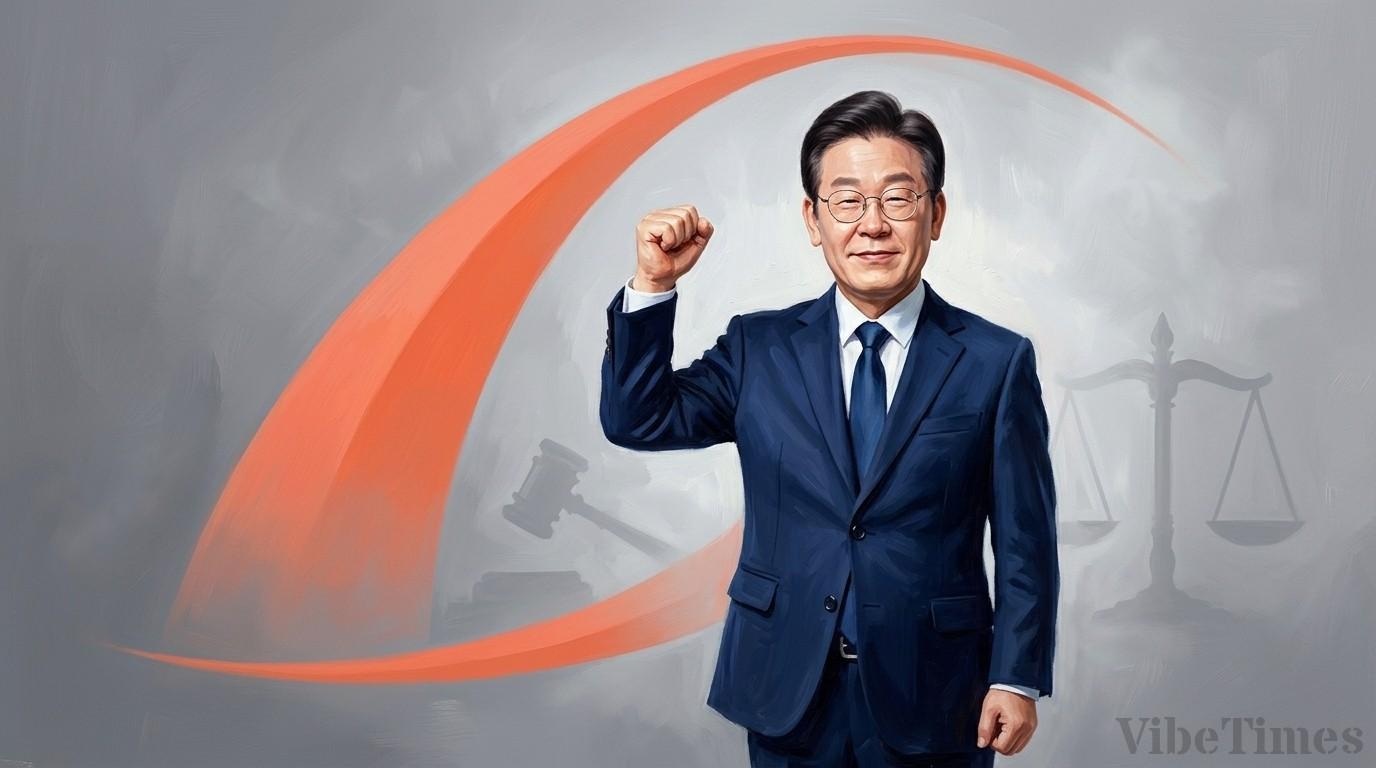
President Lee Jae-myung has declared a 'war' on random acts of violence.
Stepping in personally right after a knife attack at a large supermarket in Incheon on the 13th, the president said, "We must establish extraordinary measures against both relational and random crimes, with the resolve to declare war." It is unusual for a president to go as far as invoking the word 'war' in response to an individual crime, raising the intensity of the response. His actions were also swift: around 8 p.m. that same day, he made an unannounced visit to the Incheon Metropolitan Police Agency to receive a briefing.
"Serious harm to society's most vulnerable... swift and strict investigation"
President Lee characterized the incident as a crime that inflicted "serious harm on society's most vulnerable members." Given that random members of the public were targeted in an everyday space like a supermarket, his approach frames the case not merely as a violent crime but as a matter of public safety for society as a whole. Accordingly, he ordered relevant ministries to conduct a swift and rigorous investigation and to draw up extraordinary measures.
What drew attention was the president himself raising the need for measures targeting people with mental illness who have been identified as posing a danger. This is interpreted as signaling that the government will consider institutional mechanisms even in the sensitive area of managing populations at mental health crisis, in order to prevent a recurrence of random knife attacks. The challenge, however, will be drawing the line between compulsory intervention and human rights protection.
The administrative machinery moved in tandem
At a Cabinet meeting chaired by the president, 41 promulgation bills — including an amendment to the Emergency Medical Service Act aimed at ending 'emergency room roulette' — along with 20 presidential decrees were reviewed and approved. The aim is to stop critically ill emergency patients from being shuttled from hospital to hospital in search of one that will treat them, plugging gaps in the emergency medical system in crime and accident scenarios — like the recent knife attack — where the golden hour separates life from death.
In that both post-crime response and emergency medical infrastructure improvements were pursued simultaneously, the response can be assessed as a multi-layered effort that went beyond mere declarations and translated into laws and institutions.
Public safety emerges as a political variable
Politically, the fallout from the incident is unlikely to be small. The opposition has been attacking the president's governing instincts, seizing on his visit to a golf course on the day of the recent parking structure ceiling collapse in Daegu. With the Incheon attack added to the mix, 'public safety' is now likely to become a central axis of partisan sparring. The president's rapid response — on-site briefings and orders for extraordinary measures — also reflects awareness of this political pressure.
Going forward, the test will be how concrete the government's extraordinary measures turn out to be. Whether the 'declaration of war' leads to genuine safety improvements will depend on how quickly — and how substantively, with real budgets and personnel — effective mechanisms are put in place, such as early identification of people in mental health crisis, blocking access to dangerous weapons, and linking up emergency medical services. With public fear of random attacks growing, the government's follow-up measures will directly shape how safe citizens actually feel, making this a moment that demands close scrutiny of both the pace and quality of implementation.