President Lee Jae-myung: 'Giving Up Command Authority over the Corruption Investigation Office Is Grounds for Impeachment'

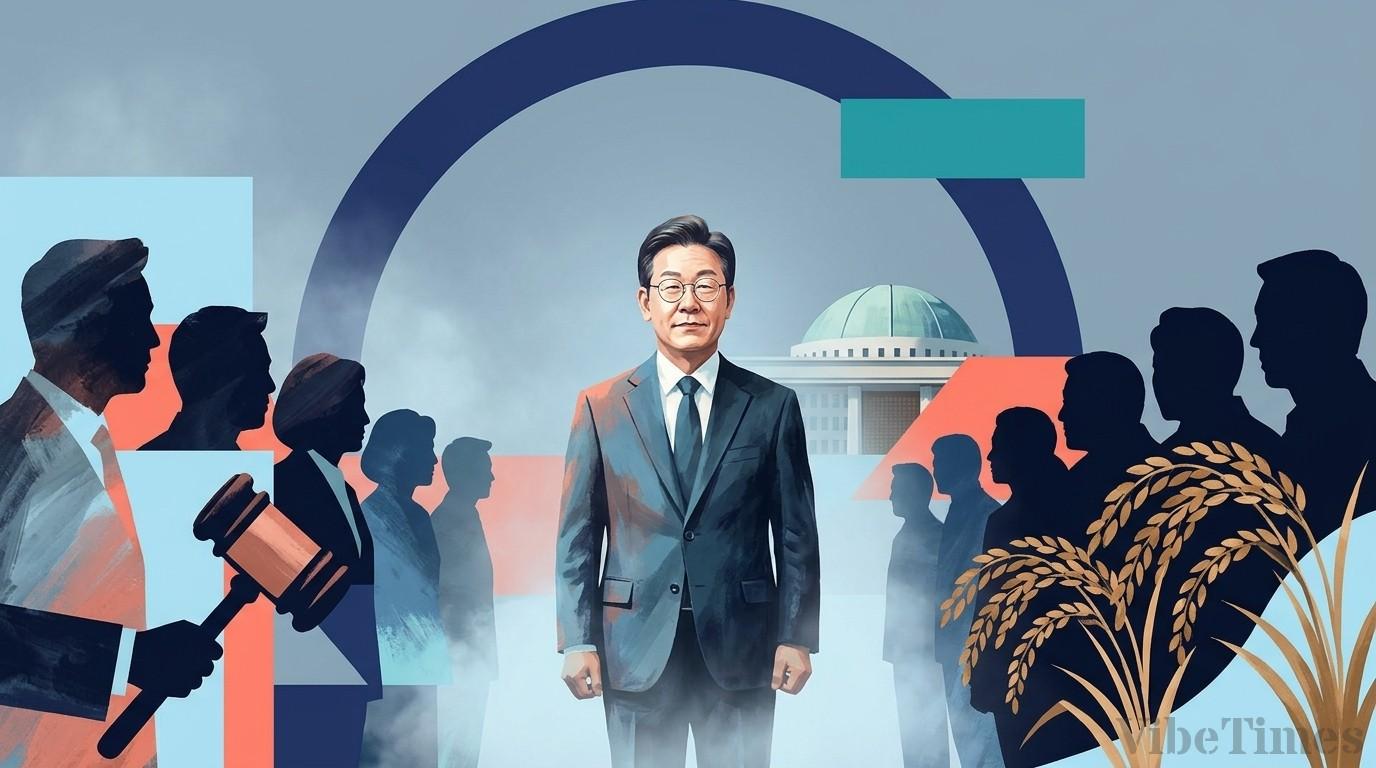
President Lee Jae-myung made it clear that giving up the authority to command and supervise the Corruption Investigation Office for High-ranking Officials (CIO) would constitute “grounds for impeachment.”
On the 22nd, regarding the political dispute over the CIO chief’s attendance at Cabinet meetings, the president reaffirmed who holds investigative command authority, framing it as a matter of “the president’s responsibility for state affairs.” Earlier, on the 13th, he stated at a Cabinet meeting that the heads of investigative agencies could not attend such sessions, and as controversy grew, he even posted rebuttal materials on social media citing answers from the generative AI tool Gemini. It was an unusual scene in itself for a president to invoke AI-generated answers in a public debate.
The Real Issue Behind the Attendance Debate: a ‘Blind Spot in Command Authority’
The core of the dispute is not Cabinet attendance but the investigative command responsibility that lies behind it. The government’s official position is that the CIO chief, as a non-member of the State Council, cannot attend Cabinet meetings. However, the People Power Party views the CIO not as a check on the prosecution but as a tool for the president to control investigations. The president’s own remark that “command and supervision is the president’s responsibility” has directly fueled these opposition concerns.
Meanwhile, the fact-finding team under the Justice Ministry’s Committee for Respecting Prosecutorial Human Rights and the Future had its activity period extended for a second time, beyond the 22nd. With suspicions raised that this is groundwork to drop charges in President Lee’s own trial, criticism is mounting that investigative agencies and the presidential office are growing ever closer. The president denied allegations of investigative interference, saying, “Checking who is on whose side is one-sided.”
The Constitutional Weight of the ‘Grounds for Impeachment’ Remark
The remark in question is more than political rhetoric. The president acknowledged his own responsibility for command and supervision while simultaneously declaring that he cannot neglect that duty. Read the other way, it means the president also bears political responsibility for the outcomes of CIO investigations. Whenever a specific CIO investigation becomes entangled in disputes over political neutrality, this remark is highly likely to be cited as a basis.
The independence of agencies investigating official misconduct and the president’s command responsibility are difficult to reconcile. For the ruling party, which has championed completing prosecutorial reform, it appears there was a need to clarify lines of responsibility in order to finish that reform. From the opposition’s perspective, however, this amounts to a deliberate declaration of intent to bring investigative power under the president’s control.
Widening Conflict and Political Variables Ahead
The circle of conflict is widening. Rhyu Si-min sharply criticized the president’s prosecutorial reform direction as giving off a “fishtank-gone-bad smell,” while former Prime Minister Kim Min-seok remarked that “Rhyu should have observed the taboo,” interpreting the president’s stance of “no desire for punishment” as meaning “discussion over law.” This signals that disagreements are surfacing even within the ruling camp over matters of investigation and prosecution.
In the short term, signs that conflict with Supreme Court Chief Justice Jo Hee-de could escalate into an impeachment crisis are compounding the picture, and a confrontation between the judiciary and the executive branch is taking shape. The National Assembly’s Legislation and Judiciary Committee’s adoption of the hearing report on special inspector nominee Choi Gil-soo also shows legislative intervention in oversight power gathering pace.
Looking ahead, the dispute over the CIO chief’s Cabinet attendance is unlikely to be resolved any time soon. Now that the president’s remarks have triggered debate over constitutional responsibility, the opposition is expected to intensify pressure, potentially mobilizing parliamentary investigations and impeachment rhetoric. If the ruling party fails to strike a balance between the rationale of completing reform and suspicions over political neutrality, investigative reform itself could end up hobbling the government’s agenda. That is how heavy the weight of the president’s single remark is.
