S. Korea, US, Japan Top Diplomats Agree to Keep Up Efforts for Korean Peninsula Denuclearization

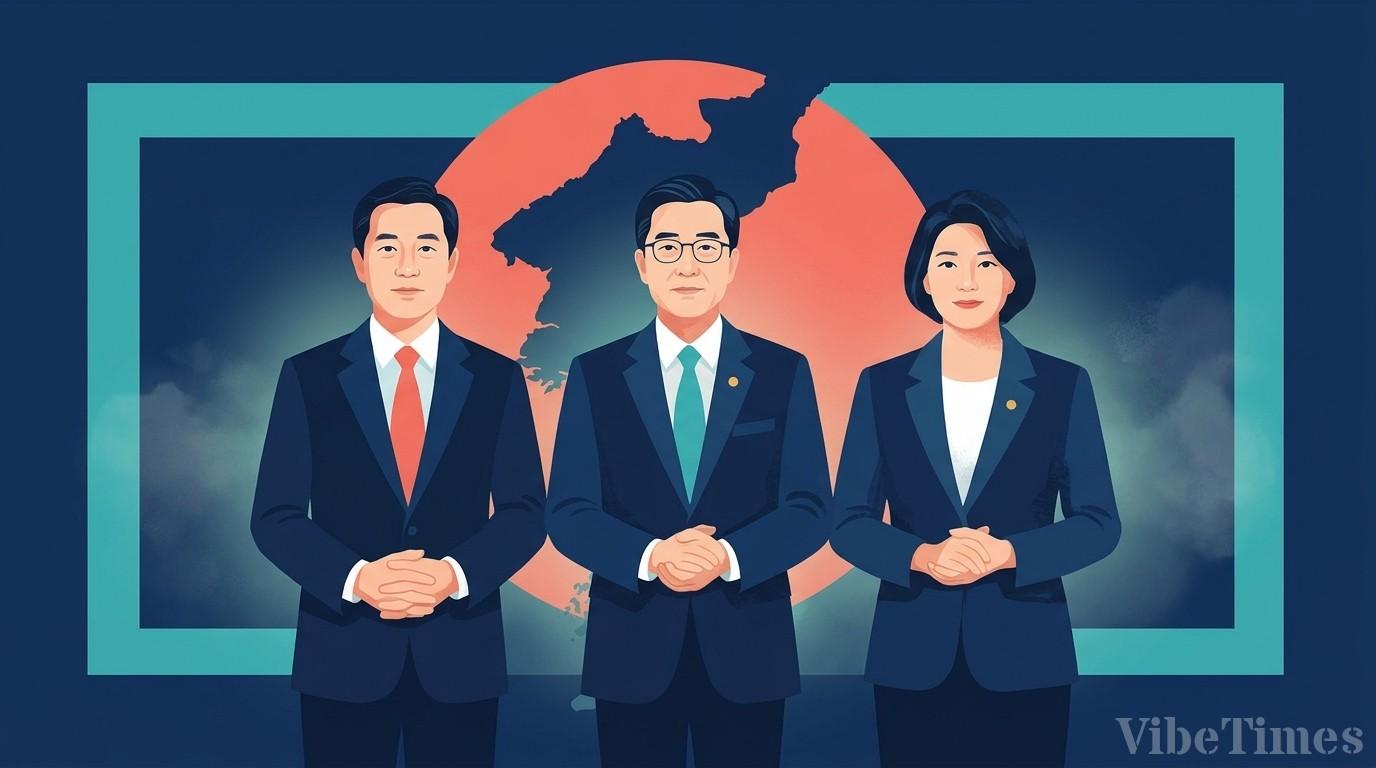
The foreign ministers of South Korea, the United States, and Japan held a meeting in Atlanta on Wednesday (local time), agreeing to continue efforts to achieve peace and stability on the Korean Peninsula and realize the goal of denuclearization, while urging North Korea to join in easing tensions. According to Seoul's Foreign Ministry, South Korean Foreign Minister Cho Hyun met with U.S. Secretary of State Marco Rubio and Japanese Foreign Minister Takeshi Iwaya on the sidelines of the G20 foreign ministers' meeting in Atlanta to hold a trilateral ministerial meeting. The meeting came about a month after their last gathering on the margins of the United Nations General Assembly.
According to the U.S. State Department, the three ministers reaffirmed their firm commitment to North Korea's complete denuclearization and the full implementation of United Nations Security Council resolutions, and agreed to maintain a robust deterrence posture against Pyongyang. The three nations also praised the work of the Multilateral Sanctions Monitoring Team (MSMT), which detects North Korea's violations and evasion of U.N. Security Council sanctions.
According to the State Department, Rubio also raised China's attempts to establish dominance in the South China Sea, its coercive behavior in the East China Sea and the Yellow Sea, and China-Russia cooperation undermining peace and stability in the Indo-Pacific region. The Korean Foreign Ministry's press release, without directly mentioning China, said only that the ministers shared assessments of regional and global developments, including "attempts to unilaterally change the status quo," and agreed to strengthen coordination.
The South Korean, U.S., and Japanese ministers shared concerns over supply chain vulnerabilities, including the global energy crisis, in the field of economic security, and agreed to strengthen practical cooperation on diversifying critical mineral supply chains and on key emerging technologies such as small modular reactors (SMRs) and artificial intelligence (AI). The three ministers signed a memorandum of cooperation (MOC) on the Trilateral Asia-Pacific Partnership (TAPP), which seeks maritime cooperation and economic partnerships in the Pacific and Arctic regions. The related cooperation is to be concretized through the Arctic Council and a working group newly agreed to be established.
On the margins of the meeting, Cho also spoke separately with Rubio, exchanging views on bilateral relations, high-level exchanges, visa issues, and other pending matters between South Korea and the United States. However, the Foreign Ministry did not disclose specifics of the discussions between the two ministers.