Micron Soars 328% in One Year, Ranking No. 1 in U.S. Stock Returns

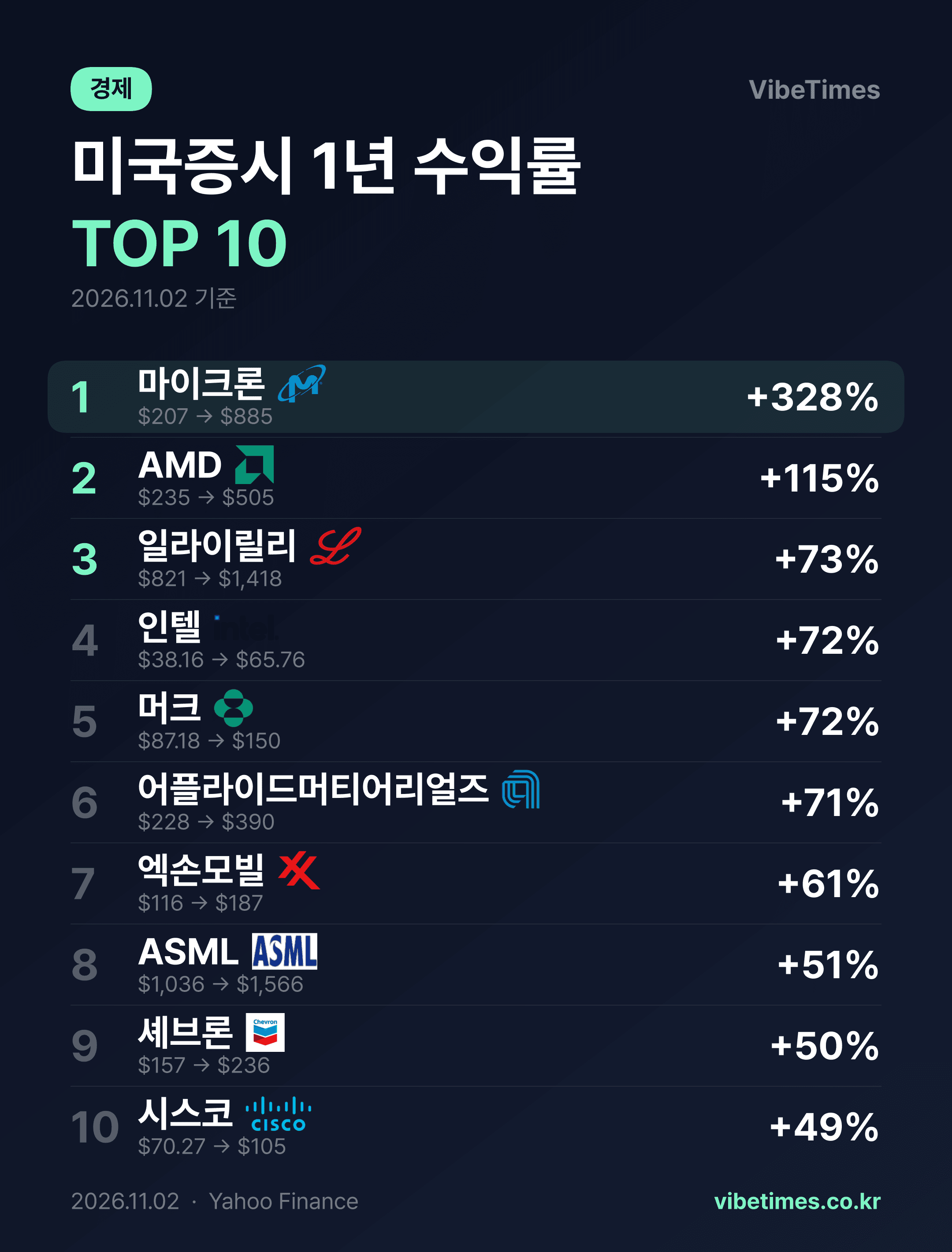
Micron has surged 328% in a single year, standing at the peak of U.S. large-cap stock returns.
The stock more than tripled from $207 to $885, pushing its market capitalization to $1.06 trillion. AMD, which ranked second over the same period, gained just 114.8% — leaving a gap of more than 200 percentage points. A single semiconductor stock has effectively redrawn the entire large-cap leaderboard.
Semiconductors and Pharma Lead the Pack
The top 10 by returns reveal a clear pattern. First, semiconductors. Five stocks made the list: Micron, along with AMD (114.8%), Intel (72.3%), Applied Materials (70.7%), and ASML (51.1%). The entire semiconductor value chain — memory, design, foundry, and equipment — rallied broadly. Intel's 72.3% climb is especially significant: the stock jumped from $38.16 to $65.76, showing that a beaten-down stock's rebound carried it into the top ranks.
Pharma flexed its muscle as well. Eli Lilly rose 72.7%, boasting the largest market cap on the list at $1.22 trillion. Merck also gained 71.5%, reaching a market cap of $361 billion. The fact that both drugmakers posted returns of around 70% is seen less as the result of a single blockbuster drug and more as a product of the market's sustained re-rating of major themes such as obesity and cancer treatments.
What the Crowded 70% Club Tells Us
The most striking part of the leaderboard runs from third to sixth place: Eli Lilly at 72.7%, Intel at 72.3%, Merck at 71.5%, and Applied Materials at 70.7%. The four stocks' returns are packed within a mere 2 percentage points. This signals that the market is being supported not by a single stock's runaway run, but by a broad rally cutting across sectors.
Energy and infrastructure were not left out. ExxonMobil rose 61.5%, securing a market cap of $753.7 billion, while Chevron climbed 50.4%. Cisco claimed the final spot in the top 10 with a 48.7% return — a large cap of $428.1 billion rising nearly 50% points to a revival of buying appetite for traditional value stocks.
The Question Micron's 328% Leaves Behind
The gap between first and second place, however, is anything but natural: 328% versus 114.8%. That difference directly reflects the intensity of the memory chip boom. As high-bandwidth memory demand exploded on the back of AI data center investment, Micron's returns have pulled away from its peers — and the market as a whole — to an incomparable degree. But a near fourfold rise in the stock also means expectations have risen just as high. If expectations for memory price increases slip even slightly, the downside could be just as steep.
From an investment standpoint, two takeaways stand out. First, the fact that semiconductors, pharmaceuticals, and energy all rose more than 50% simultaneously suggests market capital has spread across multiple sectors rather than piling into a single theme. Second, stocks like Micron and Intel — viewed as undervalued a year ago — reaped the biggest gains, showing that expected returns grow when a value thesis coincides with a semiconductor cycle.
The key question ahead is sustainability. Whether this leaderboard, based on early November 2026, holds into next year will depend on memory supply conditions, the earnings of big pharma's key products, and energy price trends. With half of the top 10 being semiconductor or semiconductor equipment names, the direction of the AI investment cycle is expected to determine the direction of this leaderboard.
