Nov. 2 Legislative Report: Min Kyung-woo on Two Fronts

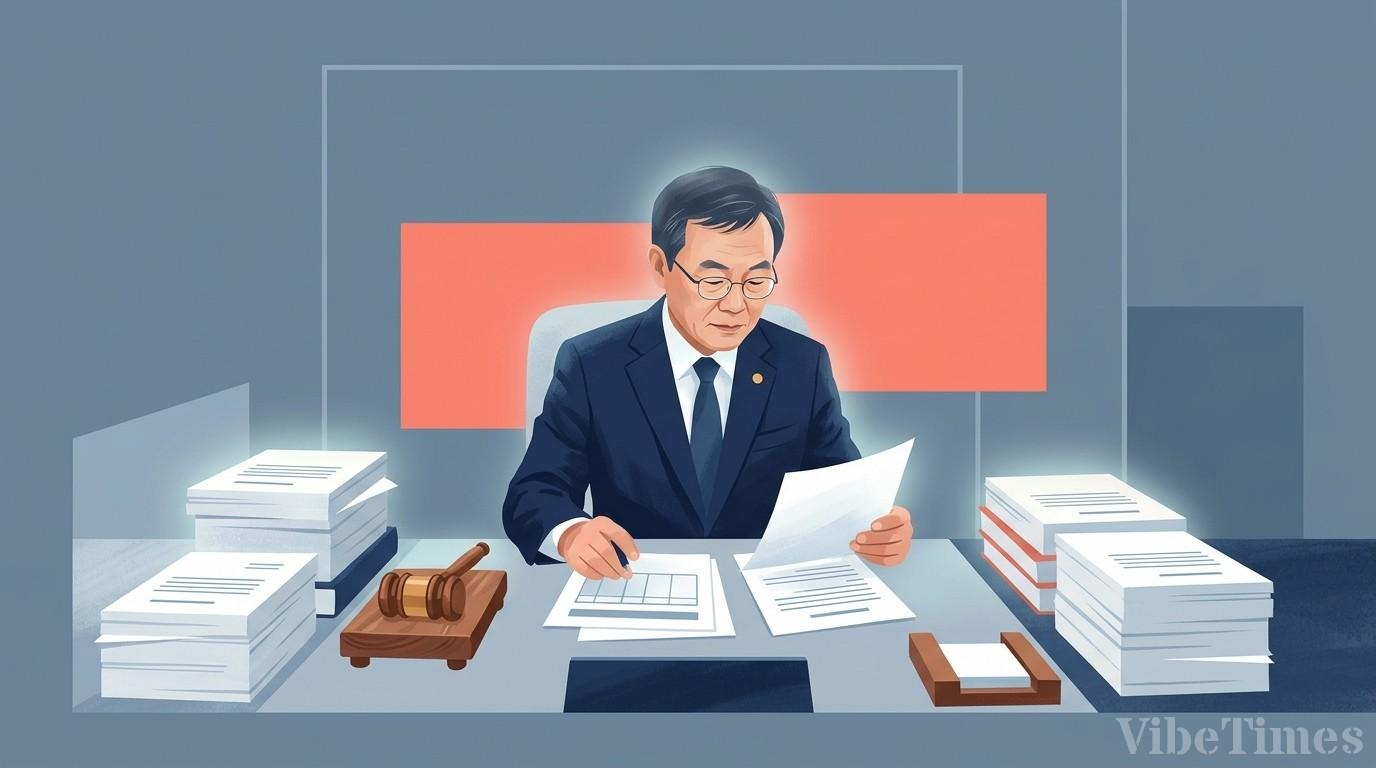
People Power Party Rep. Min Kyung-woo is fighting on two fronts at once: the review of the 821 trillion won budget bill and the scrutiny of education legislation.
According to the Open National Assembly Information system, Rep. Min has been assigned to both the Special Committee on Budget and Accounts and the Education Committee in the 22nd National Assembly. Reps. Ju Jae-hyun, Jo Mi-hyang, and Yun Bok-in of the Rebuilding Korea Party share the same dual-committee structure. Now that the National Assembly audit has ended, the weight of these assignments has changed, as the Assembly's stage has shifted rapidly from oversight to legislation and the budget.
The Budget and Legislative Battle Unfolds After the Audit
According to Yonhap News, the battle lines between the ruling and opposition parties have moved from the Assembly audit to a war over legislation and the budget. The government's budget bill for next year, submitted to the Assembly, totals 821 trillion won in spending (820.9 trillion won per Yonhap), a 12.8% increase over this year's 727.9 trillion won main budget and the largest in history, with the growth rate also at a record high. President Lee Jae-myung is expected to explain the budget's direction and urge swift deliberation in his policy address to the Assembly on the 2nd.
The sticking point is clear: the creation of a 162 trillion won Future Response Fund. Partisan sparring over how the fund will be used and operated is all but assured, which makes Rep. Min's role as a member of the Special Committee on Budget and Accounts all the more significant. Meanwhile, a Board of Audit and Inspection audit confirmed revenue shortfalls averaging more than 50 trillion won per year over the past four years, prompting a bill to require disclosure of the basis for revenue forecasts — a case of demands for budget transparency flowing into legislation.
Education Committee Bill Reviews and the Political Neutrality Issue
Activity in the Education Committee is anything but quiet. After the Supreme Court ruled that a teacher on leave serving concurrently as a National Assembly aide undermines the political neutrality of education, legislative discussions on the boundary between the teaching profession and political activity are likely to gain momentum. Education Committee members face follow-up bill reviews on teachers' status and political neutrality.
Rebuilding Korea Party members on the same committee are making their presence felt by sponsoring numerous bills. The Democratic Party, the majority party, plans to control the pace of legislation through a so-called salami strategy of processing a small number of bills at each plenary session. As a member of the opposing party, Rep. Min faces a growing burden of having to mount counterarguments at every turn in education legislation.
Cross-Party Votes Expose Fissures Within Both Parties
The results of the Oct. 1 plenary votes reveal fractures within both parties. On the revision of the Act on the Special Account for Rural Development, the Democratic Party recorded 86 votes in favor and 16 against, with 16 lawmakers — including Moon Dae-rim, Park Jung-hyun, Jung Chung-rae, Jin Sung-joon, and Min Hong-chul — breaking ranks, indicating considerable dissent even within the ruling party over the rural finance restructuring.
The rift runs even wider in the People Power Party. In an alternative vote on the Emergency Medical Services Act, the party voted 14 in favor and 10 against, with 10 members defecting; Reps. Kim Tae-kyu, Lee Jong-bae, Yoo Young-ha, and Park Chung-kwon were among those on the opposing side. On the rural development special account bill, only 4 members voted in favor, with Reps. Kim Yong-tae, Kwon Young-se, and Lee Man-hee among 4 who voted against the party line. On the broadcasting law revision and the eco-friendly agriculture bill alternatives, 3 members each broke ranks. Notably, the list of defectors changes with each vote — not a fixed opposition bloc, but shifting alliances depending on the subject of each bill.
Outlook and Investment Implications
A head-to-head confrontation between the ruling and opposition parties is expected to continue through year's end. The Democratic Party has said it will process the plan for a parliamentary investigation of Supreme Court Chief Justice Jo Hee-de at a plenary session as early as the 12th, and the People Power Party is pushing back, calling it "crude political violence." The wrangling over the investigation, entangled with the budget review schedule, is deepening political uncertainty.
The direction of the budget sends direct signals to industries. Key examples include expanded national funding for fire services, public housing supply, the mandatory disclosure-based tender offer under review in capital markets, and a bill sponsored by Rep. Ahn Do-geol to establish the Southwestern Region Investment Corporation with 5 trillion won in capital. Rep. Ahn emphasized a structure in which the state, policy financial institutions, and local governments jointly invest and returns are shared with local communities. As funding flows toward construction, disaster prevention, regional development, and capital market institutions, the process of deciding how to deploy the 162 trillion won fund is set to be a variable that shapes the landscape of contracts in related sectors.
As the old adage about the era of legislative dominance of power goes, those who write the laws decide the direction of resources. The 821 trillion won in spending, the 162 trillion won fund, and the fate of the votes that break from party lines will determine that direction. The two committees on which Rep. Min Kyung-woo sits are precisely where those decisions will be made.
