Negative Ratings Overtake President Lee Jae-myung's Approval, Hitting 50%

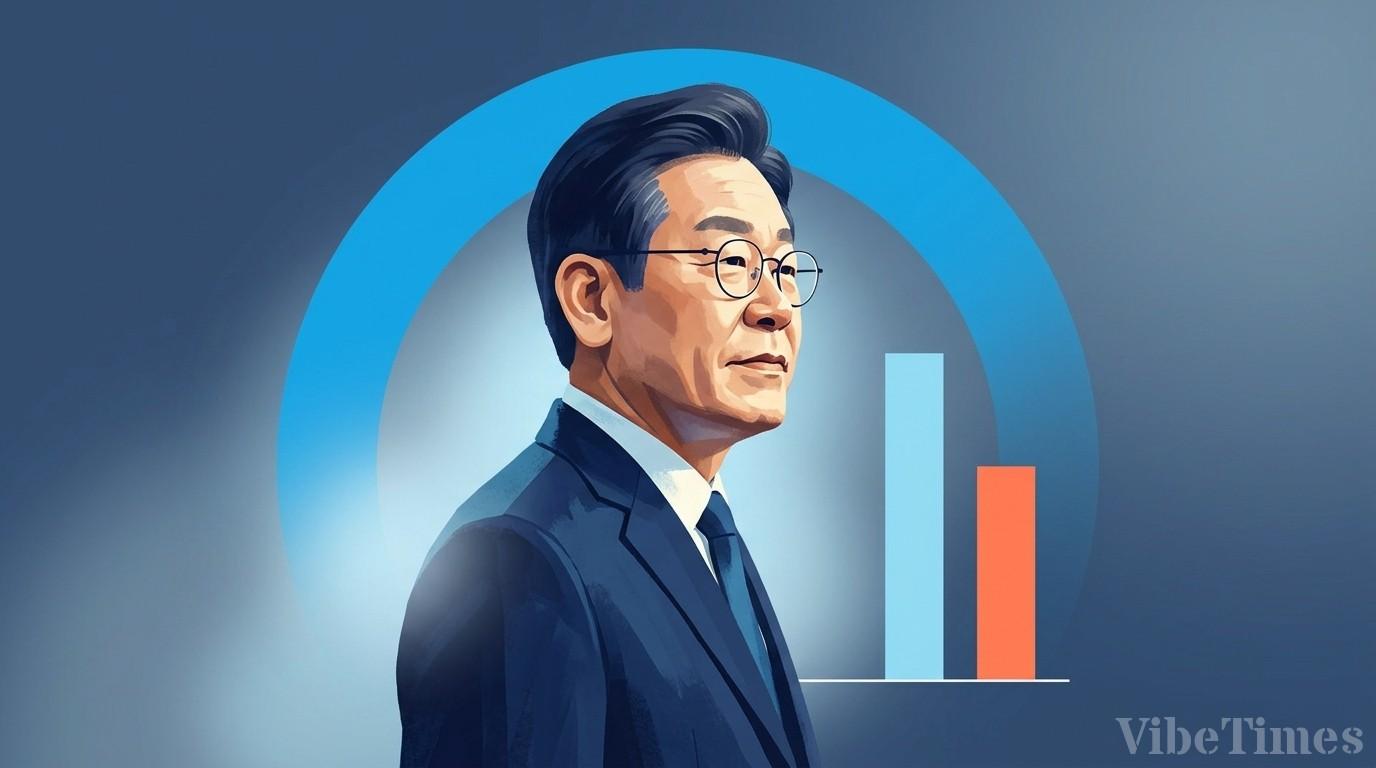
Negative responses have overtaken positive ones for the first time in job performance ratings for President Lee Jae-myung.
A composite of various opinion polls shows positive evaluations of the president at 41% and negative evaluations at 50%. The approval curve, which started high in the early days of his presidency, has bent downward after passing the six-month mark. With the 9-point turnaround exceeding the margin of error, it is difficult to dismiss it as mere polling variance. This reversal, coming as the administration approaches mid-term, is being read as a signal of voter judgment on the Lee Jae-myung government's approach to governing.
Factors Driving Up Negative Ratings
A complex set of factors lies behind the drop in job approval. The first is the controversy over the special counsel act to investigate fabricated investigations and prosecutions. As the People Power Party claims that 6 of the 12 items targeted for special counsel probes relate to cases involving the president himself, pressing a "self-pardon" offensive, the extreme standoff between the ruling and opposition parties has consumed the political landscape. Shaking within the presidential office has continued as well. With the replacement of the senior secretary for political affairs at the presidential office, followed by the resignation offer from National Situation Room chief Kim Jung-woo and the designation of Kim Tae-geum as his successor, early personnel instability has raised questions about governing capacity, analysts say.
Economic perceptions are also dragging the president down. At a Cabinet meeting on the 3rd, Lee directly acknowledged the real estate downturn, citing an increase in Seoul apartment listings, declining transaction volumes, and falling actual transaction prices in major areas. With the economy worsening in the eyes of middle-aged voters and small business owners—key segments of his support base—there is a strong possibility that the shift in public sentiment has accelerated. Declines in asset prices, including apartment values, sting far more now than in the early days of the administration.
The 42% Wall and the Opposition's Offensive
Looking at the political landscape, the 50% negative rating feeds directly into the opposition's offensive. People Power Party leader Jang Dong-hyuk has openly floated impeachment, and on the 7th, supporters rallied at a "National Denunciation Rally Against the Malicious Law Cancelling Lee Jae-myung's Trial" in front of Gyeongbokgung Station in Seoul. However, the general analysis is that while the impeachment push may be effective in consolidating conservative supporters, it is unlikely to expand into the middle ground. Rather, the opposition's excessive offensive could provoke pro-government supporters, limiting the decline in approval ratings.
What deserves attention is the message the president himself is sending. Warning against blind faith and extremism, he said, "Offer praise, but not adulation; give support, but not worship," and reiterated on X (formerly Twitter) on the 7th that "politicians need both praise and criticism, but this must not extend to religious adoration or worship." The remarks are interpreted as reflecting his own diagnosis that the atmosphere of worship among his fervent supporters is fueling backlash from critics. His unconventional appointments—including the appointment of a non-prosecutor as head of the Financial Intelligence Service following Prosecutors' Association chief Seom Seong-ho as justice minister nominee—are also seen by some observers as moves aimed at reputation management.
Conditions and Outlook for an Approval Recovery
Two things will be key going forward. The first is whether the president will exercise his right to request reconsideration (veto) after the special counsel act is processed. Whether he wields or forgoes the veto will either intensify or ease the confrontation between the ruling and opposition parties. He faces a dilemma: exercising the veto invites criticism that he is protecting his own cases, while not exercising it raises the risk of losing his support base.
The other is the recovery of the felt economy. Accumulating visible achievements—such as the integration of SRT and KTX services, blocking privatization of the public sector, and a promised 20 trillion won in consolidated fiscal support for South Jeolla Province and Gwangju—could serve as a lever for turning public sentiment back. However, since opposition lawmakers like Bae Joon-young criticize expanded fiscal support for local governments as centralized budget management, the administration must balance concerns about "handouts" against substance.
The 50% negative rating is a signal that wavering middle-ground voters have shifted to the opposition. Socrates said that "the unexamined life is not worth living"; the same goes for unexamined approval ratings. On the crossroads the president himself has warned about—between "worship" and "rational judgment"—voters' answer is already written on the survey sheets. How both parties read this number will determine the political landscape for the remainder of his term, observers predict.