AI Investment Boom Emerges as a New Risk to the Global Economy

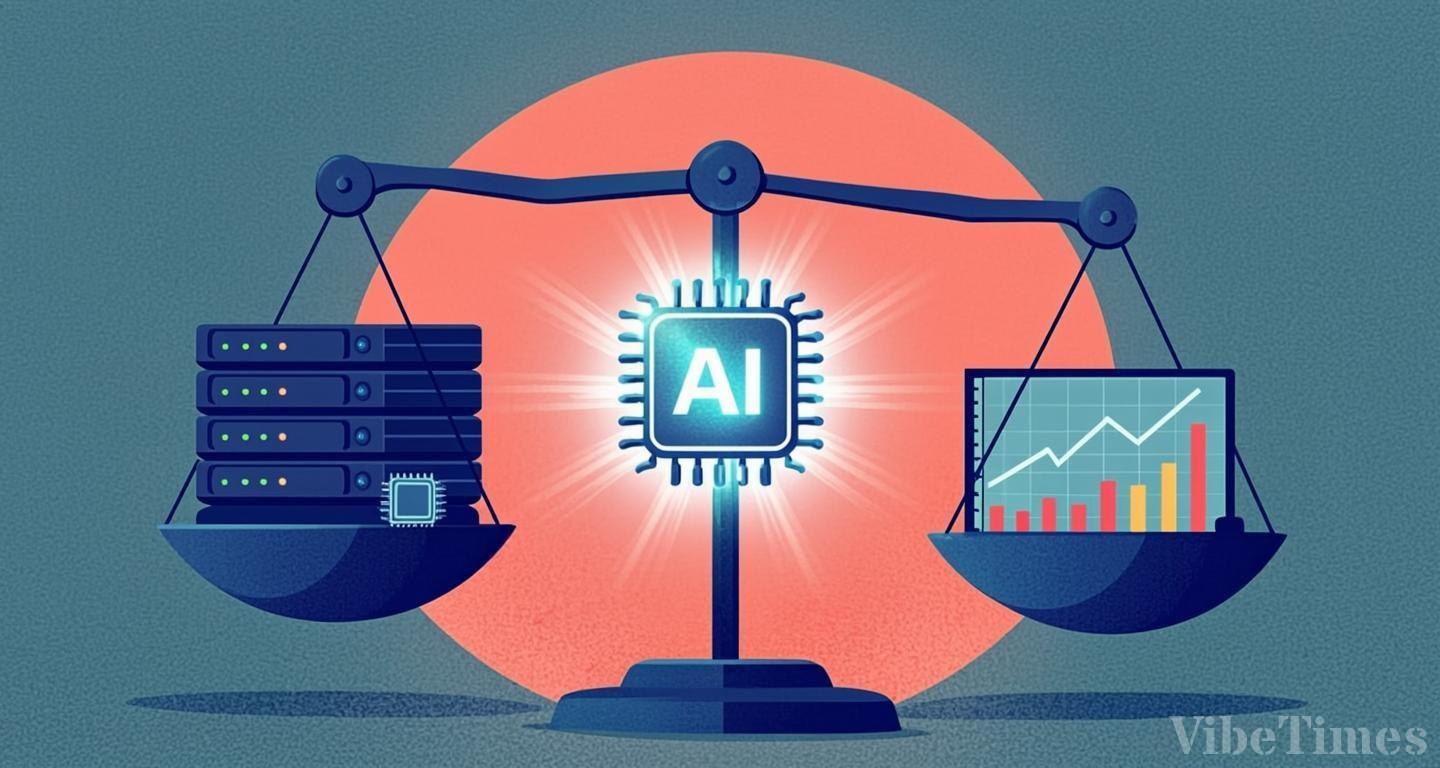
The world is pouring money into artificial intelligence (AI) facilities, bolstering trade and economic growth. But as economies become overly reliant on the AI industry alone, a new risk is growing: when the AI market wobbles, the entire economy wobbles with it. Economic research firm Capital Economics diagnosed this risk in a recent report.
According to foreign media coverage citing the report on Tuesday (local time), global trade this year is projected to post its strongest annual growth since the early 1990s. The key engine of the trade boom is US data center construction. As generative AI and large language models spread, demand for high-performance computing has surged, prompting US big tech companies to pour vast sums into building data centers and expanding server capacity. Asian countries such as South Korea, China, and Taiwan have benefited by expanding supplies of semiconductors, server racks, and related components.
South Korea's export statistics illustrate the trend clearly. In October, the country's total exports surged 93.7% year-on-year. Semiconductor exports soared 259.4%, driving the overall increase, while exports to China also grew 35% over the same period. Demand for high-performance semiconductors and server-related products needed for AI computing has lifted Asian manufacturers' results.
Capital Economics analyzed that up to 80% of the recent increase in global exports is concentrated in AI-related goods. The more export growth is concentrated in a single industry, the more the entire economy can be shaken the moment investment flows shift.
The collapse of the dot-com bubble is a real-world example of this vulnerability. According to Oxford Economics, US imports of IT-related equipment, as a share of GDP, peaked in mid-2000 and then fell 55% over two years. Exports from Asian countries supplying such equipment took a direct hit, and as world trade contracted sharply, global economic growth fell to 2% in 2001.
Financial markets are also growing wary of the AI investment boom. Experts warned that a slowdown in AI investment, if it coincided with other negative factors, could amplify the shock. Gaurav Ganguly, head of international economics at Moody's Analytics, warned that if an oil price shock, tariffs, and rate hikes were compounded by a plunge in AI-related stocks, it could lead to a global recession. Frederic Neumann, HSBC's chief Asia economist in Hong Kong, also noted that if the AI boom collapses, countries would have limited policy tools available to stave off recession.
AI infrastructure investment is also creating new demand in related industries, including power and cooling systems and data center construction. Still, the report's common conclusion is that if growth drivers remain excessively concentrated in a single industry and in US investment decisions, the shock when the boom ends will be that much greater.
