5-Year Test Ban for Cheating on Suneung With AI Glasses

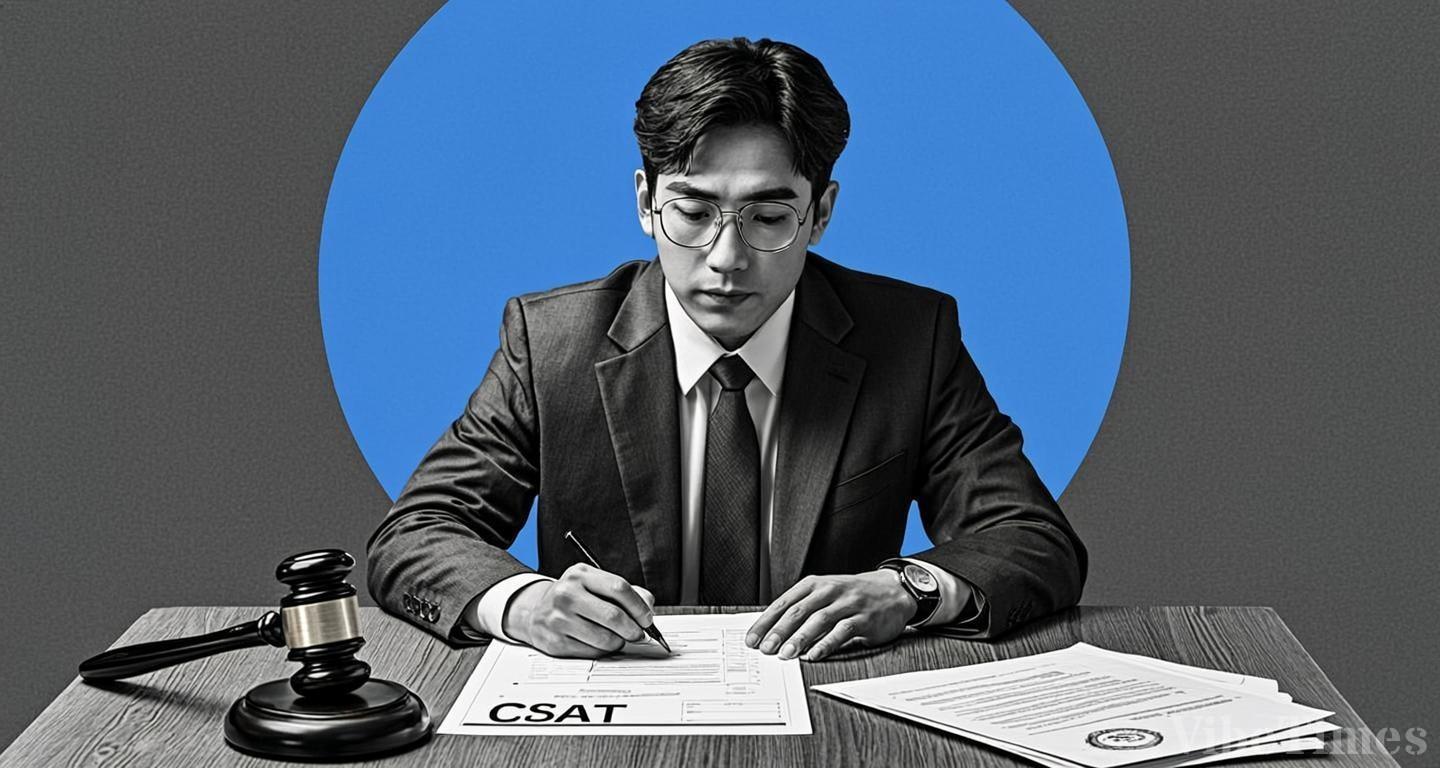
Students who use AI glasses to cheat on the College Scholastic Ability Test (Suneung) could be barred from sitting the exam again for up to five years.
Rep. Kim Moon-soo of the Democratic Party of Korea (Suncheon, Gwangyang, Gokseong and Gurye A, South Jeolla Province) submitted a bill to the National Assembly on the 17th to counter cheating on the college entrance exam using miniature AI devices. The bill would extend the period of disqualification to up to five years for those caught cheating with advanced devices such as AI smart glasses, and require colleges to share records of cheating incidents. The legislative response comes as public concern over test security has grown just two days before this year's exam.
Why AI Glasses Are a Problem Now
AI smart glasses are equipped with cameras and voice recognition but are nearly indistinguishable from ordinary glasses in appearance, making them virtually impossible to identify by eye. The core of the problem is this difficulty of detection: when the wearer reads a question aloud, the AI can compute the answer and deliver it via audio or on-screen text, rendering the current monitoring system—centered on banning smartphones—ineffective.
Under the current Enforcement Decree of the Elementary and Secondary Education Act, those caught cheating on the Suneung face restrictions on their eligibility to retake the test, but the rules do not specifically address the risks posed by AI devices. As case law and administrative practice have failed to keep pace with technological change, disputes over the consistency of penalties have repeatedly arisen. Kim's bill aims to fill this regulatory gap.
Key Provisions of the Bill
The bill rests on two pillars. First, anyone caught cheating with AI smart glasses or similar devices would be barred from taking the college entrance exam for up to five years—a severe penalty that would eliminate opportunities spanning multiple retake cycles and dramatically raise the cost of cheating.
The second is inter-university sharing of cheating records. It has been pointed out that information on exam eligibility restrictions is not currently systematically linked across college admissions. If record-sharing is codified into law, prior cheating offenses could also be factored into transfer admissions and universities' own entrance exams. In effect, a single violation would follow a student through the entire admissions process rather than being confined to one test.
The same day, Democratic Party leader Kim Min-seok also announced plans to push legislation imposing a ban of up to 10 years on test eligibility for those caught using AI to cheat. With the ruling party's leadership and its members competing to propose stiffer penalties, the restriction period is likely to be adjusted during the bill review process.
The Debate and Points of Contention
While broad consensus exists on tougher penalties, critics question their effectiveness and balance. Detection itself is a major hurdle: given that AI glasses are hard to distinguish visually, physical inspections alone may not confirm whether they have been brought into the exam hall. No matter how severe the penalty, it loses meaning if cheaters cannot be caught, critics argue.
Education experts say prevention-focused measures—such as explicitly listing prohibited items and tightening entry procedures at test sites—should accompany the new sanctions. Legal questions also remain over whether a five-year ban is proportionate compared to penalties for ordinary cheating. On the other hand, many contend strong sanctions are warranted, arguing that a breakdown in admissions fairness would harm all students who prepared earnestly.
Legislative Process and Outlook
The bill will be referred to the National Assembly's Education Committee for review. With several similar bills already submitted within the ruling party, a consolidated version is expected to be drafted before passing through the Legislation and Judiciary Committee and moving to a plenary session. Given that admissions fairness is an issue with little partisan divide, swift passage is possible.
However, with Kim Min-seok's 10-year proposal and Rep. Kim's five-year bill coexisting, negotiations will be needed to settle the level of sanctions. As the bills were introduced just ahead of this exam, a realistic scenario is for the system to be finalized before the next exam season. Observers say the law will only prove effective if backed by practical measures such as device-scanning technology and sufficient proctors.
