South Korea Braces for Promulgation of Special Counsel Law Over W38 Billion Fabricated Indictments

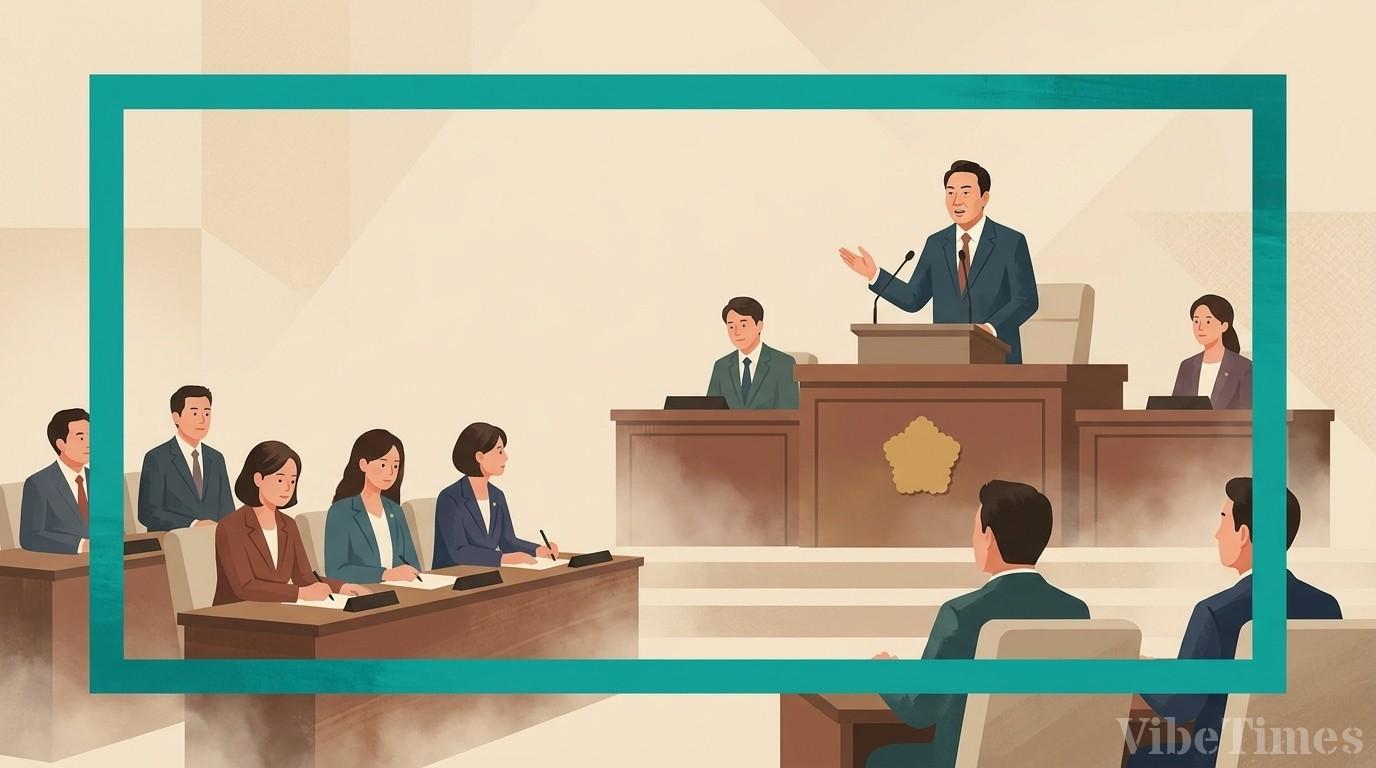
A 38 billion won 'special counsel for oneself' is awaiting President Lee Jae-myung's signature.
Cabinet Approval, Only Promulgation Remains
At the State Council meeting chaired by Prime Minister Han Sung-sook on the 17th, the government approved the promulgation of the 'Act on the Appointment of a Special Prosecutor to Investigate Allegations of Fabricated Investigations and Fabricated Indictments by State Institutions Such as the Prosecution Service, National Intelligence Service, and Board of Audit and Inspection Under the Yoon Suk-yeol Administration,' commonly known as the fabricated indictment special counsel law. All that remains is President Lee Jae-myung's final approval and promulgation. Critics on the other side argue that, since the ruling Democratic Party explicitly named cases involving President Lee as core targets of the investigation, the law effectively creates a mechanism for the president to handle his own legal troubles.
The scale is also unprecedented. More than 38 billion won will be funneled into the special counsel team—the largest budget of the seven special counsels appointed since the launch of the Lee Jae-myung administration. Special counsels typically operate on a months-long deadline, but a budget of this size suggests a substantially large organization and investigative scope. The institutions under investigation—prosecutors, the National Intelligence Service, and the Board of Audit and Inspection—cover nearly the entire apparatus that previously held investigative and audit authority.
'Jailbreak Law' vs. 'Truth-Finding': A Confrontational Standoff
The main opposition People Power Party is fiercely resisting, dubbing the bill the 'Lee Jae-myung Jailbreak Law.' Its core objection: the ruling party has placed the president's personal cases under special counsel investigation with the aim of effectively nullifying his indictments and trials. Opponents have even invoked the phrase 'constitutional coup,' rallying public opinion, while staging picket protests outside the National Assembly when the president visited. Resistance is unfolding beyond the chamber as well.
The Democratic Party's logic differs. Completing the rule of law, it argues, means exposing the truth behind allegations that state institutions under the previous administration manipulated investigations to target a specific individual. In fact, the impeachment grounds cited against Chief Justice Jo Hee-de— including the remand ruling in a case involving Lee as a candidate and the refusal to re-nominate a Supreme Court justice—show how conflict with the judiciary has become structural. All three branches—executive, legislative, and judicial—are now entangled at once.
When the body tasked with uncovering the truth of an investigation becomes the same body handling the suspect's own trial, what the public sees is not the truth but a calculation of political gain and loss.
Political Shockwaves and the Road Ahead
Once the law is promulgated, the next steps are selecting the special counsel candidate and launching the investigation. If the special counsel finds evidence of fabrication in cases involving President Lee, his trials themselves could be shaken; if not, the opposition could seize on that as proof of 'politicization.' Either way, the outcome is likely to become a major variable in the 2027 political landscape.
Cracks within the ruling party are also worth watching. Even inside the Democratic Party, remarks have surfaced suggesting that President Lee once opposed the impeachment of former President Yoon Suk-yeol and sought cooperation with then-Prime Minister Han Duck-soo, sparking a battle of interpretations over his right-leaning tendencies. The special counsel gambit could again expose the temperature gap between the party's 'moderate' faction and its hardline base.
The opposition has also signaled moves such as legislation to invalidate the withdrawal of indictments and constitutional petitions. Promulgation is not the end but the beginning; over the coming months, as the special counsel's investigation gets underway, the intensity of ruling-opposition confrontation is expected to escalate further.