November 20 Procurement Market Report: One Contract Each for 80 Companies

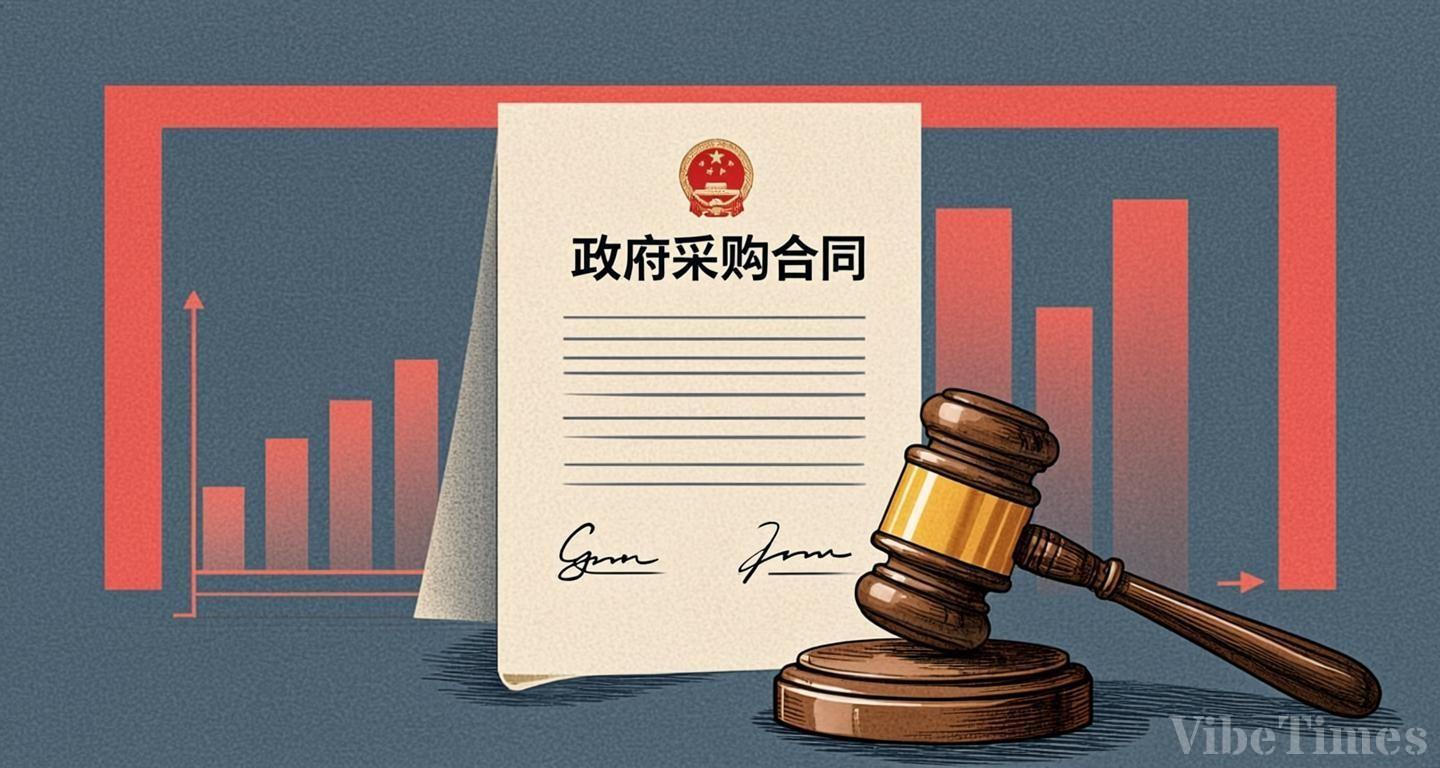
80 Companies, 80 Contracts: The Fragmented Landscape of the Government Procurement Market
The keyword running through 80 government procurement records is 'dispersion.' Each of the 80 companies surveyed holds just a single procurement contract—a structure far removed from the pattern of a few large winners dominating the market. As Conan Doyle said, "There is nothing more deceptive than an obvious fact." Behind this seemingly simple one-company-one-contract structure lies another layer: gaps across industry sectors.
Filtering the list by sector paints a different picture. Environmental and forestry companies such as Daehun Environment, Daekyung Forest Development, and Yuhan Company Forest Resource Development stand out, as do design and engineering firms like Hanin Architects, Hanbit Engineering Architects, and Acestone Engineering. Also included are maintenance equipment companies like Samjeong Elevator and surveying and geospatial information firms like Geumgang Geoinformation. In other words, while the number of contracts is evenly spread at one apiece, the distribution tilts toward infrastructure maintenance and technical services.
Key Analysis: The Structure of New Entrants and Niche Markets
The fact that each company's record consists of a single contract allows for two interpretations. The first is that these may be operators newly entering the government procurement market or participating irregularly. The second is that the structure reflects the dispersed awarding of small-scale sole-source and limited-competition contracts commissioned by local governments and public institutions, rather than large-scale bulk contracts centered on the Public Procurement Service. Indeed, forest management, environmental cleanup, architectural firms, and elevator maintenance are all fields where regional-level contracts are common.
What stands out is the inclusion of insurance, platform, and distribution companies. Kyobo Lifeplanet Life Insurance is interpreted as marking the entry of digital insurance products into the public sector, while Myshoponshop and Interz are seen as securing procurement contracts in commerce and platform domains. This is evidence that government procurement demand is expanding from traditional civil engineering, construction, and services into finance and digital services. Safety and technology service providers such as Innovation Safety Technology and Wyble also made the list.
Market Impact: From Conglomerate Dominance to Diversity
This landscape reads as a favorable signal for small and mid-sized companies. A structure where 80 companies each take one contract means lower barriers to entry than markets where a single operator sweeps up successive orders. The fact that relatively lesser-known operators like GNB Planning and Neulpoom E&C—not Narae Knowledge Information—appeared on the list shows that the procurement market's door remains open to small specialized firms.
That said, from the perspective of the gap between winning bids, challenges remain. Given a market characterized by wide variation in per-contract size and sector-specific unit prices, even with an even distribution of contract counts, the gap in contract values between the design and engineering sector and the simple services sector was likely substantial. Environmental and forestry sectors see frequent contracts but at small individual scale, while architectural firms and surveying firms command higher technical rates.
Outlook: A Reshaping Driven by Maintenance Demand
The coming trend appears set to follow a clear direction. As aging infrastructure accumulates, demand for 'management rather than removal'—maintenance, safety inspections, and forest management—is expected to expand structurally. The sector distribution seen in the procurement data already reflects this direction.
Entry by digital and financial players is also likely to grow. With confirmed cases of insurers and platform companies winning public contracts, the scope of private outsourcing for public services is expected to widen, making procurement participation by such non-traditional sectors more frequent. Ultimately, the government procurement market is projected to be reshaped not as an arena dominated by a select few, but as an arena of diversity where companies like these 80 each come looking for their own share. This is a market where entering the contest itself carries meaning more than deciding winners and losers—that is the landscape this data reveals.