Democrats' Merit Act for Pro-Democracy Activists Passes National Assembly Again, Overriding Yoon Suk Yeol's Veto

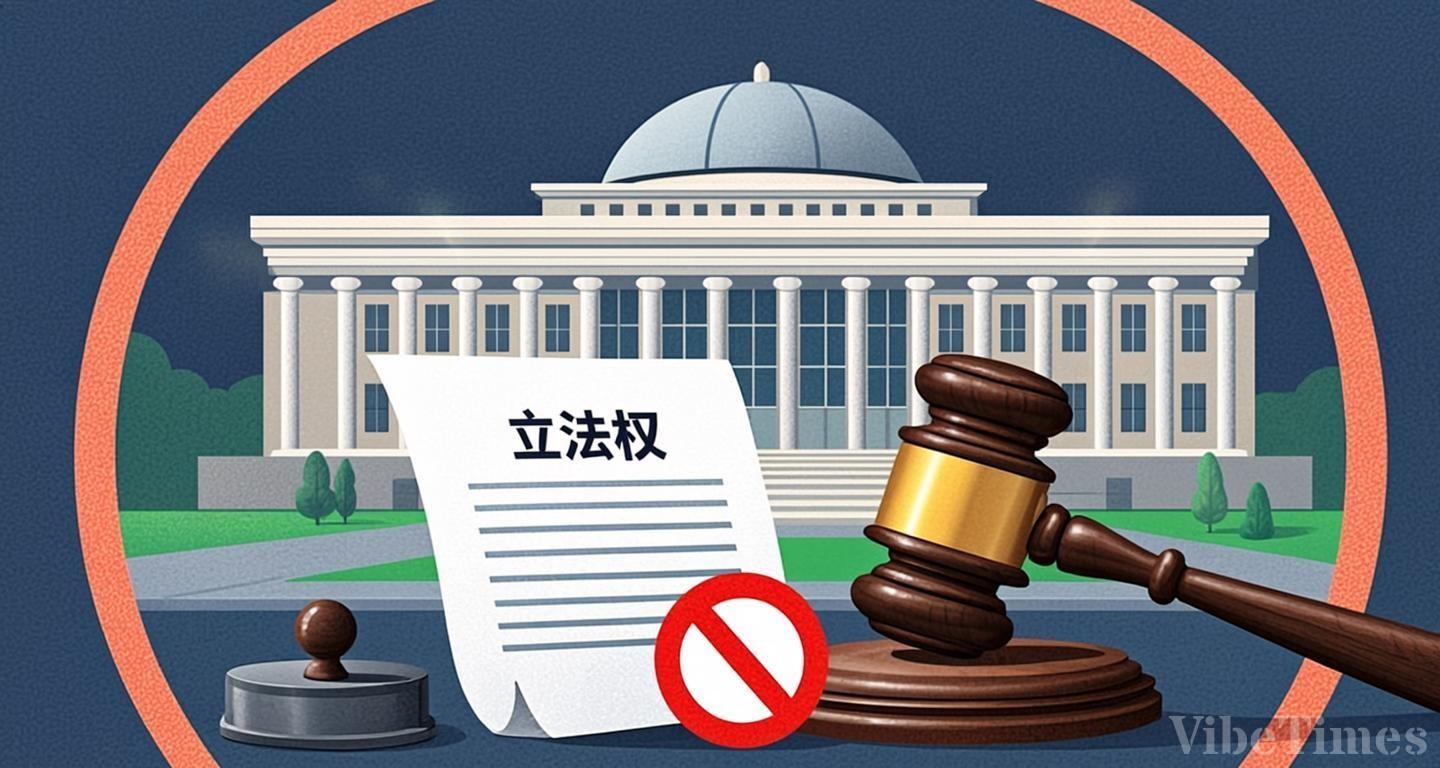
Former President Yoon Suk Yeol's veto power was effectively neutralized at the National Assembly for the first time in about two years.
The Act on Honoring Pro-Democracy Activists, which establishes the basis for state-level recognition and support for those who contributed to the democratization movement and their bereaved families, passed the National Assembly plenary session, led by the Democratic Party of Korea. The bill had previously been stalled after former President Yoon exercised his veto. Having exceeded the quorum required for re-deliberation, the legislation is now effectively confirmed procedurally despite opposition objections.
Why It Became an Issue Again
The Act on Honoring Pro-Democracy Activists centers on honoring participants in past democratization movements, such as the May 18 Gwangju Democratization Movement, and their families who were not adequately compensated by the state. The legislative intent is to establish the legal basis for providing pensions, medical support, educational benefits, and other assistance to individuals officially recognized as pro-democracy honorees through state-level review.
However, after passing the National Assembly, the bill was left in limbo for more than two years when then-President Yoon Suk Yeol exercised his veto. To pass a bill that has been vetoed, a majority of all Assembly members must be present and at least two-thirds of those present must approve. The fact that this re-deliberation succeeded amid opposition objections is seen as the key significance of the passage.
Key Provisions and Scope of Application
Under the bill, a specialized body will be established to review and determine facts related to democratization activities, and a procedure will be put in place for the state to formally recognize deaths, injuries, imprisonment, and other harms suffered in the course of democratization efforts. Recognized pro-democracy honorees and their families will receive various forms of support through the Ministry of Patriots and Veterans Affairs and other channels. The legislation can be interpreted as confirming the state's minimal responsibility for the remaining lives of the now-aging participants.
The scope of application is expected to extend to participants in various democratization movements that took place during past military governments and the democratization process. The bill is structured as a transition to an integrated recognition system that also covers individuals who fell through the cracks despite receiving individual compensation under previous special laws.
Political Divide and Social Debate
The Democratic Party of Korea emphasized the bill's justification as overdue but necessary recognition for the generation that endured state violence and repression. In contrast, the People Power Party pushed back, calling it a "special privilege law for activists," pointing to structural problems in which benefits would be concentrated on particular generations and classes. Concerns over ensuring objectivity in compensation review criteria were also cited as grounds for opposition.
Within civil society, the fulfillment of state responsibility toward pro-democracy honorees is viewed as a given, while experts are expected to raise the point that follow-up implementation decrees guaranteeing the independence and fairness of the review body will be key.
Next Steps and Outlook
The bill takes effect upon publication in the official government gazette. Actual support programs can begin only after follow-up administrative procedures are carried out in sequence, including drafting enforcement decrees and rules and forming the review body. A considerable amount of time is likely to pass before the first reviews and first payments take place.
Politically, the passage is expected to influence the shape of legislative conflict between the ruling and opposition parties, as it marks one of the first cases where a blocked issue was resolved through re-deliberation to override a veto. Moreover, amid ongoing judicial-legislative clashes — including the promulgation of a special counsel law on prosecution fabrication and efforts to impeach Chief Justice Cho Hee-de — the possibility of further escalated tension among state institutions cannot be ruled out.
