Democratic Party to File Impeachment Motion Against Chief Justice Cho Hee-de on December 3

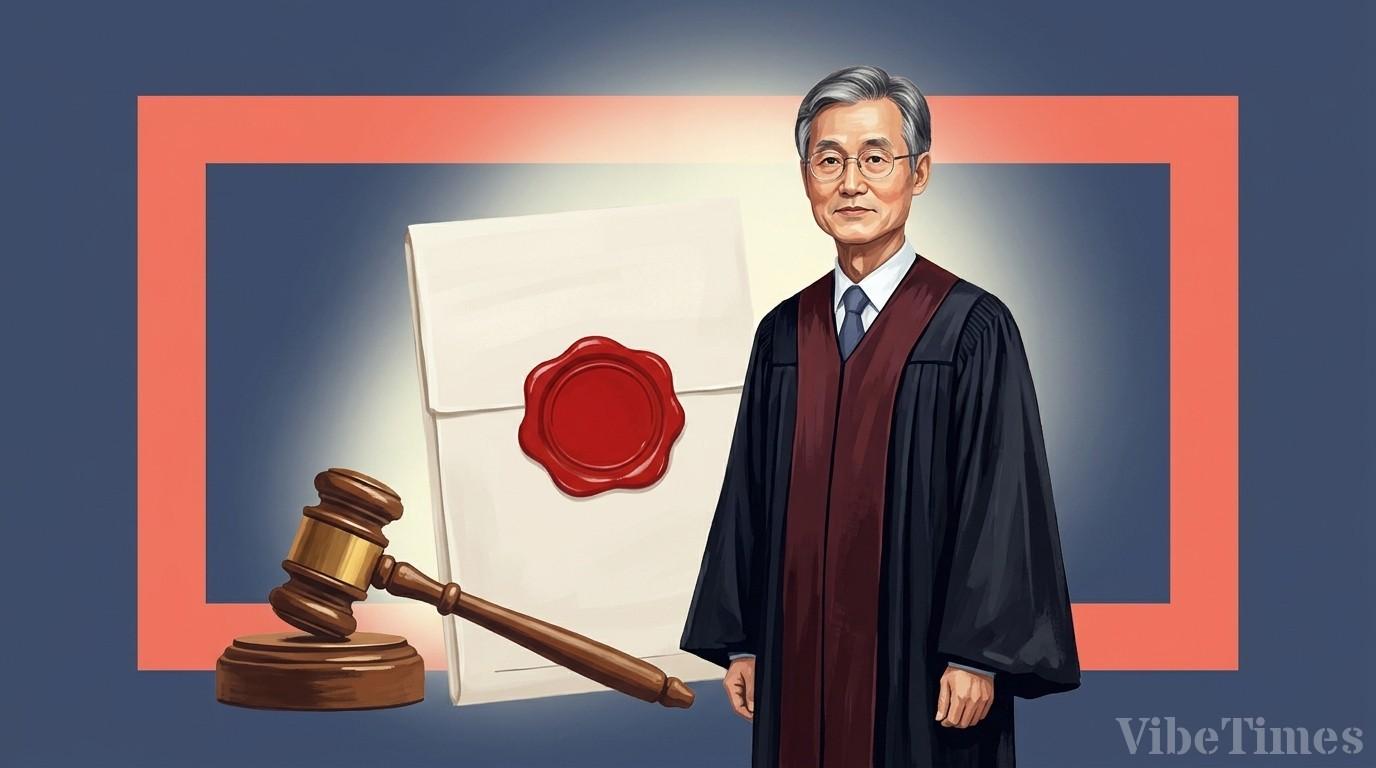
The Democratic Party has set December 3 as the date to file an impeachment motion against Chief Justice of the Supreme Court Cho Hee-de.
Democratic Party spokesperson Cho Kye-won said at a recent briefing that consensus has formed within the party to file the motion around the 'second anniversary of the December 3 insurrection.' According to Yonhap News, the prevailing plan within the party is to file the motion in early December and complete a National Assembly vote by year's end. On December 3, 2020, the former acting president declared martial law, threatening the constitutional order, and the ruling party seeks to make that date a symbolic starting point for its push to check the judiciary.
Impeachment Procedure and Legal Effects
An impeachment motion marks the start of the constitutional process for removing a public official. The bill is introduced in the National Assembly with the sponsorship of at least one-third of sitting members, and passage in a plenary session requires the approval of a majority of members. However, for the Chief Justice, the required quorum is higher than for ordinary ministers, set at two-thirds of sitting members.
If the motion passes the National Assembly, Chief Justice Cho would be immediately suspended from his duties. However, actual removal depends on a ruling by the Constitutional Court, making the Assembly vote and removal separate procedures. If the court dismisses the motion, the Chief Justice returns to his duties, and there are precedents in constitutional history of the court rejecting impeachment motions. The Democratic Party has already adopted the impeachment push as official party policy and entered the formal process.
Ruling-Opposition Clash and Political Fallout
The People Power Party is pushing back hard. At a large-scale outdoor rally in Daegu on the 21st, the party denounced the ruling party's railroading of a 'fabricated-indictment special counsel act,' the so-called 'surprise re-approval,' and the push to impeach Chief Justice Cho. The People Power Party characterized this string of moves as "treason" and condemned them repeatedly.
Reactions from the third-party landscape are also delicate. Rep. Lee Jun-seok of the Reform Party pointed out on Facebook on the night of the 19th that if the Chief Justice is impeached, the Seoul High Court would be forced to proceed with the remanded retrial of President Lee Jae-myung under the Public Official Election Act. He took issue with the timing itself, arguing that the Democratic Party was attempting to shut down the judiciary on the very day the constitutional order was threatened by martial law. This shows that even within the opposition camp there are those who view the impeachment push as not unrelated to the outcome of a specific trial.
Judicial Vacancy and Upcoming Schedule
A suspension of the Chief Justice's duties would lead to the most senior justice serving as acting chief. With various court administrative affairs and the role of head of the judiciary operating under an acting arrangement, concerns are being raised about possible delays in long-term judicial policy. In particular, procedures tied to the judiciary, such as the appointment of Constitutional Court justices, are also in play, leaving room for political friction.
In terms of schedule, the Democratic Party is expected to file the impeachment motion around December 3 and aim for a plenary vote by year's end. If the People Power Party resorts to physical obstruction such as occupying the chamber, even the agenda itself could become uncertain. Even if the vote passes, the Constitutional Court review remains as a final hurdle, meaning the ultimate outcome of the impeachment is likely to be decided sometime next year or later. As the standoff between the ruling and opposition parties intertwines with memories of the martial law episode, the political calendar surrounding the National Assembly in early December looks set to become even more intense.
