How to Build Routines That Create Structure When You Live Alone

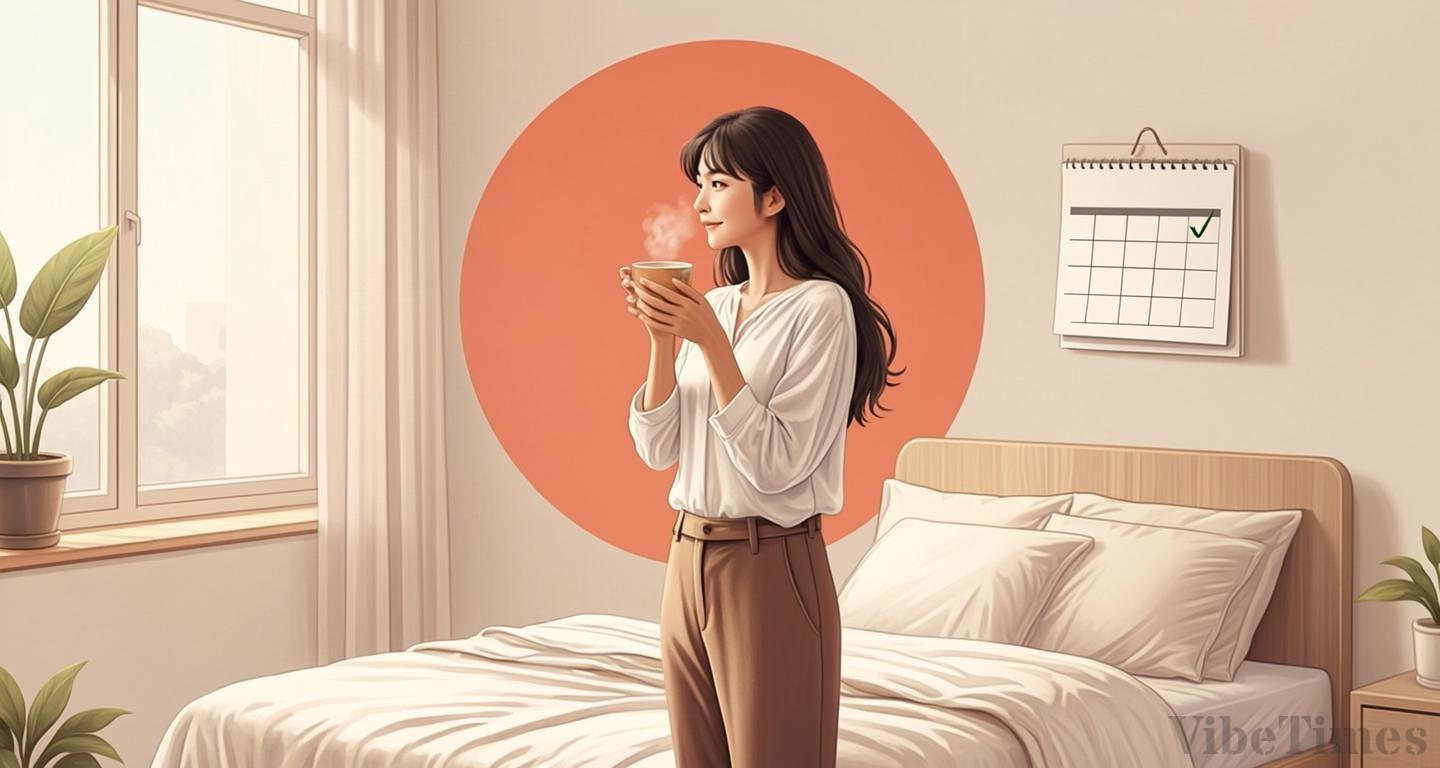
When life falls apart while living alone, the problem is not a lack of willpower but a lack of structure.
Experts share a clear diagnosis. In an environment where the gaze of housemates and the check-ins of family are gone, all discipline becomes a 'choice,' and choices collide with decision fatigue every time, leading to failure. The solution is not to steel your resolve, but to link cues, actions, and rewards into a single chain and redesign your environment itself.
First, Understand the Structural Reasons Life Falls Apart
An Environment Where No One Checks on You
When you live with someone, wake-up and meal times naturally align. The moment you live alone, this external control disappears, and a regular life becomes a task you must re-choose every single day. The moment a rule becomes a choice, its execution rate plummets.
The Trap of Choice Overload and Instant Gratification
What to eat, when to sleep, whether to exercise—dozens of decisions must be made alone each day. As decision fatigue accumulates, the brain slides toward the path of least resistance: delivery food, YouTube, and games. These temptations deliver instant rewards, while the rewards of a regular life—health and stability—arrive only weeks later. This asymmetry makes an irregular life the default.
Common Patterns of Collapse
The patterns that recur in actual single-person households are similar. Wake-up and bedtimes swing by two to four hours, skipped meals and late-night snacks increase, laundry piles up, and going out itself declines, causing physical activity to plummet. Evenings can vanish entirely into aimless smartphone use after work.
Why Routines Work
Rhythm Disruption Is a Mental Health Issue
According to social zeitgeber theory, proposed by Ehlers et al. in 1988, the disruption of daily rhythms is a factor that triggers depression and bipolar disorder relapse. Social rhythms are sustained through interactions with others, and living alone weakens them. A regular life is not a virtue—it is a line of defense for mental health. By Statistics Korea's count, single-person households number about 7.5 million, roughly 35% of all households, making them the most common household type. Routine design is no longer a minority preference—it is a survival strategy.
Habit Loops That Rely on Cues, Not Willpower
The habit loop, as articulated by Charles Duhigg, is a three-stage structure of cue, action, and reward. By linking an action to an environmental trigger rather than willpower, you can skip the decision-making process altogether. For example, a morning alarm becomes the cue for a glass of water and making the bed. As psychologist Skinner pointed out, with positive reinforcement, how you reinforce matters more than how much. The Harvard Study of Adult Development also identifies regular routines and social relationships as key variables in long-term health and happiness.
Four Steps to Design a Routine Starting Today
Step 1: Start with three fixed anchors
Trying to regulate your entire day leads to failure. As sleep experts recommend, fix your wake-up time before your bedtime. Anchor only three to five key points that form the skeleton of your day—waking at 7 a.m., eating around 8 a.m., turning off your phone at 11 p.m.—and the rest of your rhythm will naturally fall into place. On weekends, keep your wake-up time within an hour of your weekday schedule.
Step 2: Attach new habits to existing ones
Habit stacking means not launching new behaviors independently, but attaching them after actions you already do. The existing action serves as the cue: open the window for fresh air while brewing coffee, do 10 minutes of stretching after brushing your teeth, wash dishes immediately after dinner. This follows the same principle as BJ Fogg's Tiny Habits approach—the smaller you make a behavior, the higher its persistence.
Step 3: Use environmental design to put distance between you and temptation
Apply the principles of behavioral activation theory to your space. Keep workout clothes by the front door, choose a gym between home and work, don't buy snacks at all, and remove payment methods from delivery apps. Banish smartphones from the bedroom and keep the charger in the living room. The point is to increase friction for temptation and reduce friction for desired behaviors.
Step 4: Close the loop with small rewards
The reward in a habit loop must be immediate. Check off your checklist right after completing a routine, play your favorite music, or attach 10 minutes of free time before bed to reinforce the loop. Add a 10-minute weekly review on Sunday evening. Simply naming one thing that went well and one thing to fix is enough.
Relapse Management When Your Routine Breaks Down
Perfectionism is the real enemy
The biggest cause of routine collapse is not a single day's exception, but giving up after the exception. The thought that 'I've already blown it, so I'll start again tomorrow' creates gaps of days at a time. The key rule: never fail two days in a row. Even if you miss a day, restoring your three anchors the next day brings your rhythm back.
Recreate social timing as external commitments
Securing one or two externally bound schedules per week—regular meetups, study groups, workout partners, standing phone calls—significantly reduces the failure rate of personal routines. Assigning the same activity to the same day each week, like working out on Monday, Wednesday, and Friday, cleaning and laundry on Saturday, and grocery shopping on Sunday, also eliminates decision fatigue. For meals, a weekly grocery run on Sunday followed by simplification into two or three rotating menus is effective.
If you're choosing an approach, the lowest failure rate comes from combining anchor routines as the skeleton, environmental design as support, and light tracking as a check. Living your day fully begins not with grand resolutions, but with small fixed points like a glass of water and making the bed.