President Lee Jae-myung to personally chair the meeting of Korean heads of diplomatic missions

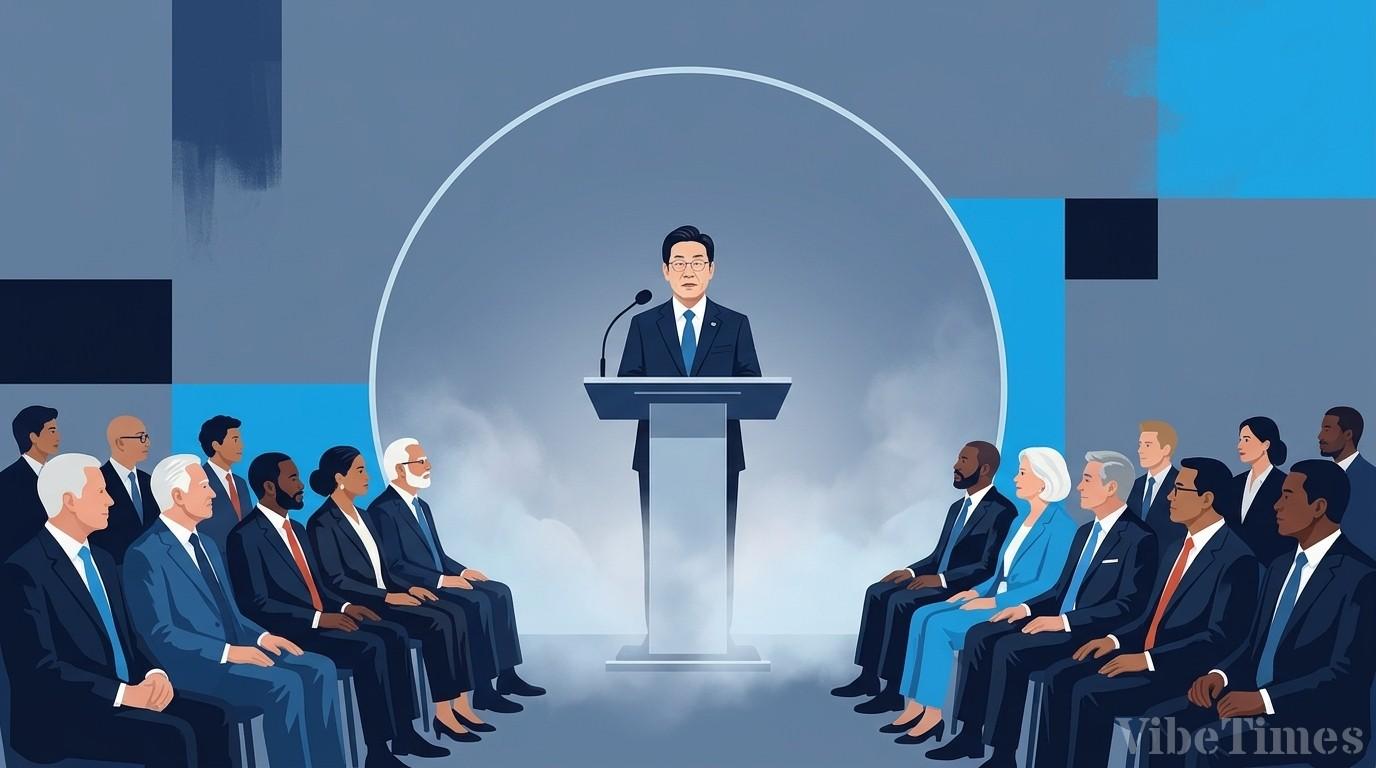
The first meeting of heads of Korean diplomatic missions to be chaired personally by President Lee Jae-myung will open next week. As it is the first worldwide gathering to coordinate diplomatic administration since the government took office, the president plans to go beyond a ceremonial opening address and oversee the entire proceedings, making the meeting a touchstone for reading the direction of Lee's diplomacy. The fact that a live broadcast of the meeting is under consideration is interpreted as the government's intent to show this event to the world.
A Signal of Entry into Full-Scale Diplomatic Mobilization
The meeting of heads of diplomatic missions brings ambassadors and consuls general from around the world home temporarily to coordinate diplomatic issues and strategies. By convention, it has often been led by the foreign minister, but President Lee has stepped forward to chair it himself. This is read as a sign of his intention to reorganize external cooperation work, previously scattered across the Prime Minister's Office and various ministries, around the presidential office.
President Lee has consistently prioritized 'economic diplomacy' in his overseas engagements. On January 6, he made a state visit to China, holding a dinner with Party Secretary Chen Jining in Shanghai to discuss economic and people-to-people exchange cooperation. With Nvidia CEO Jensen Huang, he discussed building AI infrastructure including physical AI, joint technology research, talent development, and startup support. His first meeting with Russian President Vladimir Putin also took place on the APEC stage. The meeting of diplomatic mission heads will serve as a channel connecting the achievements of this summit diplomacy to the practical work of missions in the field.
What the Live Broadcast Consideration Tells Us
The consideration of a live broadcast is assessed as more than a mere publicity strategy. The government intends to let the public hear directly from the diplomatic front lines, aiming for the effect of unfiltered disclosure of the actual situations reported by ambassadors amid shifting trade environments and trade pressure. Two goals—ensuring transparency and strengthening the public's foundation of support for diplomacy—overlap here.
What draws attention is the personnel picture. President Lee recently carried out a sweeping cabinet reshuffle, nominating Deputy Director of National Security Office Lim Woong-soon as foreign minister candidate, former Senior Presidential Secretary for Political Affairs Hong Ik-pyo as unification minister candidate, and Kang Geum-sil as nominee for director of the National Intelligence Service. As this first mission heads meeting opens just as the new diplomatic and unification line is being put in place, the direction of appointments for future missions to key countries is also expected to be gauged at this meeting.
A Schedule Intertwined with Domestic Politics
The timing of the meeting is also noteworthy. The domestic political atmosphere is one of deepening confrontation, with reports that Seoul Mayor Oh Se-hoon said he was denied a chance to speak about the special counsel and the Chief Justice's impeachment at a State Council meeting chaired by President Lee, and that the president banged the gavel three times and left the room. The ruling and opposition parties' battle over the impeachment motion against Chief Justice Cho Hee-de is tied to the National Assembly's December schedule. In this context, the president stepping directly onto the diplomatic stage can be interpreted as a calculated effort to manage external credibility during a period of domestic conflict.
Democratic Party leader Kim Min-seok proposed joint action with progressive opposition parties on the impeachment of Chief Justice Cho, calling for a "complete reckoning with the insurrection." This is understood as a move to broaden the alliance within the opposition bloc. The picture is one of a hard-hitting domestic political offensive and an all-out economic diplomacy campaign abroad proceeding simultaneously. Given that the Lee government's diplomatic achievements ultimately underpin its domestic support base, the two-track strategy is closely interlocked.
The meeting of heads of diplomatic missions is highly likely to become a regular event chaired by the president directly. As long as economic and technological diplomacy is set as the government's core task, there is ample incentive to maintain a system of direct command over missions in the field. Cooperation on AI infrastructure and trade issues with major countries are expected to be key agenda items, with the practical challenge of Korean diplomacy—striking balance between the United States and China—set to emerge concretely in the missions' reports.
Still, diplomatic achievements do not necessarily translate into domestic political gains. As the saying goes, success is momentary; what matters more than a single meeting is the follow-through. How the tasks derived from the meeting translate into concrete results at each embassy, and whether the candid reports from the diplomatic front lines made public through the live broadcast can win public empathy for diplomacy, will determine the success or failure of this government's diplomacy.