PM Han Duck-soo's office clashes with Seoul Mayor Oh Se-hun over request to speak at Cabinet meeting

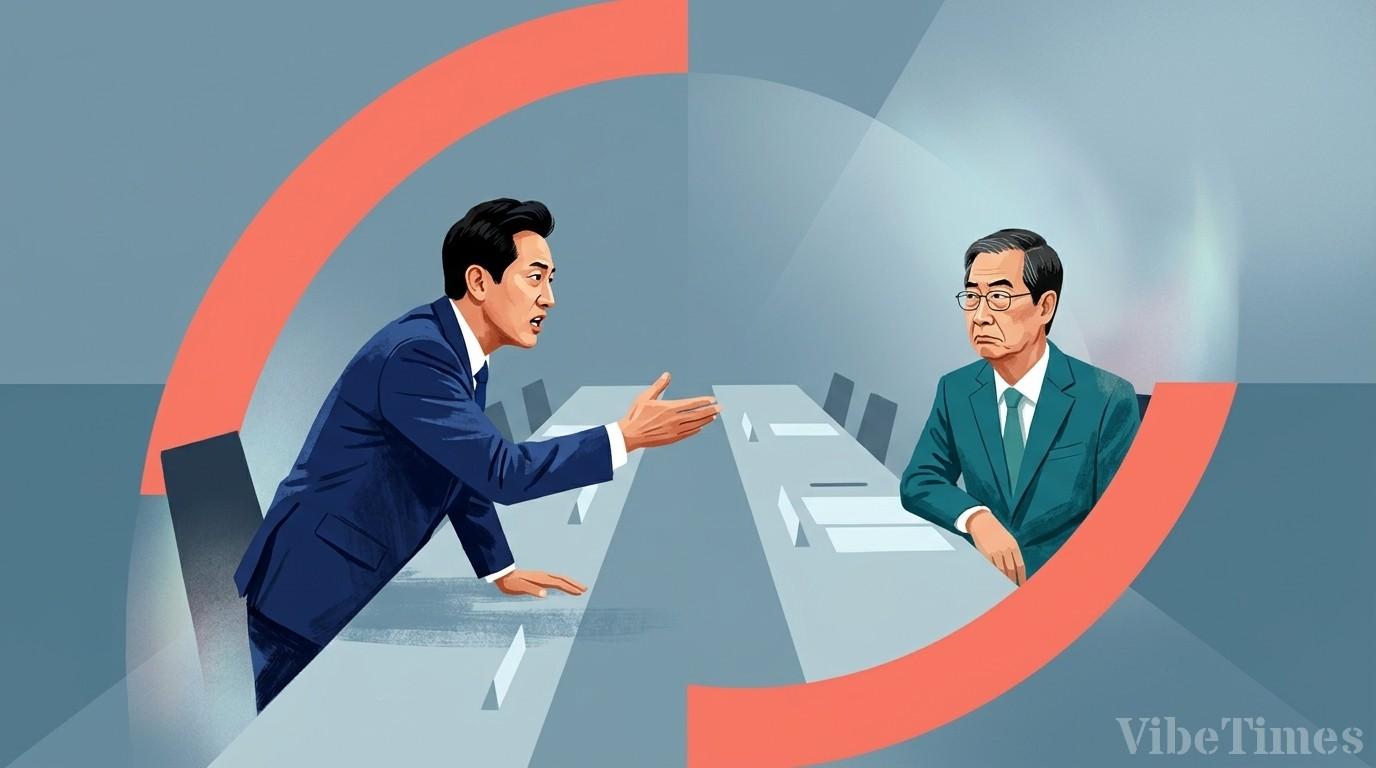
The government and ruling party clashed with the head of the Seoul metropolitan government inside the Cabinet meeting room over a chance to speak about the special prosecutor and impeachment.
Seoul Mayor Oh Se-hun said he requested a chance to speak at the Cabinet meeting on the 24th about the so-called 'fabricated indictment' special prosecutor and the ruling party's push to impeach Chief Justice Jo Hee-de, but was not given the floor. He immediately held a press conference to explain the circumstances. At the briefing, held right after the Cabinet meeting, he claimed the session was adjourned at the very moment he was about to speak on the special prosecutor and impeachment.
The background to the clash over the Cabinet meeting
The Cabinet meeting is the government's highest decision-making body, chaired by the president, which deliberates on and approves bills and major government policies. It is typically attended by cabinet ministers and heads of local governments, and the government's official position is that it is a forum for handling livelihood issues. The seed of the controversy was whether political matters could be raised there.
Mayor Oh appears to have judged that the 'fabricated indictment' special prosecutor and the push to impeach the chief justice affect state affairs across the board, making it necessary to state his position in an official setting. He sought to raise the issue directly with attendees of the Cabinet meeting in his capacity as Seoul mayor. The government, however, refused to give him a chance to speak, citing the meeting's nature and procedures.
PM Han's rebuttal and the shape of the conflict
Prime Minister Han Seung-sook responded shortly after Mayor Oh's press conference. She criticized bringing political disputes into the Cabinet meeting, which she said is a forum for livelihood discussions, calling it "highly inappropriate conduct." The government's argument was that a meeting dedicated to livelihood issues cannot be turned into an arena for political sparring.
Mayor Oh's side is said to have emphasized that the special prosecutor and impeachment are matters connected to the entire national judicial system, not merely local ordinances or city administration. In other words, he argued that blocking his chance to speak itself was procedurally problematic. The two positions were in direct confrontation.
Surrounding political schedule fuels the issue
The clash came as legislation related to the special prosecutor and impeachment gathers pace. The Democratic Party is reportedly planning to recommend a candidate for the fabricated indictment special prosecutor on the 25th after completing the confirmation hearing for Justice Minister nominee Lee Yong-cheol, and to adopt the so-called 'Lee Yong-cheol report' on the 27th. The ruling camp's push to impeach Chief Justice Jo Hee-de continues as well.
The legal community's response has also been strong. The Busan Bar Association expressed strong regret over the National Assembly's passage of the fabricated indictment special prosecutor law and the push to impeach the chief justice, illustrating that there are internal disagreements within the legal community over the special prosecutor and impeachment pushes themselves. Mayor Oh's attempt to speak is seen as aligned with this current of criticism.
What comes next and the ripple effects
The most direct fallout concerns cooperation between the central government and the Seoul city government. Seoul has already shown disagreement with the government over a recent revision to the Urban Redevelopment Act, and with this incident added, friction with the central government is mounting. There is a real possibility that consultations on fiscal matters and redevelopment projects—key local government concerns—could harden.
In political circles, the incident is expected to become another scene in a larger confrontation over the legitimacy of the special prosecutor and impeachment pushes. The ruling party faces the adoption of the Lee Yong-cheol report on the 27th, and the special prosecutor candidate recommendation process is underway. Given that Mayor Oh has held his ground outside the Cabinet meeting through a press conference, the intensity of the government's response is expected to set the tone going forward.
A further question remains: is it appropriate for the institutional forum of the Cabinet meeting to function as a stage for political contestation? In the coming phase, the key will be which argument wins public support—the government's livelihood-first stance or Mayor Oh's call for public debate on judicial and legislative matters.