Cutting Back on Smartphone Use Before Bed Can Transform Your Sleep Quality

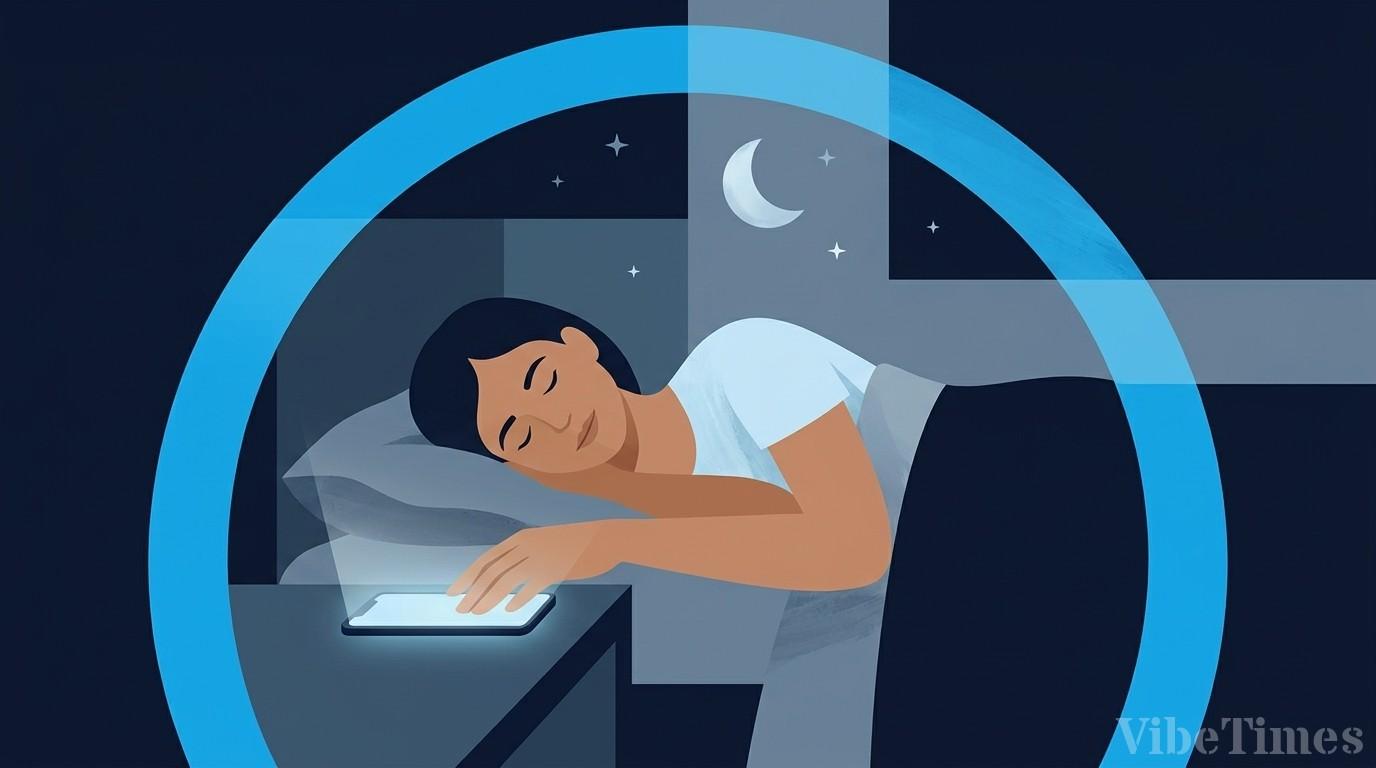
Simply putting down your smartphone one hour before bedtime can transform your sleep quality. According to Harvard University research, blue light from screens suppresses melatonin—the sleep hormone—more than twice as much as ordinary light sources, and can shift your sleep rhythm by up to three hours.
Yet recent research points to a surprising conclusion: blue light may not be the main culprit. In a 2024 study of roughly 45,000 people, Norwegian researchers found that smartphone use in bed was significantly associated with poorer sleep quality and higher insomnia risk—and total screen time, not screen type, was the bigger variable. In other words, the problem is less about the light itself than 'how long and how deeply you engage with the screen.'
Three Ways Smartphones Wreck Your Sleep
Blue Light Blocks Melatonin Production
Blue light with wavelengths of roughly 450–480 nanometers stimulates special photoreceptor cells in the retina, suppressing melatonin secretion from the pineal gland. Melatonin is the hormone that tells your body it's time to sleep. Harvard research found that blue light suppresses this secretion more than twofold and can delay the body's circadian rhythm by up to three hours—effectively pushing back your actual bedtime.
Infinite Scrolling Keeps the Brain Aroused
Social media, YouTube, and news feeds keep the brain in a state of alertness. The infinite-scroll structure continuously stimulates the dopamine reward system, driving the urge to watch 'just one more video.' The result is cognitive arousal: the body is lying down, but the brain remains switched on—and the brain, which should be winding down before sleep, never gets to rest.
Lost Sleep Becomes a Growing Debt
Koreans rank near the bottom of the OECD in average sleep duration, with actual sleep hovering in the six-hour range. Adults are recommended to sleep seven to nine hours. The 30 to 60 minutes of sleep lost daily to smartphones quickly becomes sleep debt, and RAND Corporation research estimates that sleep deprivation causes economic losses equivalent to 1–3% of GDP. Surveys showing that more than half of people in their 20s and 30s look at their phones right up until falling asleep underscore the problem.
What the Latest Research Changed: Time Discipline Over Filters
Lessons from a 45,000-Person Study
The most striking finding in the Norwegian researchers' 2024 analysis was the difference by screen type—or rather, the lack of one. How long people used their screens mattered far more to sleep quality and insomnia risk than what they watched, whether social media or TV. Research trends in 2024–2025 have likewise converged on the conclusion that blue-light filters alone offer limited benefits for adults, and that behavioral change—actually stopping use—is more important.
Why Night Mode Alone Isn't Enough
This is why 'turning on night mode and continuing to scroll' is only a half-measure. Filters merely reduce light stimulation; they do nothing about the real problems of engagement, arousal, and screen time. Comparative analyses repeatedly confirm that physically distancing yourself from the device is the most effective approach.
Practical Steps You Can Start Tonight
Impose a Digital Curfew One Hour Before Bed
The most reliable method is to stop using devices after a set time. Setting your smartphone's sleep mode and Do Not Disturb to activate automatically one to two hours before bed means you don't have to rely on willpower. On iOS, use Focus mode and app time limits; on Android, use Digital Wellbeing's Bedtime mode. Switching your display to grayscale removes the visual appeal and curbs the urge to use the phone in the first place.
Move Your Charger Out of the Bedroom
Charging your smartphone outside the bedroom—in the living room, for example—blocks 'one last look after getting into bed' at the source. If you worry about alarms, replace your phone with an analog clock. Comparative analyses rated keeping the phone outside the bedroom highest for fundamental prevention. It's not coercion—it's an environment designed to change the habit.
Fill the Freed-Up Time with Other Activities
Leaving the newly available time empty invites relapse. A wind-down routine—such as a warm shower 30 minutes before bed, 20 minutes of reading a paper book, then 5 minutes of deep diaphragmatic breathing—makes the habit swap feel natural. The 4-7-8 breathing technique (inhale for 4 seconds, hold for 7, exhale for 8) calms the sympathetic nervous system. If you must use a device, lower the brightness to minimum and switch to audio content like podcasts instead of video as the next best option.
Sleep Fundamentals Beyond the Smartphone
Managing Temperature, Caffeine, and Wake Times
The ideal bedroom temperature is 18–22°C (64–72°F), ideally kept dark with blackout curtains. Since caffeine has a half-life of five to six hours, cut back after 2 p.m., and keep naps under 20 minutes, ending them before 3 p.m. Waking up at the same time every day—including weekends, within a ±30-minute window—is key to stabilizing your body clock. Regular aerobic exercise also improves sleep quality, but avoid vigorous workouts in the two to three hours before bed.
Beware Perfectionism and Paradoxical Arousal
The compulsion to quit perfectly becomes a stress that harms sleep instead. There is even a known phenomenon called orthosomnia, in which excessive obsession with sleep itself paradoxically causes arousal. For adolescents, whose brains and bodies are still developing, the effects of sleep deprivation are greater than for adults—so setting family-wide nighttime device rules is an effective approach.
The Compounding Effect of Small Sacrifices
Start with 15 Minutes and Build Up Gradually
An initial goal of putting the phone down just 15 minutes before bed is enough. After practicing for three or more consecutive days, extend to 30 minutes, then an hour—a sustainable progression. Given research by Lally showing that habit formation takes an average of 66 days, patience is essential. A routinized sleep-hygiene approach leads to fewer relapses than a one-off digital detox, and experts recommend it accordingly.
Verify It Yourself with a Two-Week Experiment
Track your screen-time statistics for two weeks while cutting back on bedtime use, and compare your morning freshness and the time it takes to fall asleep. Layering your own data onto the research conclusion—that reducing usage time matters more than screen type—makes the path forward clear. Improving sleep quality is the cheapest health investment there is, requiring no money to see results.