November 28 Legislative Report: Whitmer Signs Michigan Minimum Wage Increase

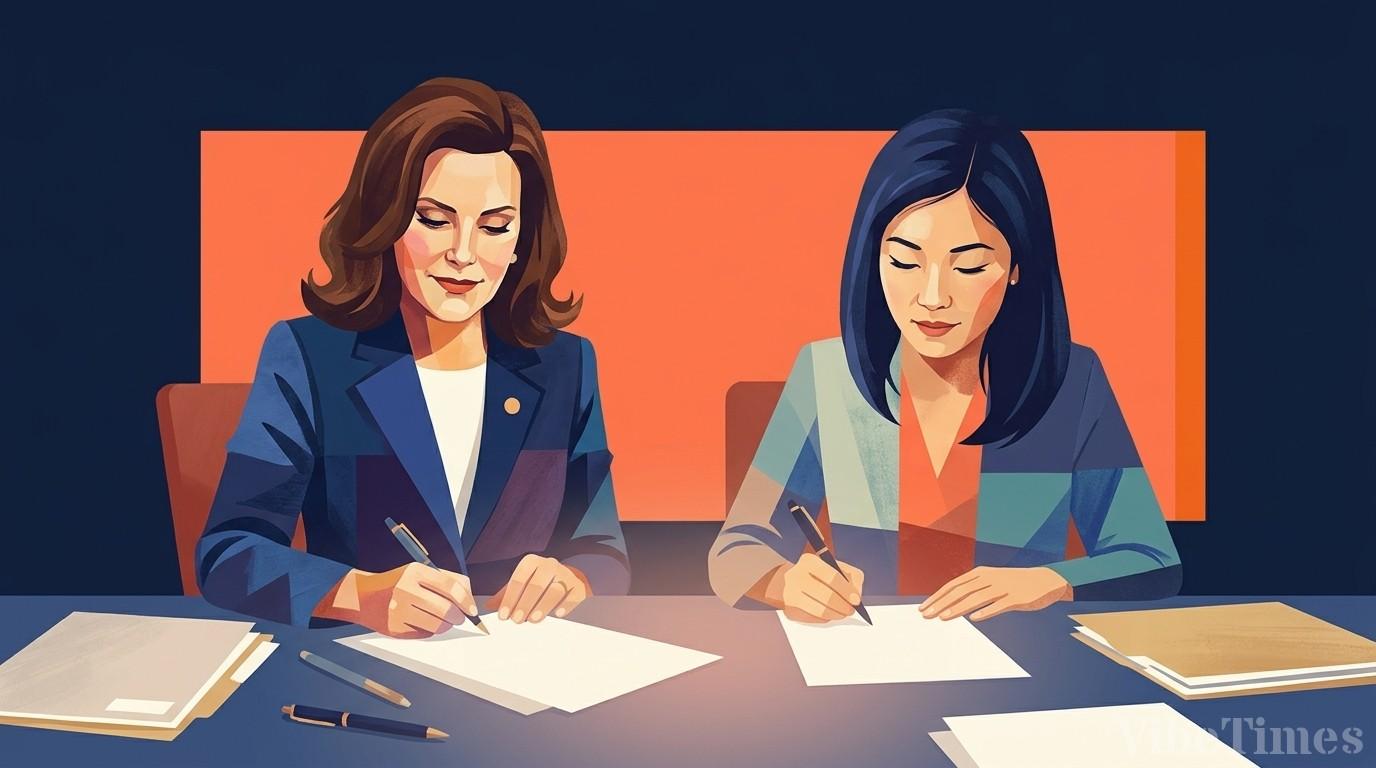
Whitmer's Signature Marks a Turning Point for Michigan's Labor Market
Michigan Governor Gretchen Whitmer signed legislation expanding labor laws, including a minimum wage increase and paid sick leave in 2023. This was not merely one week's legislative decision, but a centerpiece of the sweeping legislative push that followed the Democratic Party's capture of both chambers of the Michigan legislature. The Democratic majority period from 2023 to 2024 delivered such broad results that it has been locally rated as "the most productive legislative session."
Why the Minimum Wage and Paid Sick Leave?
Michigan has traditionally been a manufacturing state anchored by the automotive industry, and its character as a labor-dense region is directly reflected in its political landscape. This state identity underlies Whitmer's prioritization of labor law expansion. The minimum wage increase is a means of directly raising the real incomes of low-wage retail and service workers, while paid sick leave guarantees the right to take time off without losing wages during illness or family caregiving situations. Simply put, the state raised the wage floor and protected paychecks when workers fall ill — tackling both at once.
That same year, Whitmer also rolled out the "Michigan Guarantee" policy, centered on free community college enrollment for residents aged 19 and older. The state pursued a floor on labor income and expanded access to education simultaneously. The structure can be seen as the minimum wage covering low-skilled workers' current income, while free community college paves the next generation's path to skills acquisition.
Legislative Momentum and the Exercise of Power
Capturing a majority in the state legislature was decisive. With Democrats winning both the Michigan House and Senate in the 2022 elections, Whitmer was able to fast-track labor and education bills that had previously been rejected or scaled back. The result was the 2023 labor law signing, and the volume of bills passed over the following two years led to the "most productive legislative session" assessment.
Her use of clemency powers also stands out. Through the state parole board, Whitmer approved hundreds of pardons and commutations. Legislative achievements and clemency grants are different in nature, but viewed together, they share a common thread: a governor who actively wields the executive powers at her disposal. She has leveraged both the power to make laws and the power to ease their enforcement.
Economic Ripple Effects and Remaining Challenges
The effects of the minimum wage increase cut both ways. For workers, household disposable income grows and spending power expands. On the other hand, small business owners and low-margin industries inevitably face labor cost burdens, and whether this leads to reduced hiring or price pass-through remains a question requiring continued scrutiny after the legislation. Paid sick leave likewise adds a cost item for businesses, so the balance between policy effectiveness and corporate burden will likely continue to be adjusted during implementation.
Politically, if the majority status shifts after 2024, attempts to amend or scale back the law could follow. Even laws already passed may see their direction altered through implementation rules or companion legislation if the legislature's composition changes. The durability of the labor law expansion will ultimately be tied to election outcomes.
The Lingering Question
Whitmer's Michigan model is significant as a case that packaged minimum wage increases, paid sick leave, and free higher education together. However, as the automotive manufacturing industry undergoes structural change, the impact of rising labor costs on industrial competitiveness remains to be seen. Signing a bill is not the end but the beginning, and its success or failure will be judged by implementation data over the coming years.