Negative Ratings for Lee Jae-myung Hit 50%, Overtaking Positive Ratings at 41%

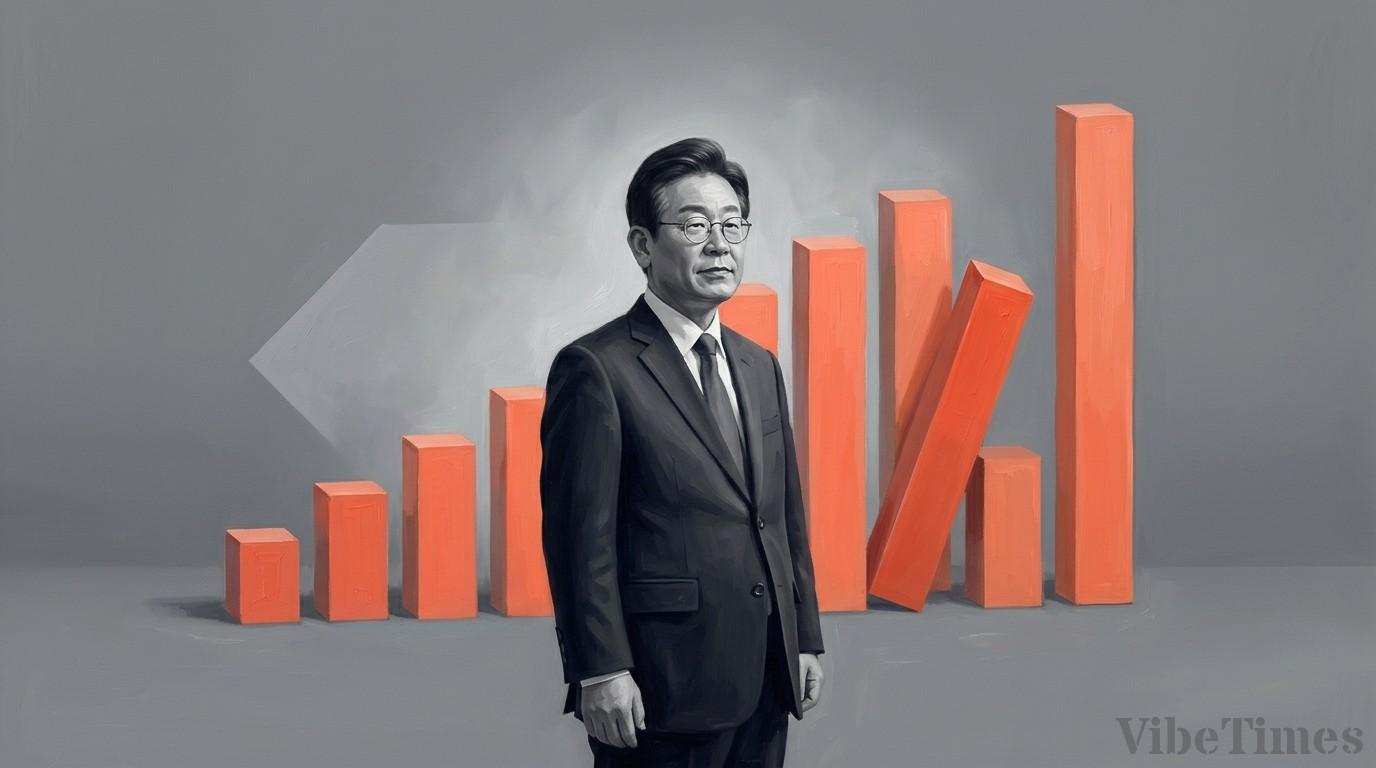
Negative evaluations of President Lee Jae-myung's handling of state affairs have reached 50%, surpassing positive evaluations at 41%.
According to a Korea Gallup survey conducted in the fourth week of November (24–26), positive evaluations stood at 41% while negative evaluations came in at 50%. The president's positive rating has hovered between 39% and 41% for the past seven weeks, meaning the upward momentum seen in the early days of his administration has stalled, leaving him trapped in a narrow band. Now that negative evaluations exceed the majority, what matters more than the numbers themselves is the reason behind them.
The Dual Structure of a Stagnant Approval Rating
The 41% positive evaluation has remained at a similar level for seven consecutive weeks — a defensive stability indicating that the support base has not collapsed. On the other hand, it is not expanding either, suggesting that the influx of new supporters has been blocked.
Favorability among progressive voters, recorded at 58.32 points, illustrates this structure: the president holds his own camp firmly but shows limits in persuading centrists and conservatives. The fact that he ranked fourth with 50.83 points in the National Assembly Research Service's survey of favorability ratings for past presidents also supports the interpretation that he is an averagely popular figure, not the protagonist of overwhelming support.
The 50% negative rating is not simply an expression of opposition. A nine-percentage-point gap over positive evaluations is a level that could erode the momentum for policy implementation. In particular, if the defection of middle-of-the-road voters repeats in battlegrounds such as the metropolitan area ahead of the next local elections, his perceived political clout could falter before his approval rating does.
The Backdrop of the Approval Rating Plateau
The president has recently been pushing forward state affairs on multiple fronts. On X, he announced that normalizing capital markets is the government's most critical policy task, granting full authority to Chairman Kim Yong-beom and directing ministries to accept in principle the reform agenda set by the Capital Market Reform Committee. If a ministry raises objections, the committee reports directly to the presidential office.
His remarks that state recovery is needed for the results of the 50 trillion won annual R&D budget also drew attention. The president emphasized the principle by saying that what must be done must be done even if it invites criticism. He also reiterated his position that the Dec. 3 incident can be fully brought to an end only when those responsible are held appropriately accountable.
Yet the approval rating is not responding. Reform messages remain alive as agenda items, but appear to take time to translate into voters' lived experience. At the same time, continued political wrangling — rebuttals over the Daejang-dong and Wirye New Town development allegations, the People Power Party's labeling of the special prosecutor act for fabricated indictments as the "Lee Jae-myung Prison Break Act," and its refusal to recommend special prosecutor candidates — is pressing down on the upper limits of his approval rating.
The Choi Min-hee Disciplinary Action and Ruling Party Infighting
Internal factors also play a role in the stagnant approval rating. Choi Min-hee, a supreme council member of the Democratic Party of Korea, received a heavy disciplinary penalty of a two-year suspension of party membership from the party's Ethics Tribunal over remarks to the effect that the president had opposed the impeachment of former President Yoon Suk-yeol while serving as party leader.
The remarks were enough to confuse a support base that had shared the legitimacy of the impeachment period. When remarks by ruling party leadership become an issue, energy is diverted from promoting policy externally to managing internal affairs. While the stagnant 41% approval rating has served as a solid defensive line, ruling party infighting stands out as one of the structural reasons it cannot open upward.
On the other side, variables for opposition realignment are also growing, with Park Jie-won mentioning the possibility of Ahn Cheol-soo's defection and predicting that People Power Party lawmakers would applaud it. Whether the conservative camp consolidates is directly tied to the future trajectory of the president's negative ratings.
Outlook and Political Implications
There are three key points to watch going forward. First, whether the 50% negative rating is a temporary peak or a hardening trend. As long as positive ratings hold at 41%, it is not an early defection, but the longer the plateau continues, the greater the time pressure for policy results becomes.
Second, whether capital market reform and tangible policies in housing and R&D can exert upward pressure on the approval rating. Visible results from reform could become a catalyst for expanding his support base, but failure could trigger the entrenchment of negative evaluations.
Third, the trajectory of judicial and political battles over the special investigation into fabricated indictments and the pursuit of accountability for the Dec. 3 incident. Progress by the deadline for special prosecutor candidate recommendations on the 29th of this month and the opposition's response will shape the political calendar. The test of leadership lies not in the approval rating numbers themselves, but in the decisions that can move those numbers again. If the president's next choice fails to break the 41% wall, the 50% negative rating appears unlikely to come down quickly in the next survey either.