Retail Investors Wail as KOSPI Slumps to Half Its Record High

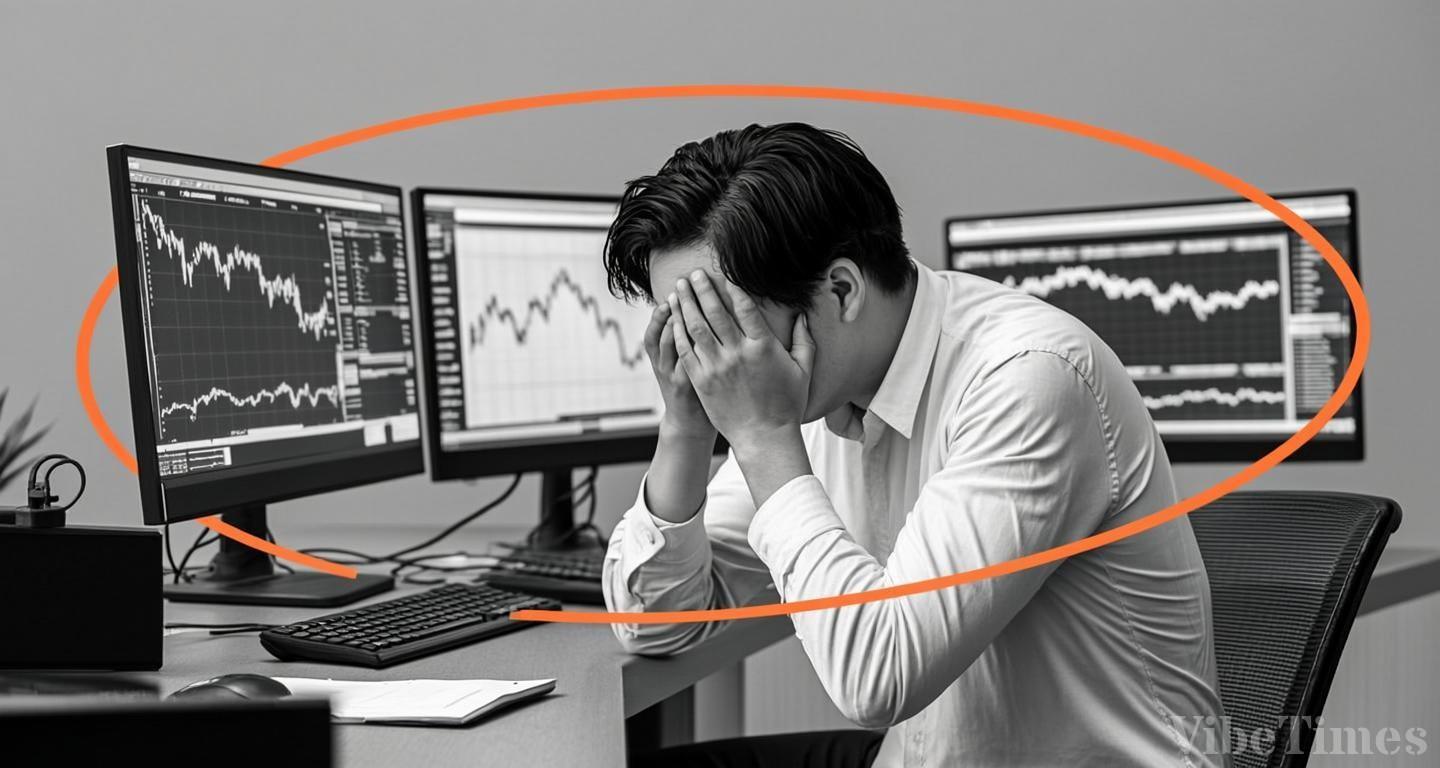
The KOSPI fell to an intraday low of 4,586.80 on Nov. 23, sinking to roughly half its all-time high of 9,385.59 set in June. The index closed down 3.31% at 4,708.54 that day. The pain is deepening for retail investors whose accounts were slashed in half seemingly overnight, with cries of despair echoing from all corners. Some now say the winner on the Korean stock market this year is whoever didn't invest at all.
According to the Korea Exchange, the KOSPI tumbled 16.1% in November, from 5,859.08 on Nov. 2 to 4,915.68 on Nov. 27 — a level similar to January's average of 4,807.38, when this year's rally began in earnest. Total market capitalization shrank by about 800 trillion won over the month, from 4,835 trillion won to 4,030 trillion won.
Retail losses have snowballed as well. As of Nov. 29, according to Naver Pay, the 357,504 Samsung Electronics investors with linked brokerage accounts had an average purchase price of 217,012 won and an unrealized loss of 17.3%. Among the 211,563 SK Hynix investors, the average purchase price was 1,623,054 won with an unrealized loss of 31.6%. Meanwhile, Samsung Electronics — the stock retail investors bought most heavily in November, with net purchases of 1.8324 trillion won — fell 20.4% over the month. Samsung Electro-Mechanics, second in net purchases at 1.5123 trillion won, saw an unrealized loss rate of 31.4%.
Korea Exchange data show foreign investors net sold 14.6568 trillion won worth of KOSPI shares from Nov. 1 to 27, extending their net-selling streak to seven months. Foreigners net sold 2.9465 trillion won of Samsung Electronics and 7.5095 trillion won of SK Hynix, with the two stocks accounting for 71.3% of total KOSPI net selling.
The market was already declining as weak earnings from U.S. big tech and uncertainty in the AI industry spread starting in October, when controversy erupted over the resignation of Nvidia CEO Jensen Huang. From Nov. 13, immediately after the controversy broke, through Nov. 23, the KOSPI fell 11.9%. It surged 6.3% in a single day on Nov. 24 on news of his return, then dropped 6.2% the next day, swinging wildly.
Amid fears of an AI crisis, the Nasdaq Composite fell 7.8% from June 2 through Nov. 27, while the KOSPI plunged 46.1% over the same period. Analysts attribute this to the market's sensitivity to global variables such as the U.S. AI industry, given the heavy weighting of semiconductor giants like Samsung Electronics and SK Hynix. Earlier this year, the KOSPI's first-half gain of 101.1% set an all-time record for a half-year period.
On Nov. 22, Lee Seung-jo, CEO of Da-In Investment, advised in a public video on the YouTube channel "KimWriterTV": "Those who bought Samsung Electronics above 300,000 won or SK Hynix at 2 million won should clear their minds and assume those price levels won't return for three years."