President Lee Jae-myung declared that truth will prevail in the end

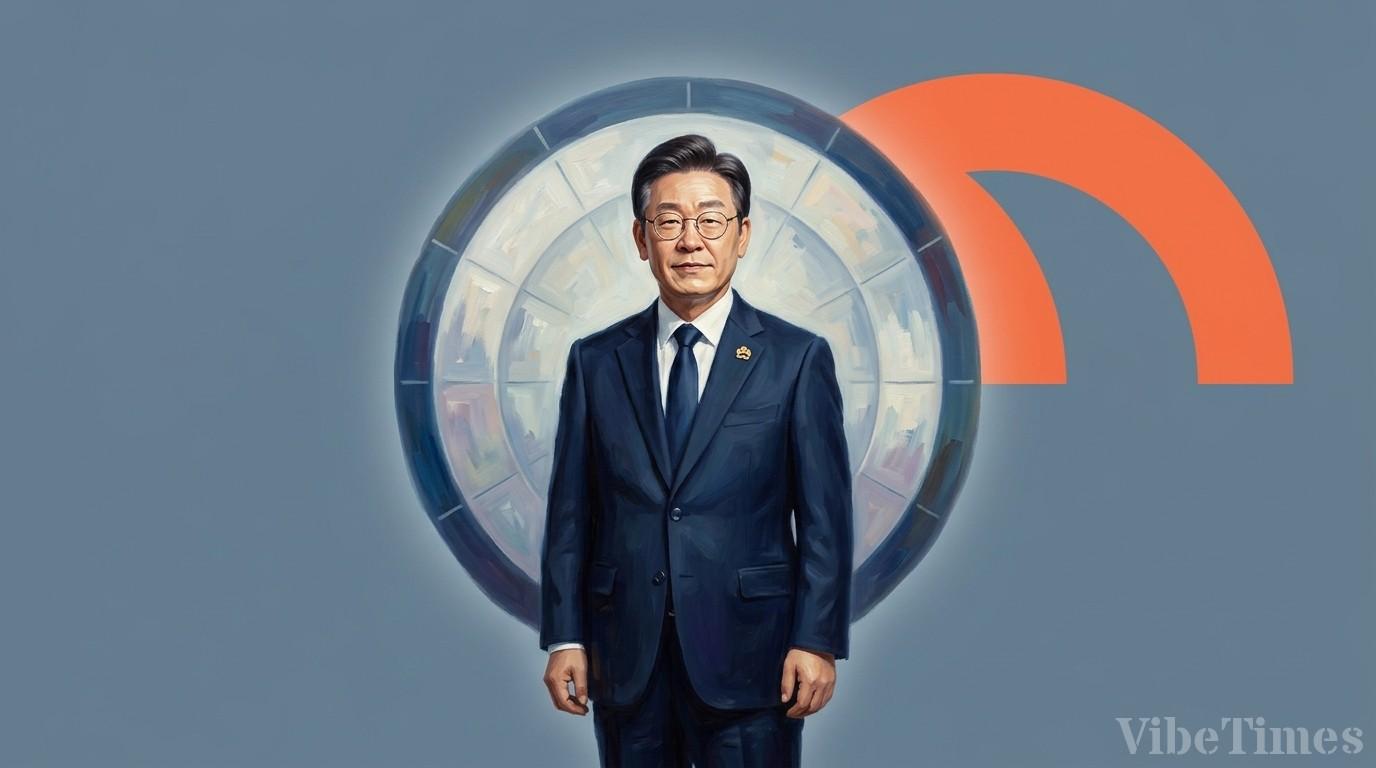
"I still have three years and six months left in my term. I believe that truth will prevail." President Lee Jae-myung publicly signaled his determination to serve out his full term at a moment when concerns over a governance vacuum and opposition impeachment pressure are converging.
Behind the president's remarks lies a twofold pressure, both legal and political: the remand trial on his election law case ahead of a ruling on his re-election bid, and the fierce tug-of-war between the ruling and opposition parties over it. The Rebuilding Korea Party has openly played the impeachment card, even asserting that the remand of then-presidential candidate Lee Jae-myung's election law case in May of last year constituted grounds for prosecution, claiming electoral interference. The People Power Party has joined in as well, arguing that the Democratic Party is pushing impeachment excessively to block the resumption of the president's trial, and branding the affair over the recommendation of an additional prosecutor general as an "indictment withdrawal scheme." People Power Party leader Jang Dong-hyuk has urged the immediate resumption of the trial, saying "Lee Jae-myung should be impeached first."
Three meanings behind the "truth will prevail" remark
The president's remark is hard to read as a mere declaration of self-confidence. First, it is a declaration of a war of attrition aimed at the impeachment forces. By confirming his own timeline of three years and six months in office, he is sending a message that he will squarely confront the opposition's calculation that the longer legal proceedings drag on, the more of his term is consumed. Second, it is a reaffirmation of party unity. With Supreme Council member Choi Min-hee having sparked a disciplinary controversy after remarks suggesting that the president, during his time as party leader, opposed the impeachment of Yoon Suk-yeol, the president's show of determination to "go all the way" can serve as a bulwark against defections among his supporters. Third, it is a political maneuver cloaked in the form of an expression of trust in the judiciary. "Truth will prevail" — the idea that what is right will ultimately be done — can be read both as a pledge to accept the trial outcome in advance and, at the same time, as an expression of confidence in an acquittal.
The interplay between the trial and impeachment is the core issue. If impeachment proceedings proceed in parallel while the president's trial is ongoing, concerns over a governance vacuum could become reality — a burden for both ruling and opposition parties. The People Power Party's criticism of the prosecutor general recommendation as an "indictment withdrawal scheme" stems from the same logic. The Democratic Party, by contrast, counters that forcibly resuming the trial amounts to weaponizing judicial procedure for political ends. The president's comment on the criteria for appointing a special prosecutor for the fabricated-indictment case — "it must be judged holistically" — is likewise interpreted as careful tightrope-walking over judicial procedure.
A clock ticking against the political calendar
The president's three-years-and-six-months clock intersects with the electoral calendar. Since the latter half of his term will overlap with upcoming local and general elections, the ruling party's strategy will inevitably shift significantly depending on when the trial verdict arrives. As evidenced by former Prime Minister Cho Kuk's remarks voicing concern over Democratic Party infighting and weakening governing momentum, voices within the party itself are wary of the uncertainty that arises when legal risk and the political calendar coincide.
The president's schedule, meanwhile, exudes a sense of urgency that seems undeterred by the opposition's attacks. On the 13th, he chaired a capital market policy roundtable, accelerating discussions on a 10-trillion-won market stabilization fund, and addressed stock market shock mitigation through a decision to postpone Pension Fund rebalancing sell-offs. On the occasion of the APEC summit in Shenzhen, China, on the 18th, he agreed with President Xi Jinping to expand human and cultural exchanges, and on the 28th he attended the groundbreaking ceremony for the GS AI Data Center (2.4GW) in Donghae, Gangwon Province, declaring it "will become Asia's largest core artificial intelligence infrastructure." On the 30th, he chaired at the Blue House the government's first-ever "National Task Force Strategy Meeting on the War Against Drug Crimes" led directly by the president since this administration took office. Operating excavators, chairing meetings, and conducting summit diplomacy even under impeachment pressure — it is a picture that can hardly escape being described as a show of aggressive governance.
Outlook: A prolonged battle is inevitable
Impeachment is unlikely to materialize anytime soon. Given the partisan composition of the National Assembly, it would be difficult for the opposition to pass an impeachment motion on its own, and even within the People Power Party, calls to "impeach Lee Jae-myung first" coexist with voices of caution. The battleground, then, is likely to shift to the courtroom. The outcome and timing of the remand trial will be the variable that determines the entire political calendar. The three years and six months the president himself has cited ultimately amount to a race against the courts.
The risks are far from trivial. As seen in the controversy over the special provision for the Future Response Fund, the opposition continues to push back against the authority to alter up to 30 percent of major expenditure items without National Assembly approval. Contentious issues that could erode governing momentum abound: resistance from the People Power Party over the nomination of National Intelligence Service Director nominee Kang Kum-sil, and criticism over plans to build ultra-high-voltage transmission lines across the country. Adding to the burden is growing internal strife, with party mavericks such as Jung Chung-rae escalating tensions using harsh rhetoric like "scorched-earth politics." As the saying goes, political conviction reveals its true worth when tested — and the president's belief that truth will prevail must ultimately pass through three successive crucibles: the courtroom, public opinion, and party unity. Three years and six months is at once a long and a short span of time.