North Korea, China, Russia Attempt to Reshape Balance of Power

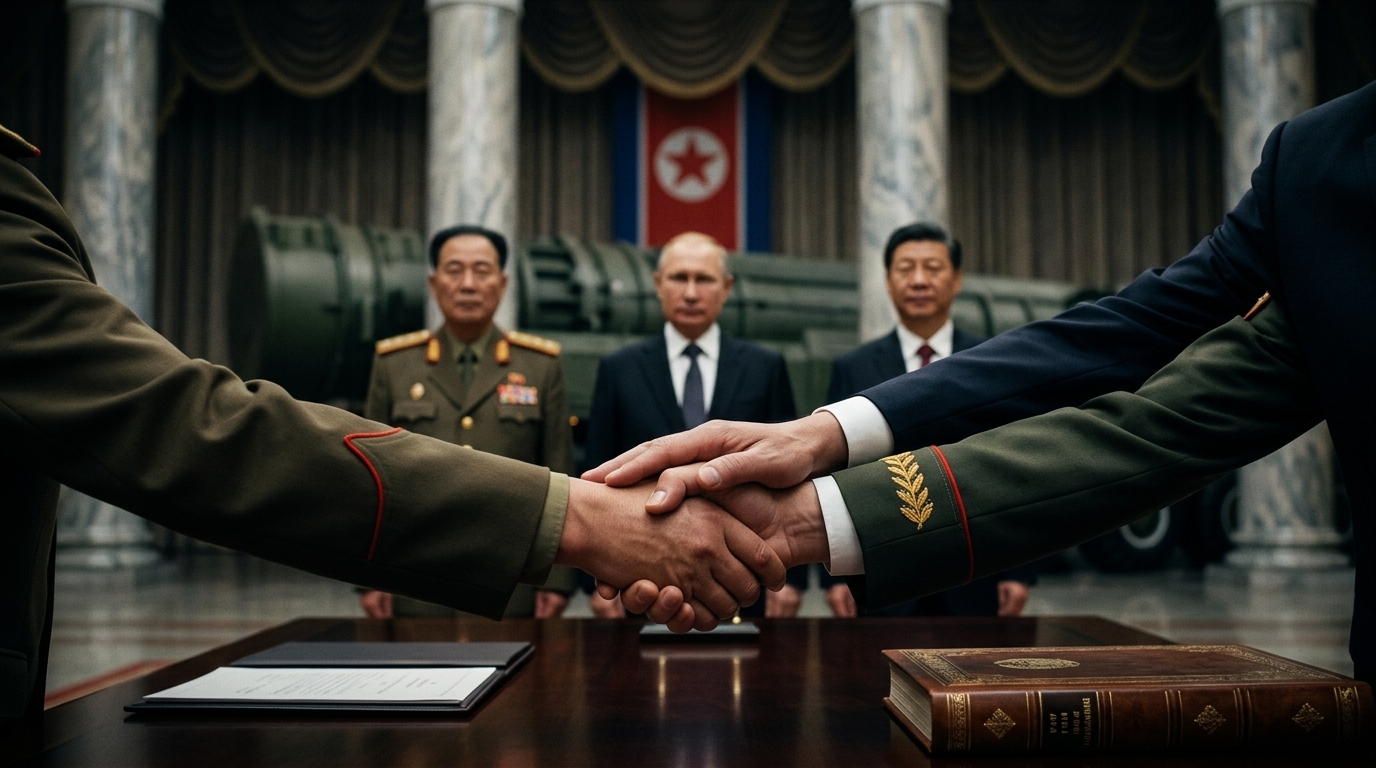
U.S. Strategic Command chief Gen. Richard Coe stated that North Korea is advancing its nuclear capabilities and expanding cooperation with China and Russia in an attempt to reshape the balance of power. Coe analyzed that North Korea defines its nuclear weapons program as a key means of regime survival and is focusing on strengthening its ability to strike the U.S. mainland. Since 2016, North Korea has advanced its nuclear capabilities by unveiling three warhead designs, including a 5-kiloton warhead, increasing its fissile material stockpile, and acquiring new military assets like underwater drones, thereby enhancing its operational readiness.
North Korea's missile systems are transitioning from liquid-propellant to solid-propellant technology. North Korea unveiled the Hwasong-20, a solid-fuel intercontinental ballistic missile (ICBM), in October 2025. Solid-propellant missiles are easier to maintain and require shorter launch preparation times. Additionally, equipment potentially capable of hypersonic glide vehicles (HGVs) to evade ballistic missile defenses was also showcased.
Deepened cooperation between North Korea, China, and Russia has also been confirmed. In September 2025, Chinese President Xi Jinping, Russian President Vladimir Putin, and North Korean Chairman Kim Jong Un attended a military parade in Beijing together. China indicated a potential policy shift by removing its demand for Korean Peninsula denuclearization from its 2025 National Security White Paper. Cooperation between Russia and North Korea has expanded through the 'Treaty on Comprehensive Strategic Partnership' signed in June 2024, which includes provisions for immediate military assistance if either side is subjected to armed aggression. Consequently, reports indicate mutual support where Russia obtains ammunition and troops necessary for the war in Ukraine from North Korea, while North Korea receives funding and technological support from Russia.
North Korea is leveraging electronic warfare as a core element to compensate for the limitations of its conventional military strength. Aggressive actions in the space domain have continued, including repeated GPS signal jamming targeting South Korea. U.S. Space Force Commander Gen. Stephen Whiting noted in a separate report that North Korea maintains its anti-space capabilities, such as GPS and satellite communication jamming, through cooperation with Russia on space technology.
Gen. Richard Coe emphasized the necessity of credible theater nuclear deterrence capabilities to counter these trends and suggested providing options for de-escalation.