CEO Kim Woo-joong Outlines Survival Strategies for the AI Era

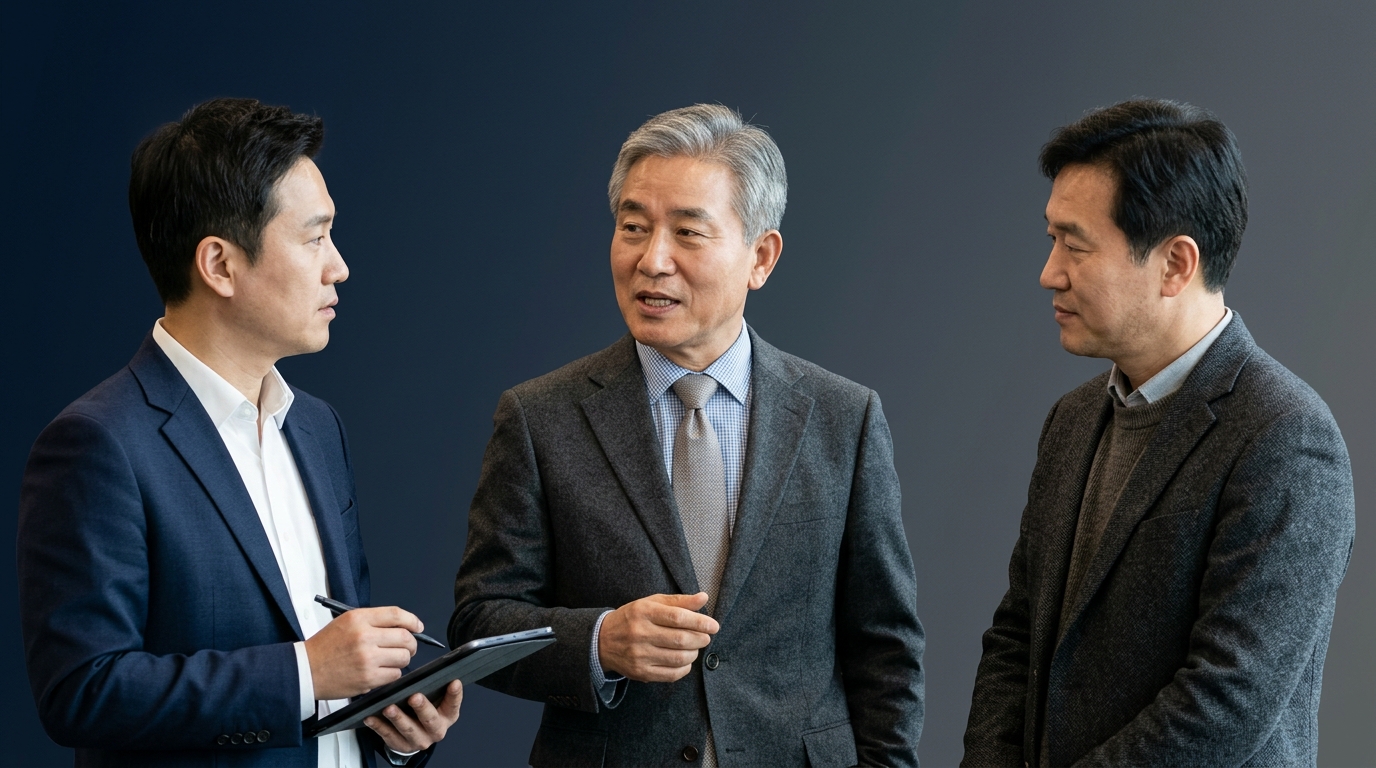
An analysis suggests the key to survival in the AI era lies not in technology itself, but in people and the establishment of proper direction. Sejong AI Research Center CEO Kim Woo-joong stresses that AI should be leveraged as a tool to further empower human capabilities, rather than being pursued blindly.
Kim leads the Sejong AI Research Center, which develops proprietary AI technologies grounded in high-performance computing environments and customizes AI models. The center prioritizes building independent technological capabilities based on its own data and models, deviating from reliance on existing APIs (Application Programming Interfaces). The API approach, likened to 'connecting' with AI services, involves paying to borrow functionalities, leading to limitations such as long-term technological dependency and ongoing costs. The Sejong AI Research Center is focused on mitigating this dependency.
As reasons for establishing the research center in Sejong, Kim cites its proximity to government and public institutions and its advantageous position for practical AI utilization based on administrative data. He is running a project, supported by R&D funding from the Ministry of SMEs and Startups, to help early-stage startups build their own AI technologies. Through this process, he has realized that in the AI era, equipment and infrastructure directly translate into skill and experience, going beyond simple education. An AI model for analyzing player movements and performance stats, currently under development in collaboration with an overseas football association, is also an area that is difficult to implement without high-performance equipment.
Kim explains that due to the rapid pace of AI technology change, content prepared a week ago can become obsolete within a single day with the emergence of new technologies, necessitating curriculum revisions. Therefore, it is crucial to identify appropriate solutions amidst a rapidly evolving technological landscape and cultivate habits of modifying or replacing existing ones. An adaptable mindset is needed, rather than clinging to specific AI models or technologies.
Lee Hyun-dong, the technical director, adds that he has experienced a shift in the role of developers. Just 3-6 months ago, AI was merely a coding assistant tool, but now AI performs actual coding tasks, and developers have transitioned to roles of planning and verifying on top of it. AI's role has elevated from 'assistance' to 'leadership.' This AI development is also bringing about changes in industrial structure and employment. Alongside a declining trend in developer hiring, there is a strengthening demand for 'AI technicians' who possess basic AI utilization skills in any job. Individuals who combine AI utilization capabilities with their specialized fields, such as designers, developers, and marketers, will gain competitiveness. AI functions as a tool to expand individual capabilities. Notably, senior personnel who embrace change can achieve productivity 4-5 times higher than before. Simply being proficient in prompt engineering (inputting commands to AI) is insufficient; on-site application becomes possible only when expertise in a specialized field is combined with AI utilization skills.
The issue of technology and ethics, particularly copyright for AI training data, is a significant concern for companies utilizing AI. The Sejong AI Research Center considers these issues and automates internal repetitive tasks. Basic tasks such as administration and document processing are handled with internally developed tools, emphasizing the construction of systems that comply with security and regulations and operate solely internally. This approach can also be applied to tasks with repetitive patterns, such as broadcast editing or audio mixing, and it is theoretically possible to build an independent AI system using a broadcaster's internal data without external leakage.
CEO Kim draws a line on the expression 'earning money with a click,' stating it relates to professionalism. While marketers or designers with outstanding expertise can efficiently generate revenue by leveraging AI, he points out that it is unrealistic to assume anyone can make money simply by being good with AI without distinct professional skills. Director Lee adds that while creating an initial product (MVP) with AI has become easier, the stages of launching and monetizing into an actual service are different matters, and people are needed to bridge this gap for the business to succeed. He analyzes that items reliant on APIs ultimately have limitations, and sustained performance in the actual market is difficult without professionalism and proprietary technology.