Emerging Tycoons Buy Professor Park's Home as He Departs

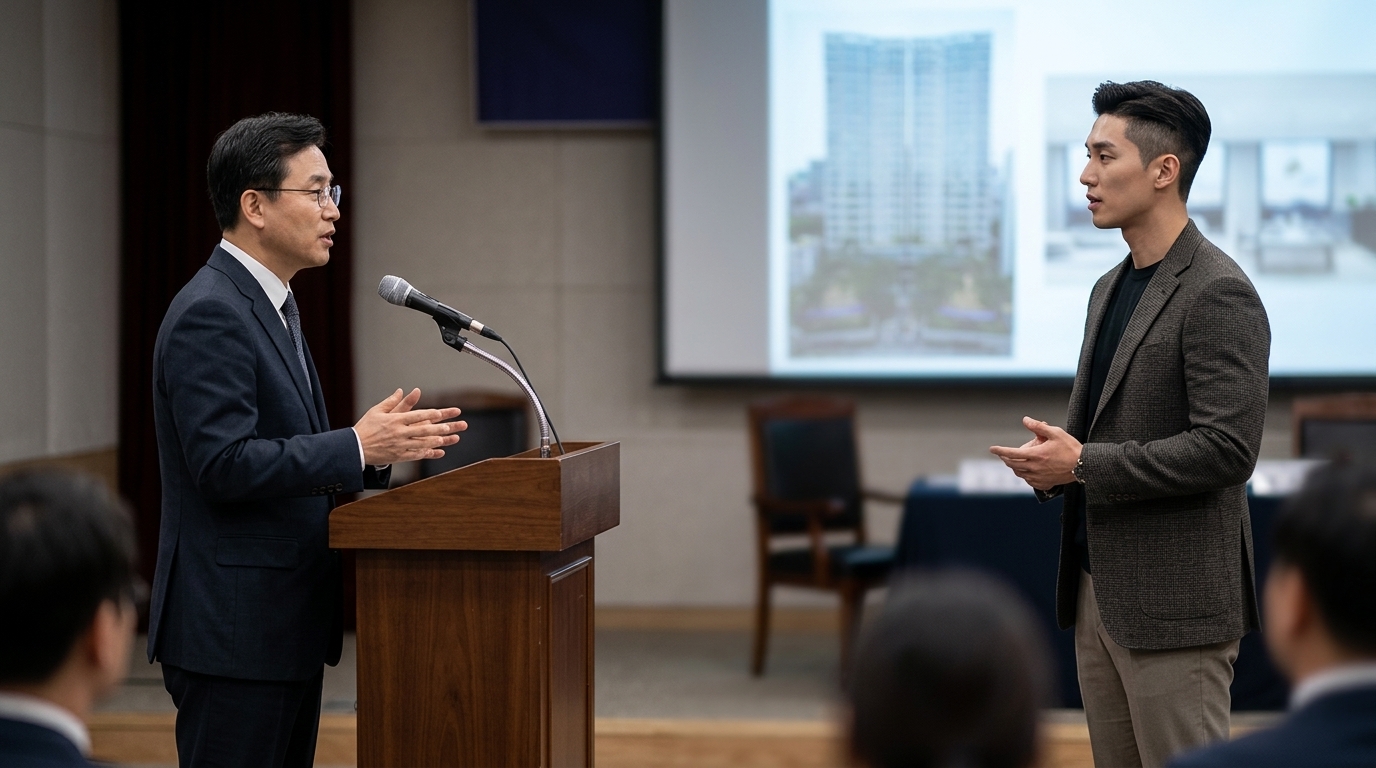
While middle-aged and older homeowners who have held properties for a long time are putting their homes on the market due to increasing tax and loan burdens, a phenomenon is emerging where young wealthy individuals, who have made significant fortunes from stocks or virtual assets (cryptocurrencies), are purchasing homes with cash. This showcases a facet of our society where asset disparity is deepening.
Professor Park Hee-jun of Yonsei University's Industrial Engineering department analyzes that fundamental differences in intergenerational wealth-building methods lie at the background of this phenomenon. The older generation aimed to acquire homes with money saved after working hard and completing their children's education, and after retirement, they planned for their later years by acquiring homes or commercial properties for rental income. However, as housing prices surged beyond predictions, they found themselves in a situation where they must bear property and holding taxes without realizing capital gains from sales. On the other hand, the young wealthy can easily bear tax burdens without relying on loans or deposits. Ultimately, capital formed through stock investment flows into the real estate market, and the stock market often serves as an intermediate investment vehicle for real estate investment.
The government maintains a policy stance of curbing real estate market overheating to help low-income earners afford homes and guiding funds into the stock market to increase corporate investment. Within this trend, a social atmosphere has formed where real estate investment is perceived as speculation, and stock investment as investment. However, Professor Park points out that the actual situation is closer to the opposite. The biggest reason why two out of three stock investors incur losses is their focus on short-term trading seeking capital gains without analyzing corporate value. Two out of three individual investors decide on trades based on news without understanding basic stock valuation indicators like the Price-to-Earnings Ratio (PER), Price-to-Book Ratio (PBR), and Return on Equity (ROE). This precisely aligns with the dictionary definition of speculation: 'trading transactions aimed at profiting from anticipated price fluctuations.'
Professor Park emphasizes that speculation should not be allowed to overheat in any market. He explains that when speculation intensifies, prices become distorted, market volatility increases, and resources are inefficiently allocated, making it difficult to create real value. Furthermore, he stated that pinpoint regulations are needed in any market, whether real estate or stocks, to ensure that no well-intentioned victims emerge, preventing policies intended to protect low-income individuals from inadvertently accelerating the decline of the middle class and asset polarization.