Middle East Expands Water Supply with Desalination Technology

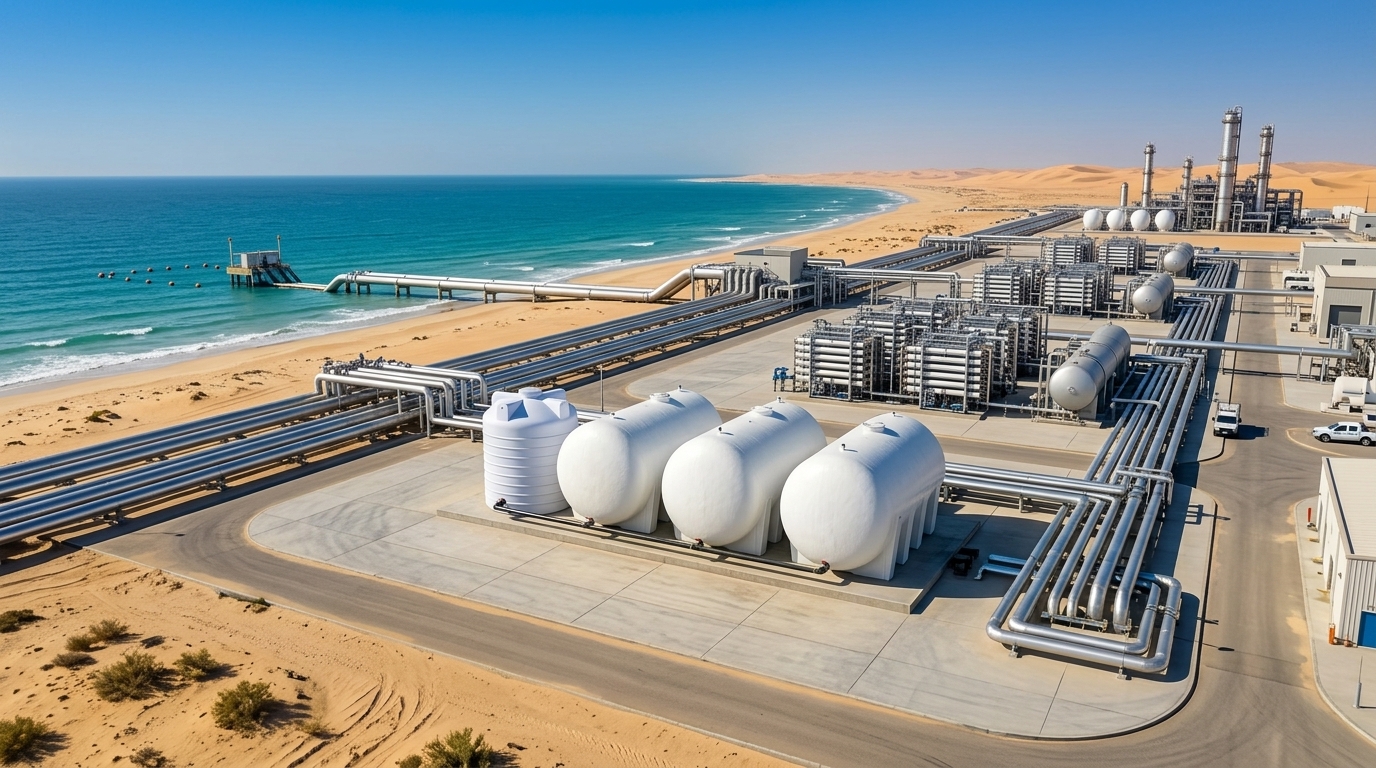
Amid deepening global water scarcity, desalination technology is experiencing explosive growth, particularly in the Middle East, and is emerging as a key water source. Water-scarce regions in the Middle East, especially Gulf Cooperation Council (GCC) countries, heavily rely on desalination. The region lacks permanent rivers and has limited groundwater resources, making seawater purification facilities essential. Qatar produces 77% of its total desalinated water output and 99% of its drinking water supply through desalination, accounting for nearly all water provision for its population of over three million. While the Middle East accounts for 6% of the world's population, it operates over 27% of global desalination plants; as of 2026, 4,897 out of 17,910 facilities worldwide are located in the region.
Desalination technology is used not only for domestic household water but also in various industrial sectors such as agriculture, manufacturing, and data centers. Large-scale facilities capable of producing over one million cubic meters of desalinated water per day, like Saudi Arabia's Ras Al-Khair Water and Power Plant, are operated in many parts of the Middle East. Water production on this scale can meet the demand of millions of urban residents.
The expansion of desalination technology consumes a significant amount of electricity. Due to technological advancements and the expansion of renewable energy-based plants, electricity demand in the global desalination sector is projected to reach approximately 1,900 terawatt-hours (TWh) by 2035. This is equivalent to the electricity consumption of about 60 million households.