Professor Lee Proposes Korean-Style DARPA for Defense Industry Innovation

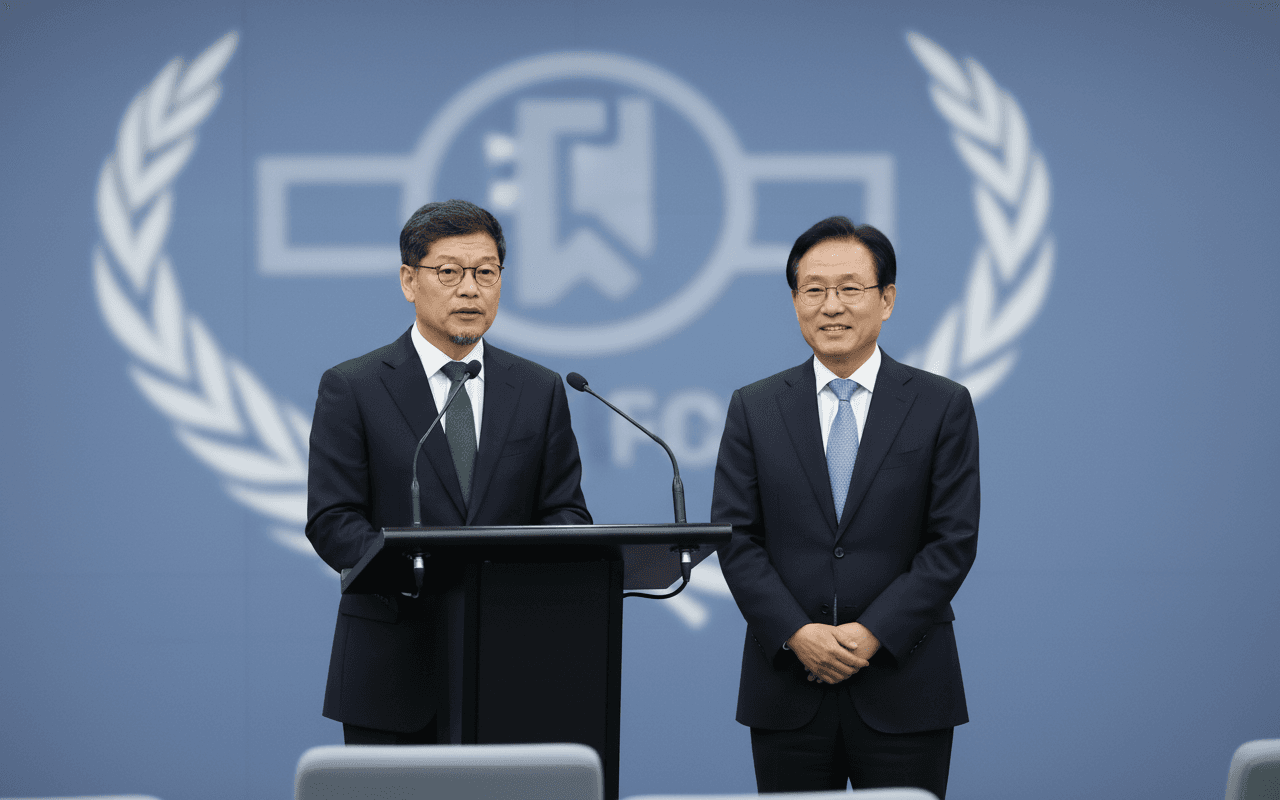
Professor Lee Jeong-dong of Seoul National University has proposed the establishment of a Korean-style 'DARPA' to lead innovative defense technology development in Korea. DARPA is a research agency under the U.S. Department of Defense that supports the development of advanced weapons and technologies. Professor Lee pointed out that the outcome of wars today is determined by technological capability, not troop size. Just as the importance of satellite communications and artificial intelligence has been highlighted in the Ukraine war, it is an era where nations securing innovative technologies gain strategic advantage. He explained that innovative technologies do not arise by chance and require a clear methodology. He stated that it is not just geniuses who are needed for outstanding technological creation, but anyone can develop superior technology if they possess 'challenging questions' and 'scaling up' capabilities. For successful technological innovation, one must pose 'challenging questions' that overturn existing common sense and undergo a 'scaling up' process of accumulating technology through numerous trial-and-error efforts. He revealed that the prototype for such innovation is DARPA (Defense Advanced Research Projects Agency) under the U.S. Department of Defense, which started from military needs and developed civilian ideas.
Professor Lee pointed out that Korea's defense research and development (R&D) lacks the capability to identify field problems and translate them into technical solutions. He criticized the slow pace of technological development due to demand-driven R&D and insufficient evolutionary acquisition. Professor Lee noted that while open innovation is pursued, internal development is predominant due to security reasons, preventing 'evolutionary acquisition' from functioning properly. He explained that evolutionary acquisition is a process of creating an initial version, receiving field feedback, and improving the next version, with the speed of feedback determining technological progress. He diagnosed Korea as lacking the capability to define real problems, discover civilian technologies, and execute evolutionary acquisition for scaling up. He analyzed that the practice of applying foreign standards or not tolerating failure hinders technological growth.
Professor Lee argued that Korea needs innovation not in new technologies themselves, but in the 'method' of creating technology. The structure must be redesigned to sharply define unique defense problems, connect them with innovative civilian technologies, and foster technology evolution iteratively in defense fields. To this end, he proposed the establishment of a specialized defense innovation agency like 'K-DARPA,' emphasizing that DARPA's core lies in its role, not its size. Professor Lee added that the defense procurement system regulations must also be innovated accordingly, and evolutionary acquisition procedures must be properly executed. He warned that if Korea fails to create a structure that allows for challenging questions, permits failure, and cultivates technology in the field, bound by existing systems and practices, it will be difficult to anticipate the future of the K-Defense industry, given the era has shifted to one where only nations with innovative technologies secure strategic superiority.
Discussions were held at the forum on new warfare patterns brought about by new technologies like AI (Artificial Intelligence) and drones, and measures to foster the defense industry ecosystem. Forum attendees also paid attention to proposals for establishing joint venture investment companies in the defense sector by the Ministry of National Defense and the National Intelligence Service.