Tenants Face Auction Procedures If Jeonse Deposit Isn't Returned

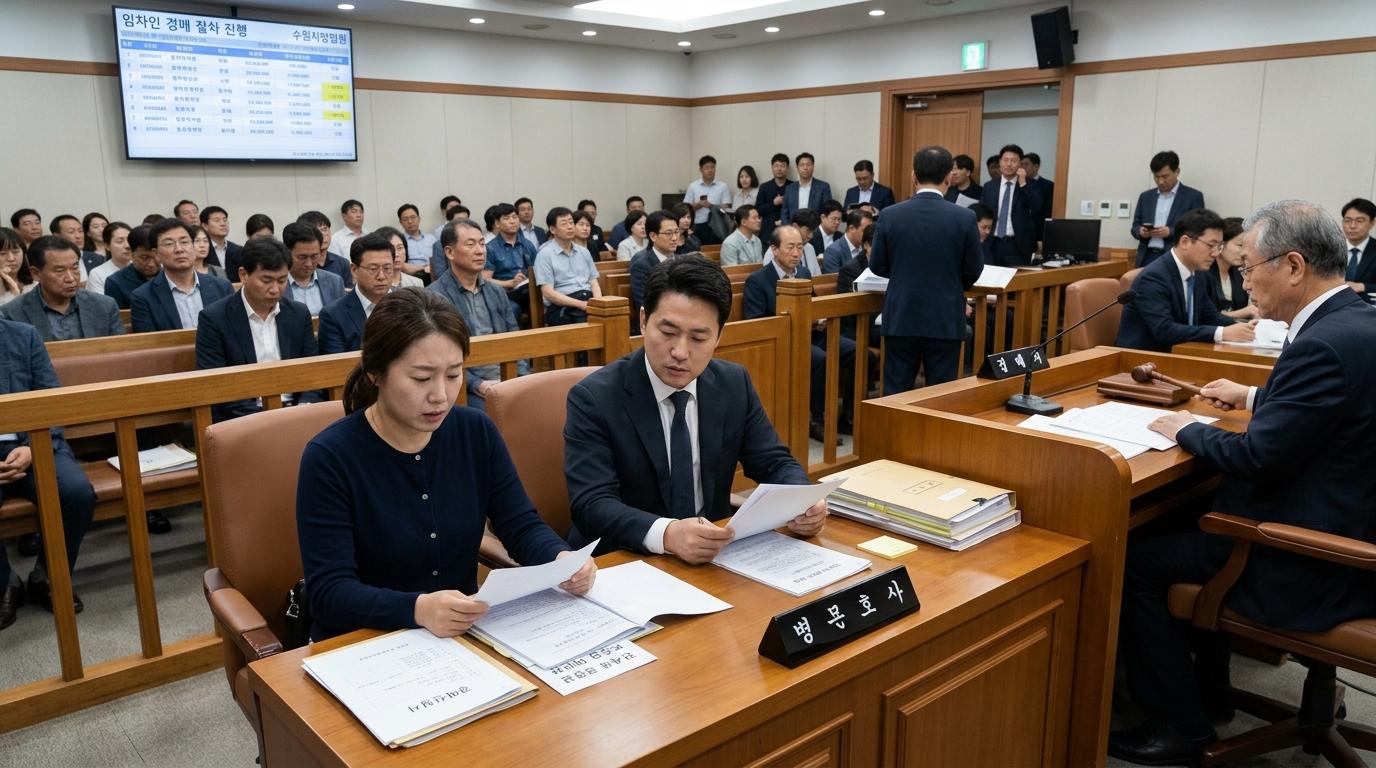
When tenants are unable to recover their jeonse deposit from landlords even after the lease agreement has ended, it causes severe economic anxiety. In such cases, tenants can secure their legal status by applying for an Order for Registration of Tenancy Rights and then legally recover the deposit they entrusted through real estate voluntary auction procedures. This serves as a final measure to protect the tenant's valuable assets from the landlord's default and to enforce the return of the deposit through legal compulsion.
Legal action to protect tenant rights in situations of non-return of jeonse deposits is crucial. The jeonse system, unique to Korea's housing culture, operates by tenants entrusting a substantial sum of money to the landlord, using and profiting from the property, and receiving the deposit back at the end of the lease term. While this has the advantage of reducing monthly rent burdens for tenants, there is always a risk of not getting the deposit back on time due to external factors such as changes in the landlord's financial status or a sharp downturn in the real estate market. In recent years, as housing market instability has escalated, cases of unrecovered jeonse deposits due to landlords' inability to repay have emerged as a major social problem. In particular, with a series of issues related to jeonse fraud, such as the 'Villa King' incidents, tenants' housing stability and property rights have faced severe threats. To respond to these situations, tenants can clarify their rights through legal measures like applying for an Order for Registration of Tenancy Rights, and further attempt to recover their deposits through compulsory or voluntary real estate auction procedures.
The Housing Lease Protection Act provides various mechanisms to protect these tenant rights. Tenants can receive a certain level of deposit protection through their right of opposition and preferential repayment rights. However, if the landlord does not return the deposit after the lease ends, there is a risk that the right of opposition may be lost if the tenant vacates the property. Therefore, the Order for Registration of Tenancy Rights is an important legal safety net that allows tenants to maintain their established right of opposition and preferential repayment rights even after moving out of the property. Through this, tenants legally register their deposit claim in the property registry and secure the right to receive dividends in subsequent auction proceedings.
Voluntary Auction Procedures: Key Steps for Deposit Recovery
One of the most direct legal recovery methods available to tenants who fail to receive their jeonse deposit back from the landlord is to apply for real estate voluntary auction. Voluntary auction is an auction conducted for the execution of collateral rights, and tenants become eligible to apply once they have registered their tenancy rights through an Order for Registration of Tenancy Rights and secured their legal claim to the deposit. The auction process proceeds through a series of legal steps. First, after receiving the decision document for the Order for Registration of Tenancy Rights, the tenant submits an auction application to the court overseeing the location of the leased property. The court accepts the application, reviews its eligibility, and issues an order to commence auction proceedings. Subsequently, the court notifies the debtor (landlord) of the auction and proceeds with preparation for sale after conducting a status investigation.
The next stage in the auction process is the designation and announcement of the sale date. The court appraises the property, sets a minimum bidding price, and schedules and announces the sale date. This announcement is a crucial procedure to inform the public of the sale and serves to notify interested parties of the auction. Following this, bidding takes place on the designated sale date, and the highest bidder is selected as the successful bidder. The court determines whether to approve the sale by comprehensively reviewing the submitted documents and bidding results. Once the sale is approved, the successful bidder must pay the remaining balance within the set deadline. Upon completion of the balance payment, the court facilitates the registration of ownership transfer to the successful bidder, and the tenant recovers their deposit through the distribution process. If the tenancy rights are registered, the tenant has a high probability of recovering the full deposit amount, provided there are no senior claims. Specifically, the possibility of recovering the deposit through the auction process increases if the ratio of the jeonse deposit to the property's value is not high or if there are no collateral rights senior to the tenant's. Analysis of data from Zhishineen suggests that if there is no senior mortgage and the deposit ratio to market price is around 67%, there is a very high likelihood of receiving full distribution in an auction.
As a practical guide for successful deposit recovery, several important considerations must be checked. To successfully recover the deposit through voluntary auction procedures in a situation where the jeonse deposit is not returned, first, it is essential to thoroughly examine the property's registry before applying for the auction. The registry contains not only ownership information but also details of all rights encumbering the property, such as mortgages, provisional attachments, and tenancy rights. This allows for an accurate prediction of whether the tenant's deposit can be repaid before other rights, or how much can be recovered from the auction proceeds. If, at the time of applying for the Order for Registration of Tenancy Rights, junior mortgages or other encumbrances have already been registered due to the landlord's other debts, there is a risk of not recovering the full deposit amount due to a lower priority in the auction. For such complex rights relationships, it is important to consult with a legal expert to formulate the optimal strategy tailored to one's situation.
Second, even after the auction proceedings have commenced and a successful bidder has been determined, there may be cases where the landlord does not vacate the property. In such instances, the tenant may need to pursue separate eviction lawsuits or enforcement procedures to hand over the property to the successful bidder. These additional legal procedures involve significant time and costs, so the anticipated time and financial burden of such situations should be fully considered before applying for the auction. Furthermore, if the tenant does not recover the full deposit amount through the auction process, they may still need to pursue the remaining unrecovered amount by filing civil lawsuits against the landlord. Therefore, while voluntary auction is a powerful means for deposit recovery, it is not a perfect solution in all situations, and one must approach it cautiously with an accurate understanding of its characteristics.