How Much is 35 Million Won in Japanese Yen? Let's Find Out

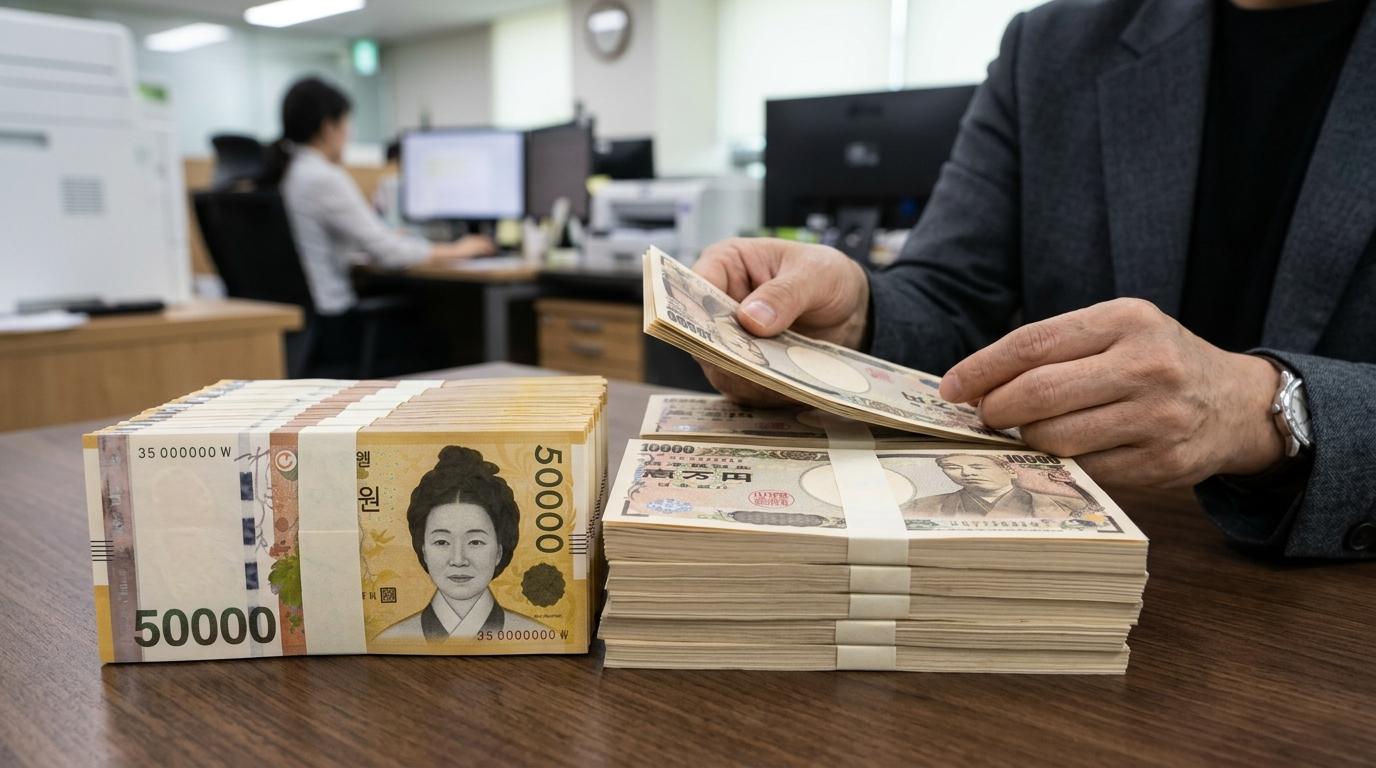
Precisely Calculate 35 Million Won in Japanese Yen and Formulate Strategies
There is high interest in how much 35 million won converts to in Japanese yen, and what specific methods and strategies exist to utilize this amount. With recent attention on the volatility of the KRW/JPY exchange rate, curiosity is growing beyond simple calculations to practical asset utilization methods. This article clearly presents the value of 35 million won in Japanese yen and provides an in-depth analysis of practical exchange, investment, and risk management strategies based on this.
Current Value of 35 Million Won: Yen Conversion and Determining Factors Analysis
Confirming the yen conversion value of 35 million won at the current moment is the most crucial foundational step before exploring detailed yen exchange information. Exchange rates fluctuate in real-time, so specific amounts are presented based on the latest official exchange rates. For example, assuming an average market rate of 895 won per 100 yen in mid-May 2024, 35 million won would equate to approximately 391.06 million yen (391,061,061 JPY). Looking at a broader range, it calculates to about 393.25 million yen (393,258,314 JPY) at 890 won per 100 yen, and around 388.88 million yen (388,888,889 JPY) at 900 won per 100 yen. This is the standard before exchange fees are applied; actual exchange amounts may vary slightly after bank buy/sell spreads and commissions are added. By intuitively grasping the magnitude of the amount in yen, the realism of funding plans for travel expenses or purchases in Japan can be enhanced.
Examining the key economic indicators influencing KRW/JPY exchange rate fluctuations reveals that the exchange rate between the won and yen is not determined solely by the trade balance between the two countries. It is a complex interplay of global economic conditions, the monetary policies of each country's central bank, international interest rate trends, commodity price fluctuations, and sometimes even geopolitical issues. In particular, decisions on base interest rates by the Bank of Korea and the Bank of Japan, and changes in the U.S. Federal Reserve's interest rate policies, are core factors determining the volatility of the KRW/JPY exchange rate. Monitoring these macroeconomic indicators is essential for exchange rate forecasting and investment strategy formulation, and checking the exchange rate at the time of actual transaction is most important.
Through large-scale yen transaction examples like corporate earnings announcements, one can confirm the scale of currency conversion far exceeding individual exchange amounts. For instance, Samsung Electronics' annual revenue last year reached 136.29 trillion won, which, converted at the then-prevailing exchange rate, amounts to a massive 10.68 trillion yen. This demonstrates that companies operating globally frequently handle large-volume foreign currency conversion transactions in the process of generating overseas sales or importing raw materials. It is important for individual investors and business owners to refer to such examples, closely monitor exchange rate trends, and plan their asset management accordingly.
Strategies for Utilizing and Exchanging 35 Million Won into Japanese Yen
If preparing yen for Japanese travel and consumption, selecting the optimal time to exchange currency is highly economical. Exchanging when the yen's value is low, meaning during a period of won strength or yen weakness, allows for acquiring more yen. Past trends show that yen weakness has persisted for certain periods, or the Korean economic situation has been favorable, leading to lower exchange rates. Therefore, it is wise to consistently monitor exchange rate trends considering your travel dates and estimated expenses. For example, if the rate drops below 850 won per 100 yen, it can be considered a favorable condition, and a strategy of partial exchange as needed may also be considered.
When purchasing yen for Japanese real estate or high-value goods, one must not only consider exchange rate fluctuations but also be aware of several precautions. In actual transaction processes, additional considerations such as exchange fees, remittance methods, and proof of fund source arise. The fee rates for each channel, including banks, private exchange offices, and online platforms, must be compared. For large sums, prior confirmation of remittance limits and foreign exchange transaction reporting procedures is essential. Particularly when purchasing real estate, potential risks should be minimized by pre-emptively understanding tax issues and regulations on fund movement between both countries.
Strategies such as utilizing foreign currency accounts or focusing on risk management for yen investment and asset management are also valid. Instead of simply holding 35 million won in cash, it can be deposited into a yen savings account or invested in financial products like Japanese stocks or bonds. When considering such investments, comprehensive analysis of the investment product's return volatility and the Japanese economic situation, in addition to exchange rate risk, is necessary. It is advisable to approach this cautiously by consulting with experts regarding overseas account opening procedures and tax issues, and risk should be managed through diversification with other currencies or assets.
35 Million Won Yen Exchange: A Practical Guide to Reducing Mistakes
Exploring the optimal channels to reduce exchange fees significantly impacts the final amount received when handling a large sum like 35 million won. Generally, using the internet or mobile apps often provides more favorable exchange rates than over-the-counter bank transactions. Furthermore, utilizing specific credit card company partnerships or preferential rates from your primary bank can further reduce fees. For large exchanges, carefully compare preferential benefits offered by different banks and competitive fee structures of online platforms to select the most economical method.
Be prepared for risks that can arise during high-value foreign currency transactions by familiarizing yourself with types of scams and prevention methods. Be particularly cautious with unverified non-face-to-face transactions or dealings through online entities. Be wary of practices that lure advance payments with promises like '0% exchange commission' or the circulation of counterfeit currency. The safest method is to use a trusted main bank or officially registered services. Always clearly confirm the exchange contract terms and the final amount received, and make it a habit to personally verify the denominations when receiving cash.
Finally, it is crucial to accurately understand the laws and tax information relevant to exchanging 35 million won. When carrying or remitting foreign currency exceeding 10,000 U.S. dollars, a reporting obligation may arise under foreign exchange transaction laws, and violations can incur fines. Caution is needed as 35 million won may approach the reporting threshold depending on exchange rate fluctuations. Additionally, when purchasing assets or investing in Japan, it is advisable to seek expert assistance and prepare for proof of fund sources in advance to manage tax risks such as income tax or gift tax that may arise in both countries.