Iran Attacks US THAAD Radar Base in Jordan

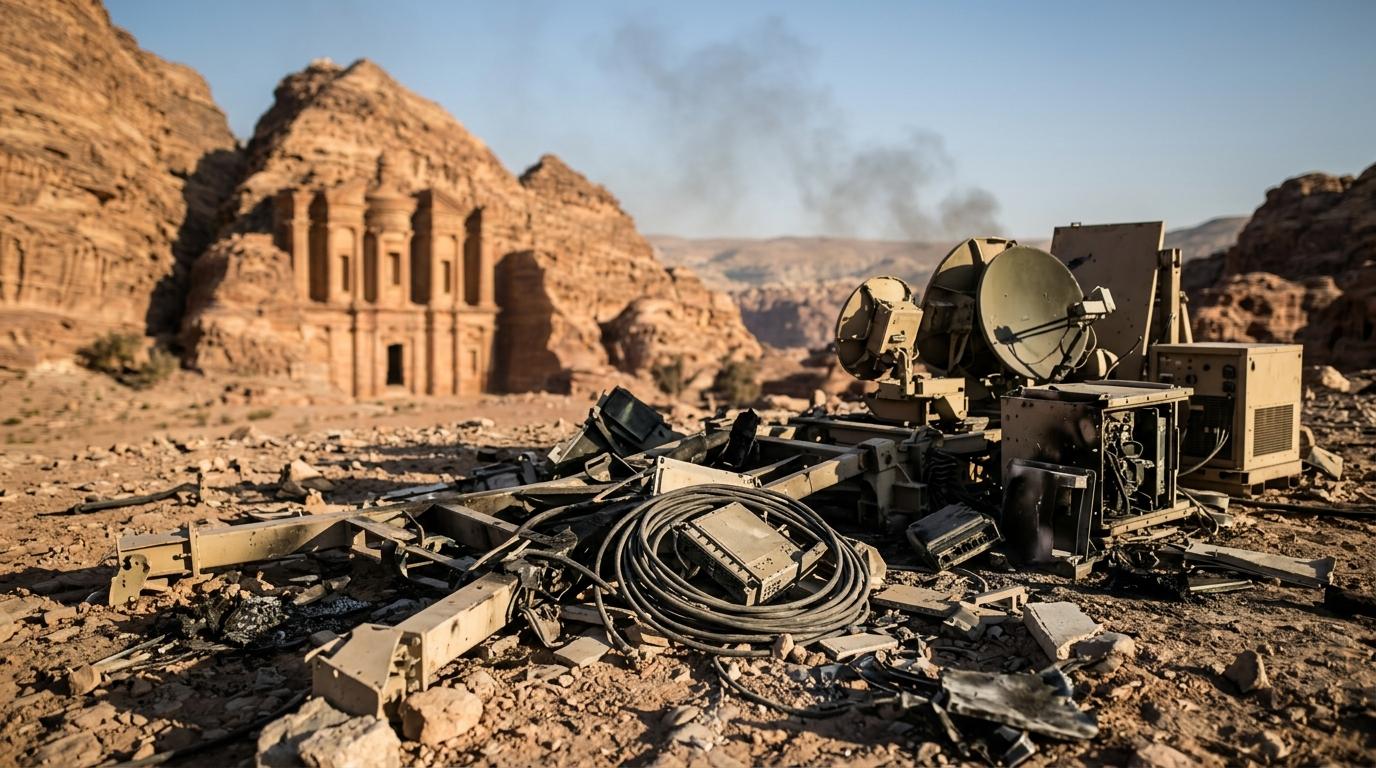
Iran launched a counterattack on February 28th, striking a THAAD radar base, the core of the US missile defense system in Jordan, following airstrikes by the US and Israel. This attack is noteworthy for directly targeting early warning radars, which detect ballistic missiles in advance, rather than Israel or other US military bases. Iran's attack was based on a strategy to neutralize the core of the missile defense system. The THAAD system relies on precise radar for ballistic missile detection and interception; loss of radar function leads to reduced detection and tracking capabilities and a lower success rate for interceptions.
Iran executed a multi-stage strategy: first weakening detection capabilities by destroying radars, then dispersing and attacking air defense systems with swarms of drones and ballistic missiles. The US Department of Defense declined official confirmation. The strategy was to 'blind' the enemy (radar) and then fire (missiles). THAAD is a defensive weapon developed by the US to counter ballistic missiles. A single THAAD radar unit alone is estimated to be worth hundreds of millions of dollars. Iran's attack was not an improvised response. Iran initially planned to dismantle the very structure that enabled the US and Israel to achieve over 90% interception rates. Iran's attack was designed in three phases: first, weakening detection capabilities by destroying radar, then dispersing air defense systems with drone swarms, and finally barraging with ballistic missiles.
Iran's drones, adapting tactics developed by Russia on the Ukraine battlefield, inflicted more than twice the damage of missiles. Some ballistic missiles carried warheads that separated in flight, meaning that even if the missile body was intercepted, the warheads scattered in the air and caused damage on the ground. This structure ensured damage even if defense was successful. According to official announcements from the US and Israel, the cost of interceptor missiles for this overall attack far exceeded the cost of Iran's offensive weapons, creating a cost-reversal scenario. During the initial four days of the war in 2026, 943 Patriot interceptor missiles were fired for the defense of the Gulf region.
US Secretary of State Marco Rubio stated that Iran can produce offensive weapons at a much faster pace than the US and its allies can intercept them. This situation led to the depletion of US missile defense stockpiles. On March 10, 2026, the US began transferring some THAAD systems deployed in South Korea to the Middle East, and also drew from Patriot interceptor missile stocks in the Indo-Pacific region. The US government signed contracts with Lockheed Martin to increase annual Patriot production from 600 to 2,000 units and THAAD production from 96 to 400 units.