AI and Neuroscience Fusion Unlocks the Secrets of Intelligence

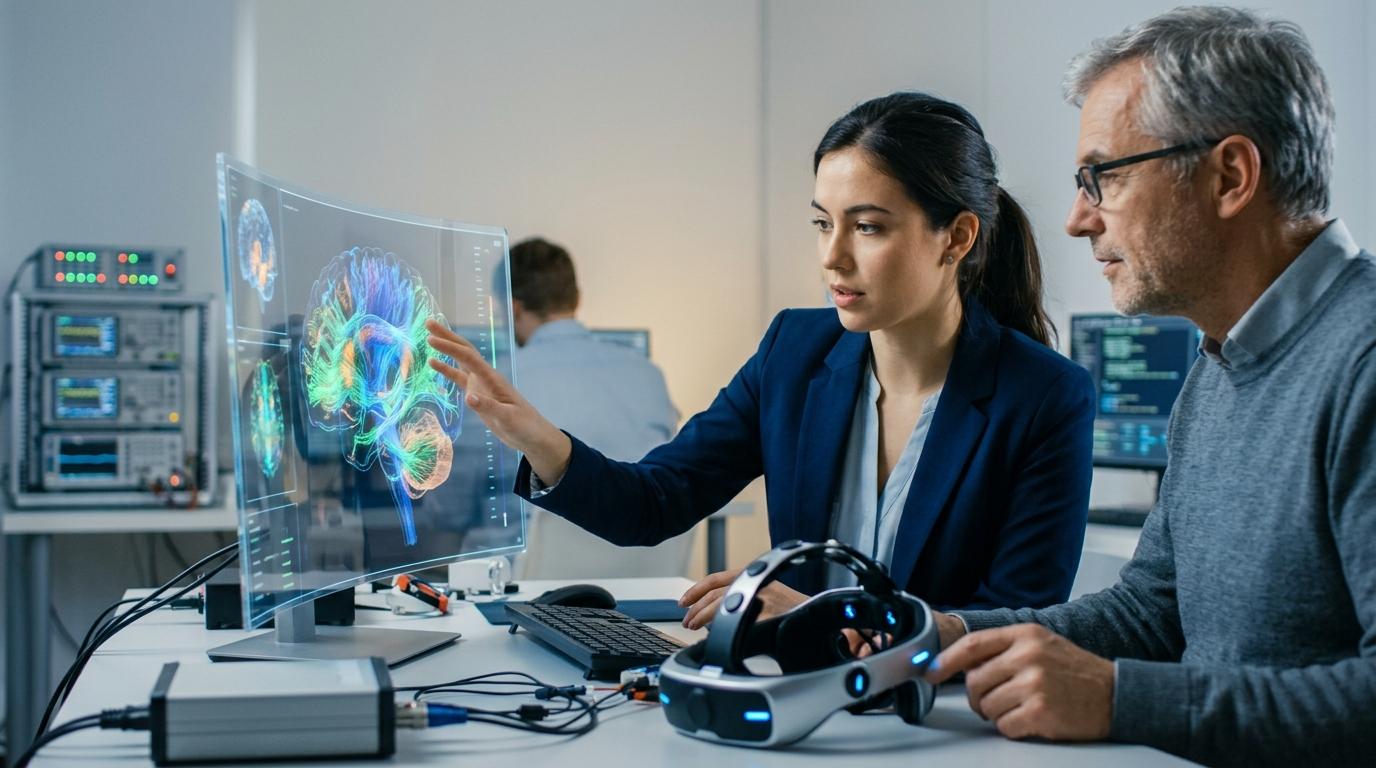
The convergence of Artificial Intelligence (AI) and neuroscience is emerging as a key driver for elucidating the operating principles of human intelligence, developing next-generation AI, and innovating treatments for brain diseases. The latest research trends in both fields are focused on integrating the brain's active inference mechanisms into AI models and enhancing AI's understanding and generative capabilities by utilizing brain activity data.
AI-Neuroscience Fusion: Unlocking the Secrets of Intelligence
Artificial Intelligence (AI) and neuroscience are fields that explore the extremes of information processing and learning capabilities, respectively. AI strives to build the most complex mechanical intelligence systems created by humans, while neuroscience seeks to understand the human brain, nature's most marvelous biological intelligence system evolved over billions of years. The convergence of these two fields has the potential not only to accelerate their individual advancements but also to broaden our fundamental understanding of the essence of intelligence, dramatically enhance the performance of AI systems, and offer innovative solutions for treating brain diseases and improving cognitive functions.
The reason for the rising necessity and importance of such convergence research is its indispensability in gaining a deeper understanding of how intelligence operates. AI benefits from understanding the brain's complexity or draws inspiration from it to develop new algorithms and architectures. Conversely, neuroscience can accelerate the analysis of vast brain data, brain function modeling, and brain disease research through AI technologies. This interaction ultimately moves towards two major goals: the development of AI with human-level cognitive abilities and groundbreaking treatments for brain diseases.
On the foundation of convergence research, combining neuroscientific insights with AI advancements, AI and neuroscience continue efforts to overcome current limitations. The brain's complex and efficient operating methods present a new paradigm for AI research, and technological advancements serve as a catalyst for this convergence. In particular, the brain's active inference mechanism offers a new paradigm for AI models. While traditional neuroscience research focused on the brain's structure and functional networks, recent studies propose the perspective that the brain is an 'active inference' machine that minimizes prediction errors and actively interacts with its environment.
Furthermore, the excellence of the brain provides crucial inspiration for compensating for the limitations of AI development. Although AI has shown achievements in specific areas due to advancements in deep learning technology, it faces limitations such as massive data dependency and high energy consumption. The human brain performs complex computations with low energy and possesses excellent generalization capabilities, thus research is underway to improve AI models' learning and energy efficiency based on these characteristics. Additionally, the expanding possibilities for convergence research due to technological advancements, such as improvements in the precision of neuroimaging technologies like fMRI and EEG, are accelerating both the utilization of AI for neuroscience research and the development of AI inspired by the brain.
The Forefront of AI-Neuroscience Convergence: Key Research Methods and Technologies
The convergence of AI and neuroscience is being pursued using a variety of advanced technologies. The combination of brain signal analysis and AI pattern recognition is driving the development of Brain-Computer Interfaces (BCIs), while simulations of brain activity using generative AI are opening new horizons for understanding and predicting brain function.
Specifically, the integration of brain signal analysis and AI pattern recognition is at the core of technological advancement. Progress in neuroimaging technologies that measure brain activity and brain signal processing techniques is elevating AI's pattern recognition capabilities. AI is used to extract meaningful patterns from complex brain signal data and identify specific cognitive states. For instance, AI can accurately determine a user's concentration level by analyzing EEG data, playing a crucial role in BCI technologies that aid paralyzed patients in communication and control.
Moreover, generative AI-powered brain activity simulation and prediction technologies serve as powerful tools for understanding the brain's information processing mechanisms. By using AI models that mimic the dynamic behavior of brain neural circuits or simulate responses to specific stimuli, researchers can predict brain function disorders or validate the effectiveness of new treatment strategies. Neuroscience research teams have developed models using generative AI to predict early signs of neurodegenerative diseases like Alzheimer's, and research applying the human brain's predictive coding principles to deep learning to enhance AI learning efficiency is also gaining attention.
The Future and Applications of Intelligence Unveiled by Convergence Research
The convergence of AI and neuroscience offers broad application possibilities, including the development of AI with human-level cognitive abilities, a paradigm shift in diagnosing and treating brain diseases, and the enhancement of human cognitive capabilities and educational innovation.
First, the development of AI with human-level cognitive abilities is expected to accelerate. The fusion of AI and neuroscience enables the creation of AI that mimics human flexibility, creativity, and deep understanding. By applying the brain's hierarchical information processing methods and attention mechanisms to AI models, AI will move beyond simple pattern recognition to possess capabilities for reasoning, planning, and complex problem-solving. This holds the potential to dramatically improve AI performance in various fields such as autonomous driving and robotics.
Next, a paradigm shift in diagnosing and treating brain diseases is anticipated. By applying the biological principles of intelligence derived from neuroscience to AI-based diagnostic tools, various brain diseases like Alzheimer's and Parkinson's can be diagnosed precisely and at an early stage. AI can predict disease progression patterns and support the development of personalized treatment plans optimized for each patient's brain state. This will act as a key driver for precision medicine, which involves creating optimized treatment plans tailored to an individual's brain condition, leading to a significant improvement in patients' quality of life.
Finally, significant changes are expected in the fields of enhancing human cognitive abilities and educational innovation. The convergence of AI and neuroscience suggests new methods for strengthening human learning styles and cognitive functions. AI systems could be developed that analyze an individual's brain activity patterns to recommend optimal learning speeds and methods, or that detect cognitive load in real-time to increase learning efficiency. AI tutors developed based on neuroscientific knowledge will provide individualized learning experiences tailored to learners' cognitive characteristics, bringing about innovation across the entire education system.