Lee Jae-myung Probe Controversy: Starbucks Emerges as Unexpected Focal Point

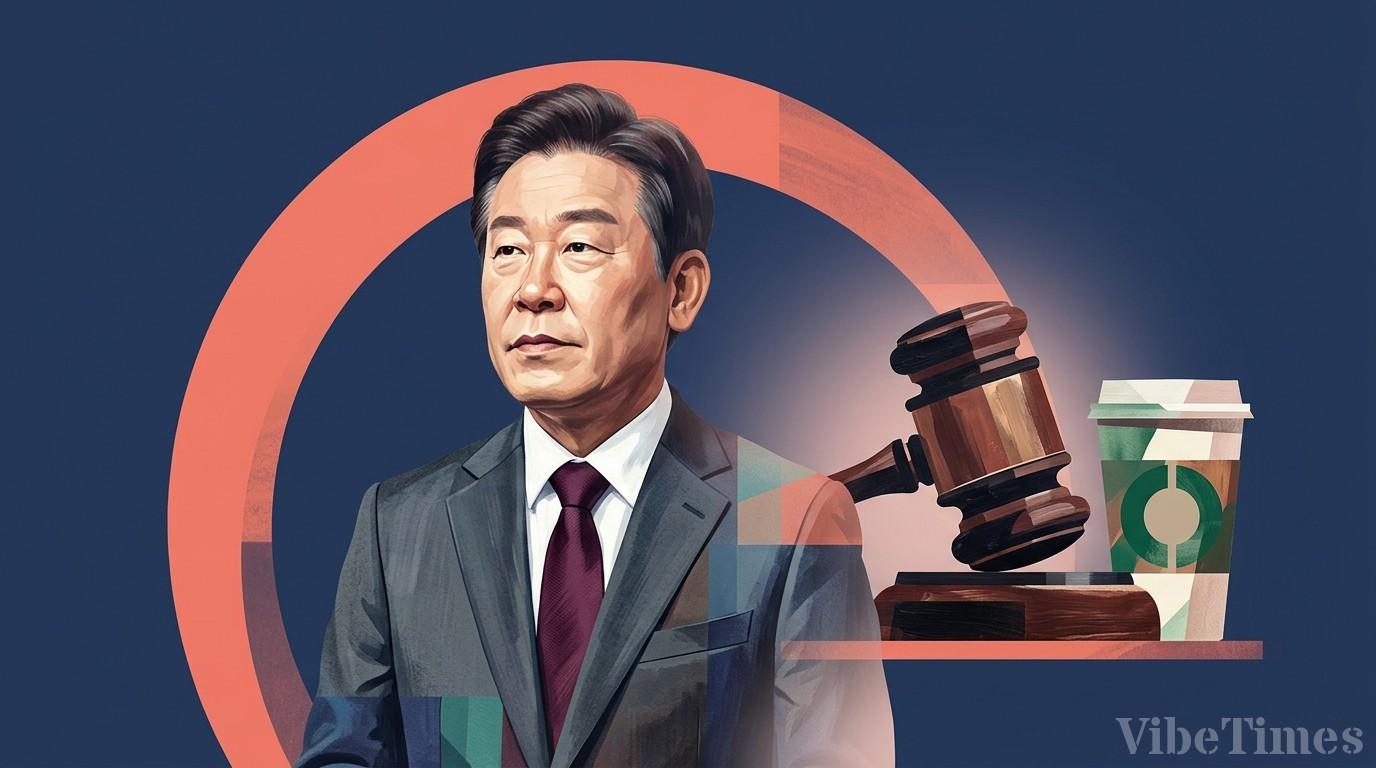
Analysis: Lee Jae-myung Probe Controversy - Suspicion of Shift Towards 'Starbucks' as Key Issue
Political wrangling over the scope of a special prosecutor's investigation into opposition leader Lee Jae-myung is intensifying. Specifically, Jang Dong-hyuk, a leader of the People Power Party, has strongly criticized Lee for his persistent remarks about Starbucks, suggesting Lee is attempting to divert public criticism of the special prosecutor's probe towards the Starbucks issue. This criticism goes beyond mere damage to a specific company's image, raising concerns about political interference in judicial procedures and strategies to mislead public opinion. The potential impact of this incident on future political dynamics and public sentiment warrants analysis.
Background of the Lee Jae-myung Special Prosecutor and 'Starbucks' Controversy
On May 25, People Power Party leader Jang Dong-hyuk claimed that Lee Jae-myung is strategically leveraging the 'Starbucks' issue to dilute negative public reactions to his ongoing legal proceedings, particularly the special prosecutor's investigation. He heightened his criticism, alleging an intention to "divert public anger over the special prosecutor demanding the cancellation of Lee Jae-myung's trial to Starbucks," and labeled it a "people's trial for local elections." The People Power Party's stance is that Lee's remarks are a political gesture to distract from his fundamental legal risks. The prevailing analysis suggests that Lee's repeated criticism of a specific company could be interpreted as a tactic to overcome his current legal and political difficulties.
Furthermore, on May 21, President Yoon Suk-yeol, during a senior secretaries' meeting, referred to "malicious fake news such as the theory of North Korean involvement in the May 18 Gwangju Uprising" and ordered a strong response. This statement aimed to caution against the spread of false information related to the May 18th Democratic Uprising and urge social vigilance against related distortions and mockery. Considering the context of the President's remarks, it's not impossible that Lee's Starbucks comments could be a rebuttal to attempts to undermine the spirit of May 18th or a defensive statement to avoid being trapped in a 'fake news' frame related to it. However, the People Power Party views Lee's statements as an attempt to politically exploit the spirit of May 18th or minimize the May 18th debate to a secondary issue, and editorials have emerged emphasizing the necessity of legislative action. Thus, this issue transcends simple corporate criticism, carrying complex political implications.
Cross-Party Debate and Social Impact
Political reactions to this issue are sharply divided. The People Power Party has branded Lee Jae-myung's Starbucks-related remarks as a 'political show' and a 'strategy to mislead public opinion,' criticizing them fiercely. As stated by leader Jang Dong-hyuk, they view it as an attempt to divert public attention from the complex legal and political challenges Lee currently faces, including the special prosecutor's probe. While such strategies are often employed during election campaigns to highlight an opponent's weaknesses or dilute one's own risks, the People Power Party has emphasized the severity by labeling this incident a "people's trial for local elections."
Conversely, Lee Jae-myung's camp and opposition parties might interpret these criticisms as a defensive mechanism to avoid being framed as "shifting the issue," or as criticism against forces attempting to undermine the spirit of May 18th. However, with the current information, Lee's specific counterarguments or stance have not been clearly confirmed, leading to the People Power Party's criticisms being more prominent. Given past attacks against opposition figures, such as accusations of academic credential misrepresentation against candidate Yang Hyang-ja or criticism of semiconductor legislation achievements, this could also be seen as an extension of mutual mudslinging and issue contention between the ruling and opposition parties. Moreover, similar to the intense exchanges over 'relocating the Ministry of Maritime Affairs and Fisheries to Busan' and 'special prosecutor for fabricated indictments' during a mayoral debate in Sejong, the pattern of attacking opponents through specific issues during election campaigns is recurring. A significant societal concern is the high risk that such exchanges, with specific companies or issues becoming flashpoints, can devolve into emotional confrontations or superficial debates rather than substantive policy discussions.
Regarding legislative issues, recent editorials have called for legislation to address distortions and mockery of the May 18th Gwangju Uprising. This reflects a societal consensus on the urgent need for legal mechanisms to correct the ongoing spread of fake news and distortions related to the May 18th Democratic Uprising. The People Power Party may interpret Lee Jae-myung's remarks as an obstruction or distortion of these legislative efforts. It is highly probable they view Lee's Starbucks comments as an attempt to distract from or divert attention away from the core issue of addressing distortions regarding May 18th. Against this backdrop, social consensus-building and political friction are anticipated during the future legislative process concerning May 18th.
Future Outlook and Market/Industry Impact
The political dispute surrounding the 'Starbucks controversy' is expected to have a significant impact on future legislative processes and related political schedules. The People Power Party's sharp criticism, labeling Lee Jae-myung's remarks a "people's trial for elections," suggests they may use the issue as material to highlight their policy superiority and differentiate themselves from the opposition in the upcoming June local elections. Consequently, similar political confrontations could intensify during the local election period, potentially increasing voter fatigue and hindering policy discussions. Furthermore, if Lee Jae-myung repeatedly resorts to using specific issues to evade legal risks, it could amplify distrust in the fairness and independence of the judicial process. The media, by focusing heavily on these political disputes, is also likely to pay more attention to the ripple effects of the issues and the personal conflicts rather than the substance of legislation or policy.
Meanwhile, as 'Starbucks,' a specific corporate name, becomes embroiled in political controversy, subtle ripples may spread throughout the company and the related industry. While Lee Jae-myung's remarks have not yet caused direct, concrete damage to Starbucks' business operations, the company's image could be unintentionally tarnished by becoming the center of political debate. Especially in modern society where consumer purchasing behavior is linked to corporate image, such political controversies could indirectly affect the company's reputation and sales in the long run. This could serve as a reminder of why companies strive to distance themselves from political issues. It remains to be seen how this situation will unfold based on the tone of Lee Jae-myung's future remarks, public reaction, and the progress of legal proceedings. Additionally, a key point to watch will be whether the legislative discussion concerning May 18th can proceed smoothly amidst such political disputes without getting sidetracked.

쿠팡 파트너스 활동의 일환으로 일정 수수료를 제공받습니다