President Lee Jae-myung's European Trip Sees Launch of Korea-EU Competitiveness Partnership

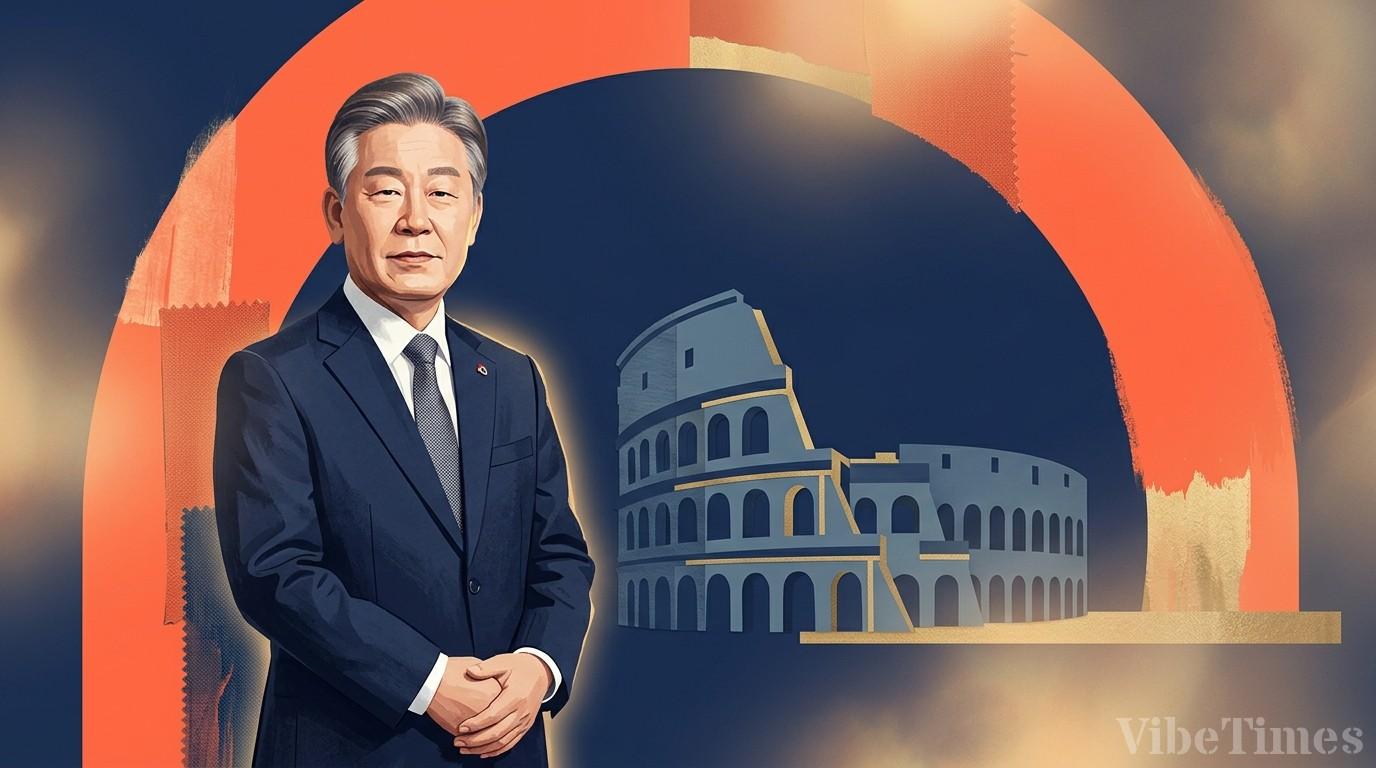
President Lee Jae-myung's European Trip Yields Tangible Results: Korea-EU Competitiveness Partnership Launched
President Lee Jae-myung's economic blueprint, announced on the occasion of his first anniversary in office, is translating into concrete achievements through his recent European tour. Notably, diplomatic engagement with the European Union (EU) has resulted in the attraction of $165 million in advanced company investments and the launch of a Korea-EU Competitiveness Partnership. This demonstrates how President Lee's vision for South Korea to evolve into a world-leading nation, moving "beyond normalizing the abnormal," is manifesting as strengthened practical economic cooperation. The tour is being assessed as an opportunity that transcends mere diplomatic encounters, serving to secure new growth engines for the Korean economy and fortify its strategic position amidst the global supply chain reconfiguration.
During his European tour, President Lee attended the 'Korea-EU Forum on Sustainable Energy Transition Cooperation' held in Brussels, Belgium, reaffirming both sides' commitment to addressing climate change and building sustainable energy systems. He also held a meeting with King Philippe of Belgium, engaging in in-depth discussions on historical solidarity and future cooperation between the two nations. He specifically referenced Belgium's sacrifice as a contributor to the Korean War, underscoring the importance of safeguarding peace and democracy. At this meeting, President Lee sought the Belgian King's support and interest in Korea's policy for peace and coexistence on the Korean Peninsula, an initiative expected to garner broader international backing for Korea's peace initiatives. In his meetings with EU leaders, he strongly condemned the military cooperation between North Korea and Russia and clearly articulated South Korea's stance against recognizing North Korea as a nuclear-armed state. These diplomatic actions are regarded as significant achievements in communicating Korea's firm position on North Korean issues, which are directly linked to regional security, to the international stage, while respecting global norms and order.
A particularly noteworthy outcome is the signing of the Korea-EU Digital Trade Agreement. This agreement lays crucial groundwork for improving digital trade environments and establishing new trade norms for both sides in the digital economy era. The decision by European advanced companies to invest $165 million is analyzed as being influenced by this institutional support, coupled with trust in Korea's leading technological capabilities and stable investment environment. In his summit with the Belgian Prime Minister, President Lee proposed "sharing the benefits of semiconductor development together," seeking to expand mutual cooperation in advanced industrial sectors. These concrete economic achievements provide evidence that the "normalization of the abnormal" policy pursued by the Lee Jae-myung administration is translating into real economic recovery and enhanced international competitiveness. The launch of the Korea-EU Competitiveness Partnership is expected to serve as an important milestone not just for one-off investment attraction, but for building a long-term and comprehensive economic cooperation relationship going forward.
Political Circles Watch President Lee's European Trip Achievements Closely... Seeking Stronger Party-Government Cooperation
The outcomes of President Lee Jae-myung's European tour have become a daily topic in domestic political circles. In particular, the ruling Democratic Party of Korea is increasingly vocal about the need to further strengthen party-government cooperation based on the diplomatic and economic achievements secured during the tour. With President Lee securing tangible diplomatic successes, including the adoption of a joint statement with the European Union (EU) condemning North Korea's nuclear development and the signing of the Korea-EU Digital Trade Agreement, the opposition parties are also continuing discussions on their evaluations and future directions for state governance.
Regarding the tour, Democratic Party spokesperson Lee Ji-eun recently caused controversy with remarks that drew parallels between President Lee and former President Yoon Suk-yeol, but she apologized for the miscommunication of her intent and resigned from her position. This highlights the subtle dynamics and the importance of communication that arise in the process of the ruling party supporting the president's state administration. Meanwhile, lawmaker Kim Min-seok accompanied President Lee on his European trip and was actively involved. These actions by party members can also be interpreted as moves made with an eye on the party's internal dynamics and the composition of the next leadership ahead of the upcoming party convention. Separately, lawmaker Jeong Cheong-rae did not attend the send-off for President Lee's trip, taking a different course of action. The diverse actions of these party members are drawing attention to how they might influence the future policy direction and leadership discussions within the Democratic Party.
Within the People Power Party, alongside evaluations of President Lee's diplomatic achievements, various opinions are being raised regarding future state administration. Especially in the lead-up to the recent People Power Party floor leader election, candidates are actively campaigning with "party reform" as their central theme. Candidates such as Jeong Jin-seok, Kim Do-eup, and Sung Il-jong are competing by presenting plans for party change and reform. The election of this floor leadership is anticipated to significantly impact the ruling party's future strategy for confronting the opposition and securing the momentum for state governance. Furthermore, assertions like lawmaker Jang Dong-hyuk's call for "national by-elections" and lawmaker Kim Tae-gyu's rejection of "congratulatory orchids" represent diverse voices within the ruling party, each asserting their presence. These movements within the political sphere illustrate the dynamic political situation arising from the process of supporting or checking the Lee Jae-myung administration's governance.
Expanding Diplomatic and Economic Cooperation: Future Prospects and Implications
President Lee Jae-myung's European tour is expected to contribute to enhancing the long-term growth potential of the Korean economy and elevating South Korea's standing in the international community, beyond short-term investment attraction effects. The $165 million in advanced company investments will drive the recovery of the Korean economy and positively impact job creation. Moreover, the launch of the Korea-EU Competitiveness Partnership is poised to play a crucial role in positioning Korea as a key player in the global supply chain by revitalizing technological cooperation, joint research and development, and talent exchange in advanced industrial sectors. Strengthening cooperation in forward-looking fields such as energy transition and the digital economy will be factors that guarantee the improvement of the Korean economy's structure and sustainable growth.
However, despite these positive prospects, challenges remain. The joint condemnation with the EU of North Korea's nuclear development and military cooperation with Russia could serve as an opportunity to strengthen international cooperation on North Korean issues, but it also highlights the need for parallel practical diplomatic efforts to ease tensions on the Korean Peninsula. Furthermore, the internal dynamics of the domestic political landscape can affect the stability and efficiency of state governance. It is crucial to secure the momentum for President Lee's diplomatic and economic policy initiatives through constructive cooperation and communication between the ruling and opposition parties. In particular, given the continued uncertainty in the external economic environment, continuous government efforts are required to further solidify the cooperation channels established with Europe through this tour and to discover new growth engines.
Moving forward, the Lee Jae-myung administration is expected to accelerate policy implementation aimed at strengthening national future competitiveness, such as fostering advanced industries, transitioning to eco-friendly energy, and accelerating digital transformation, based on the achievements of this European tour and by further enhancing economic diplomacy. Additionally, by actively participating in and contributing to major global issues, Korea is expected to demonstrate global leadership and enhance its international standing. For these efforts to bear fruit, bipartisan cooperation from domestic political circles and national support are essential. Close attention is being paid to whether President Lee's economic blueprint can become the driving force to lead South Korea to become a globally leading nation.