President Lee Jae-myung's Approval Rating Plummets 9%p: Analysis of Causes

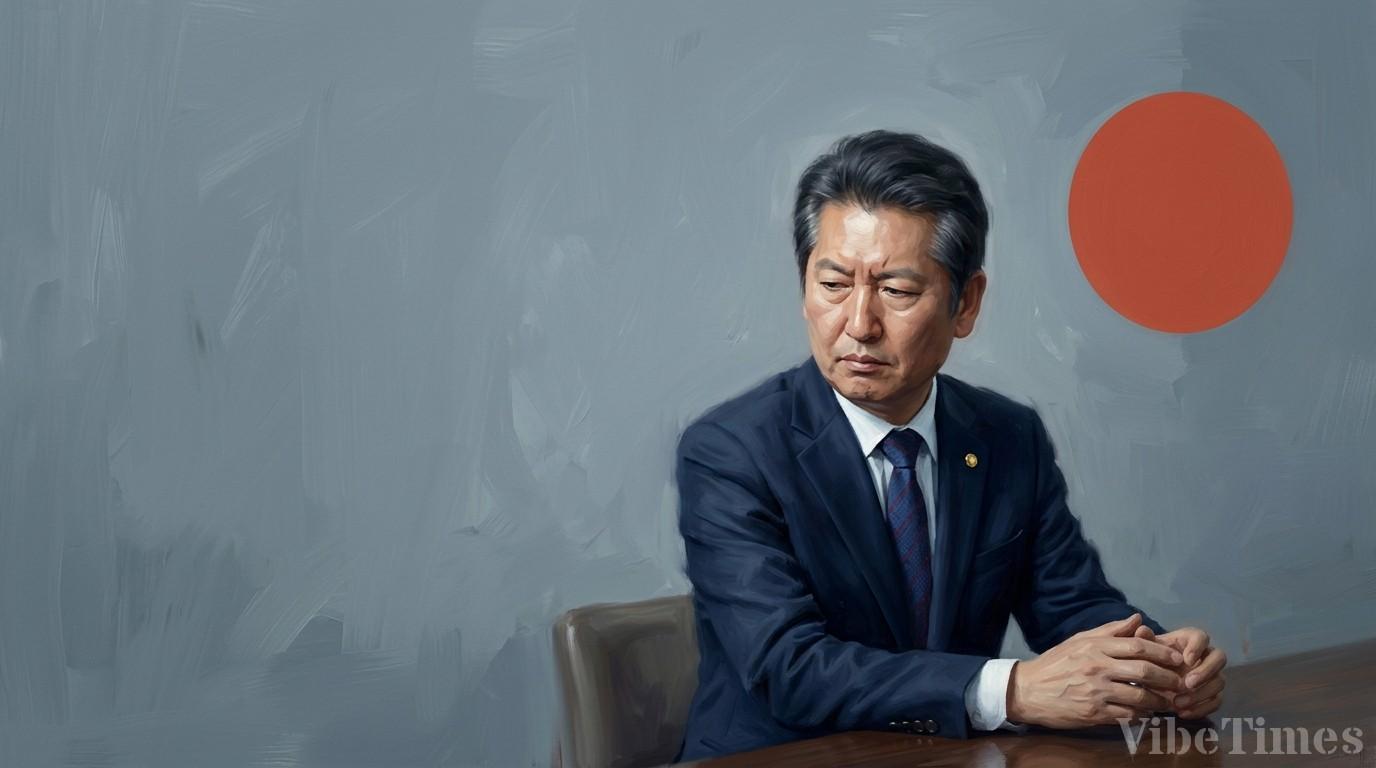
President Lee Jae-myung's Approval Rating Plummets Amidst 'Election Setbacks' and Worsening Public Sentiment
According to the latest National Barometer Survey (NBS) results, President Lee Jae-myung's approval rating for his state administration has plummeted by 9 percentage points to 57%. This marks a significant decline compared to last week's survey, with political circles analyzing it as a reflection of public sentiment following recent election outcomes. The NBS report indicated that 57% of respondents approved of President Lee Jae-myung's governance, while 33% disapproved. Among those who approved, 31% said he is 'doing very well' and 26% said 'doing fairly well.' For the disapproval group, 13% responded 'doing fairly poorly' and 20% 'doing very poorly.'
This drop in approval rating warrants interpretation within the context of the opposition's strong performance in the recent local elections. The NBS results showed that 45% of respondents viewed the election outcome as 'the opposition's strong showing,' compared to only 28% who considered it 'the ruling party's strong showing.' This shift in public sentiment can be seen as a signal calling for a review of the Lee Jae-myung administration's policy direction and implementation methods. The 9 percentage point drop in the president's approval rating is a serious matter that goes beyond mere fluctuations in public opinion, potentially leading to a weakening of his governing capacity.
Complex Impact of Failed Real Estate Policies and the 80 Trillion Won Education Fund Reform
From its inception, the Lee Jae-myung administration has focused on stabilizing the real estate market, yet it finds itself facing criticism for policy failures. Statistics showing a 14.73% increase in Seoul apartment prices within his first year in office support these critiques. This has led to accusations of repeating the failures of the Moon Jae-in administration's real estate policies, with analyses suggesting the government's market intervention methods are backfiring. Furthermore, the proposed reform of the 80 trillion won education fund is a contentious issue. Concerns are being voiced within and outside the education sector that the reform fails to adequately reflect the unique realities of educational sites, potentially acting as a future source of public alienation. These policies risk provoking backlash from specific groups in the short term and could lead to a decline in overall trust in the government's administration in the long run.
The government's real estate policies should prioritize the housing stability of ordinary citizens, but recent data faces criticism for exacerbating wealth disparity. The 14.73% surge in Seoul apartment prices, coupled with rising household debt, is pushing the dream of homeownership further away for the younger generation. Against this backdrop, the 80 trillion won education fund reform is sparking social debate intertwined with issues of educational equity. If the reform is pushed forward under central government leadership without heeding the voices from educational sites, dissatisfaction within the education sector could escalate, inevitably leading to a decline in government approval ratings. These multifaceted factors are believed to be interacting and contributing to the drop in President Lee Jae-myung's approval ratings.
Future Outlook: Between the Message of 'Unity' and the Demand for 'Cooperation'
Amidst President Lee Jae-myung's declining approval ratings, Democratic Party leader Jeong Cheong-rae is calling for party unity, emphasizing the need to 'rally around President Lee Jae-myung to ensure the success of his administration and achieve a second term.' This is interpreted as a strategic message to overcome the current crisis. Jeong stated, 'Are our internal minor differences greater than theirs?' urging for the narrowing of internal disagreements and a collective awakening. He also expressed agreement with President Lee's assessment and perception of the June 3 local election results, reminding that historically, unity led to victory while division led to defeat. These remarks are seen as a rebuttal to theories of leadership accountability or demands for change within the party, demonstrating a will to solidify party cohesion under strong leadership during a crisis.
However, elsewhere, the phrase 'regimes are short-lived' is being circulated, with calls for the opposition's critical remarks to be reflected in state affairs. The newly appointed People Power Party Floor Leader Jeong Jin-seok requested Hong Ik-pyo, the Senior Presidential Secretary for Political Affairs, to 'reflect the opposition's critical words in state administration.' Jeong stated, 'It is the opposition's role to criticize and offer sharp opinions,' adding, 'While such critical words might sound uncomfortable, I believe it is the unique role of the opposition, and I request that these are reflected in the state administration.' He also emphasized that 'what the public expects is not partisan squabbling between the ruling and opposition parties, but cooperation for the sake of livelihoods,' underscoring the importance of governance through cooperation and communication. Thus, the Lee Jae-myung administration faces the challenge of solidifying internal party unity while also needing to accept public sentiment and restore governing momentum through constructive dialogue and cooperation with the opposition. Finding a balance between these two demands in future policy implementation is expected to be a critical turning point for the stable governance of the Lee Jae-myung administration. Furthermore, regarding the controversy over the withdrawal of prosecution, President Lee's statement that 'all those involved in the conspiracy will be punished' signals a strict response based on law and principles, which could also affect future political repercussions.
