KAI Director Kang Byung-gil Announces Shift to AI-Based Future Air Combat Systems

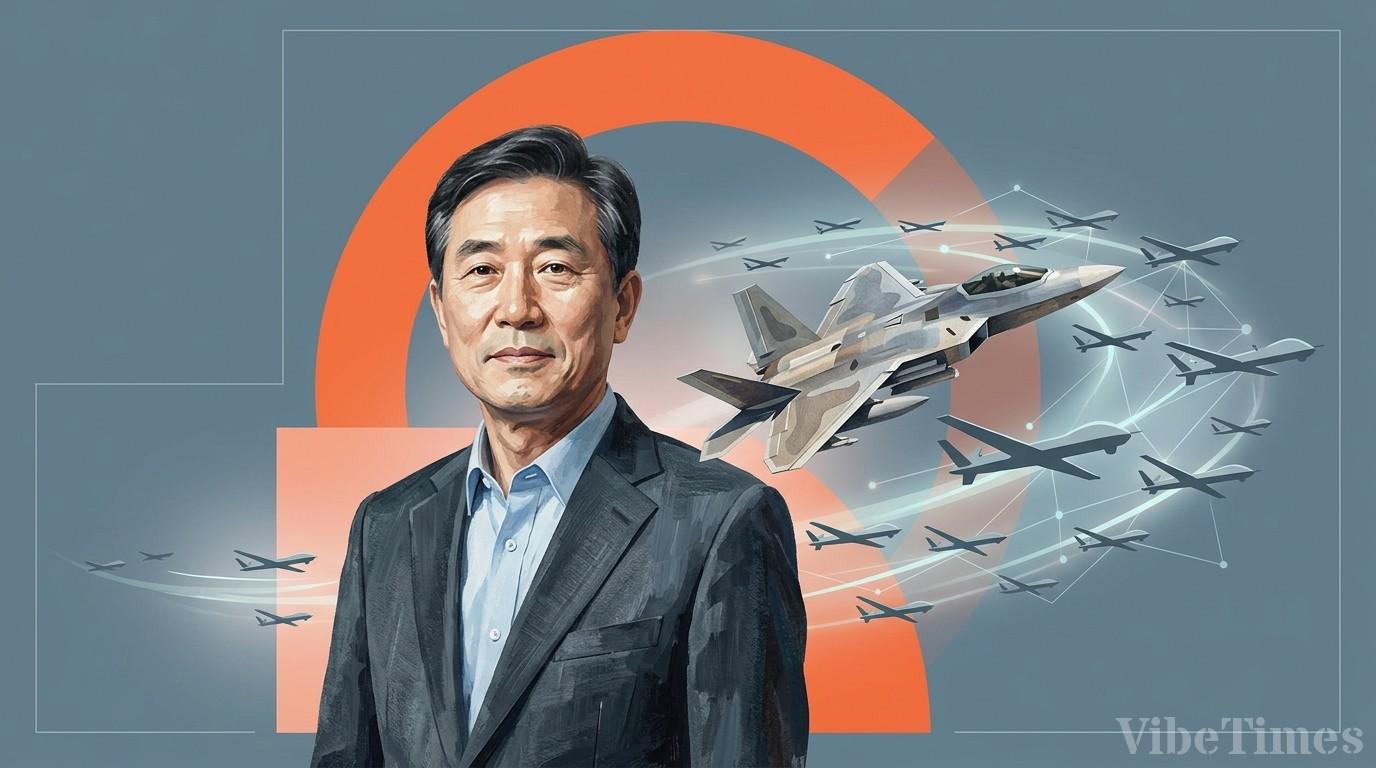
KAI Director Kang Byung-gil announced that AI-based Manned-Unmanned Teaming (MUM-T) will lead future air combat. Modern warfare is shifting from a focus on large troop numbers and high-cost platforms to intelligent unmanned forces that are low-cost and highly efficient. Manned-Unmanned Teaming (MUM-T), where manned platforms operated by humans and unmanned platforms operated by artificial intelligence perform missions together, plays a crucial role in building future air power. At a seminar held on the 11th, Director Kang announced that future battlefields will evolve from human-led to AI-led manned-unmanned combined warfare.
Director Kang cited the Russia-Ukraine war as an example, explaining that a new battlefield environment is forming where low-cost unmanned systems counter high-cost weapon systems. He stated that operations in the form of 'kill webs' and 'mosaic warfare,' connecting multiple unmanned systems and manned platforms, will expand, presenting 'unmanned, autonomous, connected, and artificial intelligence' as key keywords for future warfare.
KAI introduced its Next-Generation Air Combat System (NACS), based on the KF-21, as central to realizing Manned-Unmanned Teaming. It explained the concept of maximizing combat effectiveness by combining the KF-21 with reusable unmanned aircraft 'Unmanned Combat Aircraft (MUCCA)' and expendable unmanned aircraft 'Small Utility Combat Aircraft (SUCA).' The MUCCA, capable of runway takeoff and landing, will perform cooperative missions with manned fighter jets and be equipped with air-to-air and air-to-ground armament, as well as AI-based autonomous mission capabilities. A modular design is planned to allow for the integration of various mission equipment such as AESA radar, IRST, and EOTS. The SUCA is being developed to allow for diverse operational methods depending on the mission and can be launched not only from the air but also from the MUCCA. KAI is currently conducting flight tests for the SUCA through its own investment.
KAI proposed the AI Pilot technology demonstration project, applying AI to the FA-50, and revealed plans to establish a Korean-style AI Pilot testbed and accumulate data for early operational capability and preemption of export markets. Director Kang Byung-gil stated that future air combat will be decided not by individual weapon performance, but by how quickly decisions and actions are made based on data. He emphasized building aerospace power that can guarantee victory for the ROK military through AI and Manned-Unmanned Teaming. Leveraging its KF-21 development experience and aerospace platform technology, KAI is expanding its capabilities in developing next-generation air combat systems and unmanned platforms, aiming to build Korean-style manned-unmanned combined air power that can respond to future battlefield environments.