EU Steel Regulation Talks Aim to Uphold Free Trade Order

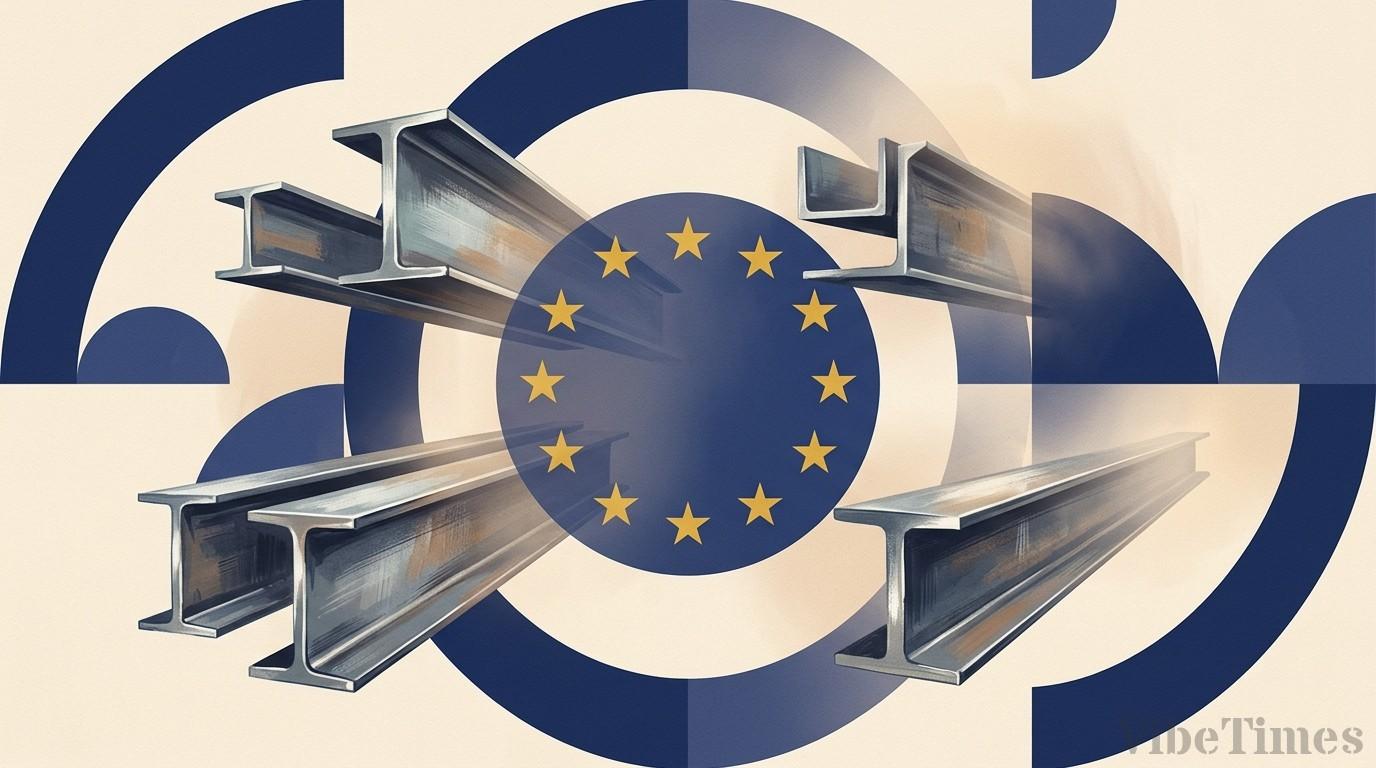
EU Steel Regulation Bill Discussions Reaffirm Importance of Free Trade Order
Amid the European Union's recent moves to bolster economic security, productive discussions between South Korea and the EU concerning regulatory legislation, including steel tariffs, have culminated in a renewed affirmation of the free trade order's significance. Senior Presidential Secretary for National Security, Wi Sung-lak, explained the outcomes of President Yoon Suk-yeol's European tour, coinciding with his attendance at the G7 summit, highlighting efforts to ensure the EU's economic security initiatives do not create barriers for Korean businesses entering the European market. This demonstrates multifaceted diplomatic efforts to manage the risks of protectionism spreading amidst the global supply chain realignments and to safeguard the free trade system, the bedrock of international trade norms, rather than merely focusing on individual national trade policies.
Specifically, the discussions focused on preemptively coordinating the potential impact on the international economic order from various EU regulatory bills aimed at protecting its industries and enhancing economic security, particularly concerning the potential imposition of tariffs on steel products. While the EU's economic security policies aim to strengthen its own industrial competitiveness and stabilize supply chains, the resulting trade barriers could directly impact major exporting nations like South Korea. Therefore, these diplomatic consultations are evaluated as proactive measures to prevent such regulations from acting as non-tariff barriers or creating an unfair competitive environment. The discussions, which comprehensively considered the grounds and standards for trade remedy measures proposed by the European Commission and the economic situations of individual member states, are expected to serve as crucial foundational material for reflecting Korea's stance in future EU legislative processes and maintaining a mutually beneficial trade relationship. Furthermore, considering that similar economic security enhancement measures may accelerate in other major economic blocs beyond the EU, these discussions could provide an opportunity to re-examine South Korea's overall trade diplomacy strategy.
Political Arena Heats Up Over Special Prosecutor and Parliamentary Inquiry Regarding June 3 Local Elections
Political infighting is intensifying over the ballot paper shortage incident during the recent June 3 local elections. The People Power Party has escalated pressure by proposing a comprehensive set of measures to uncover the truth behind the incident, including a rerun of the election, the introduction of a special prosecutor, and the dissolution of the National Election Commission, directing these proposals towards Prime Minister Han Duck-soo and Democratic Party leader Lee Jae-myung. Jang Dong-hyuk, the People Power Party's floor leader, publicly stated these proposals multiple times on the 13th, pointing out that an internal investigation led by the Election Commission could not guarantee fairness or credibility. He alleged that the Election Commission is being operated in a manner spearheaded by a specific individual referred to as a 'dinner companion of the President,' and asserted that a 'two-track' solution combining a parliamentary inquiry and a special prosecutor is the only way to resolve the issue. This indicates that the matter is being perceived as a grave threat that could shake the foundations of democracy, going beyond mere mismanagement of election administration.
In response, the Democratic Party has adopted a cautious stance regarding the immediate proposals for a rerun election and a special prosecutor, effectively shifting the focus of their offensive. Alongside the dispute over the chairmanship of the Legislation and Judiciary Committee between the ruling and opposition parties, there is speculation that such election-related issues could be leveraged in negotiations for the latter half of the 22nd National Assembly's leadership composition. Choi Bo-yoon, the People Power Party's chief spokesperson, emphasized in a statement on the 14th that 'the opposition party must absolutely secure the chairmanship of the Legislation and Judiciary Committee to block this administration's judicial destruction schemes,' questioning the role of the 'Prosecutorial Human Rights Respect Committee' under the Ministry of Justice. This suggests that existing political disputes surrounding prosecutorial reform could become more complicated as they intertwine with the election controversy. Critics, like former Daegu Mayor Hong Joon-pyo, have voiced concerns that prosecutorial reform legislation could be perceived as 'retaliation,' further amplifying the political sensitivity of the issue. Currently, significant differences in the stances of the ruling and opposition parties on clarifying the cause of the ballot paper shortage and punishing those responsible make it difficult to expect a swift agreement.
Comprehensive Special Prosecutor Summons Former President Yoon Suk-yeol for Second Investigation Over Rebellion and Treason Charges
Meanwhile, the second comprehensive special prosecutor's team (Special Prosecutor Kwon Chang-young), investigating allegations that the deployment of military forces during the December 3 emergency martial law amounted to rebellion under military law, beyond simple insurrection, summoned former President Yoon Suk-yeol on the 13th for an intensive, approximately nine-hour interrogation. Former President Yoon, who arrived at the special prosecutor's office in Gwacheon, Gyeonggi Province, via a Ministry of Justice escort vehicle, was summoned around 9:42 AM and concluded his investigation around 6:46 PM. This marks the second interrogation following the first, with a strong focus on whether the act of deploying troops to the National Assembly and other locations constituted rebellion under military law. The special prosecutor's team reportedly delved deeply into the specific facts surrounding the declaration of emergency martial law and the decision to deploy troops, as well as the former president's perceptions at the time. This can be interpreted as a move to reconfirm suspicions of military political intervention and abuse of power, in a similar vein to the 'North Korean drone deployment' case, for which a first-instance verdict has already been rendered as of June 2026.
In relation to this, Reform Party lawmaker Lee Jun-seok has pointed to former President Yoon's first-instance ruling and argued that President Lee Jae-myung's alleged remittance of funds to North Korea also requires legal judgment. This illustrates how judicial rulings on the past actions of specific political factions can spark further political disputes and influence discussions on the rule of law and accountability throughout society. The comprehensive special prosecutor's team is expected to analyze the statements and evidence obtained during the second investigation of former President Yoon to determine further investigative directions related to rebellion and treason charges. In particular, former President Yoon's testimony is anticipated to be a crucial turning point in assessing whether the emergency martial law and troop deployment decisions at the time violated constitutional values. As such, with judicial rulings on past incidents following alongside discussions on bills and legislation across the political spectrum, there is a significant possibility of considerable repercussions on the future domestic political landscape. This demands deep reflection on voters' criteria for political judgment and the task of restoring social trust.