President Lee Jae-myung Puts Brakes on Intensifying Party Leadership Race with 'Inclusive Politics'

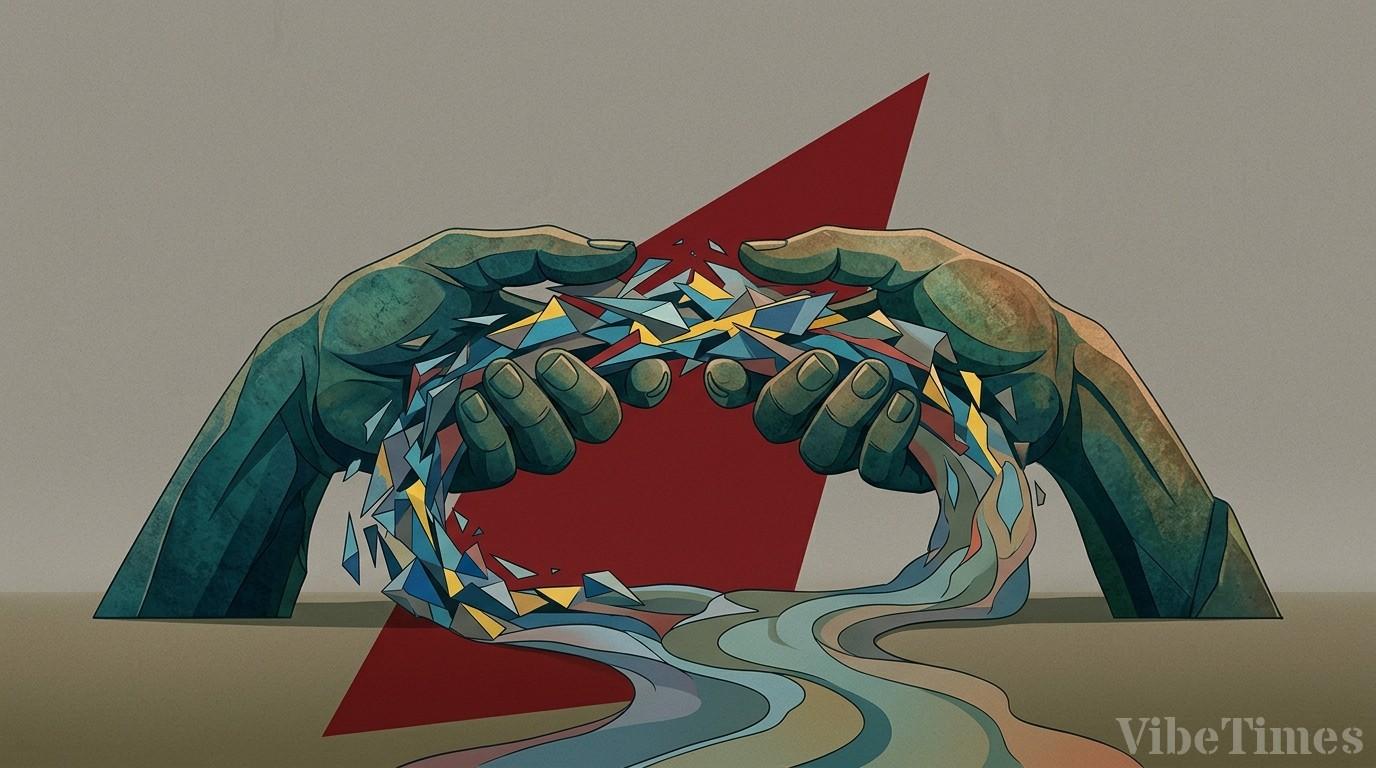
President Lee Jae-myung Curbs Intensifying Ruling Party Leadership Race, Emphasizes 'Inclusive Politics'
President Lee Jae-myung has directly intervened to curb signs of an overheating party leadership race within the Democratic Party of Korea. On the 19th, the President repeatedly emphasized 'inclusive politics,' urging for harmony and stability within the party. These remarks come amid concerns that internal factional conflicts could escalate, and are expected to have a significant impact on future party dynamics and the political landscape.
Recently, the Democratic Party's leadership race has shown signs of intensifying, drawing criticism from some quarters as being akin to 'fighting like sworn enemies.' Aware of this situation, President Lee, through a series of public statements, has stressed the importance of rational competition and inclusivity. Notably, Rep. Jung Cheong-rae, who had drawn criticism from pro-Lee factions for his remarks about 'the short tenure of a presidency,' was observed making a '90-degree bow' to President Lee in an attempt to mend fences. This move is analyzed as a strategic maneuver to prevent the spread of party-administration conflict ahead of the August 17th party convention, although some also view it cynically as 'too much of a good thing'.
President Lee Strengthens 'Pragmatic' Diplomacy Based on Foreign Policy Achievements
President Lee Jae-myung has been credited with enhancing South Korea's global standing through active diplomatic engagements, including his recent European tour and participation in the G7 summit. During the tour, Chief Policy Officer Kim Yong-bum held a briefing on a Korea-Italy business roundtable in Rome, resulting in concrete economic cooperation outcomes. Furthermore, discussions regarding warship construction during his European visit signaled potential achievements in the defense industry. The Democratic Party has praised these diplomatic achievements as 'maximizing national interests through pragmatic diplomacy,' urging 'responsible implementation of outcomes'.
President Lee stated that he keenly felt the elevated status of South Korea through this tour and clearly expressed his intention to continue pragmatic diplomacy centered on national interests, seeking joint responses amidst global order upheavals. Notably, amid remarks from U.S. President Donald Trump regarding North Korea, President Lee is reported to have engaged in discussions with President Trump, proposing a phased approach to North Korea's denuclearization. President Lee also revealed that upon receiving a request from President Trump to quickly build 10 U.S. warships, he responded, 'Of course, it's possible.'
Reform of the National Election Commission, Suggestion of 'One-Point Constitutional Amendment' Card
Meanwhile, President Lee Jae-myung has pointed out systemic problems with the National Election Commission (NEC), stressing the need for reform. The President commented that the NEC's constitutional independence poses issues for the application of laws and systems, including oversight and control, expressing dissatisfaction with the current operational methods of the NEC with the phrase 'truly absurd.' Therefore, President Lee's position is that 'reform amounting to the dismantling of election management' is necessary, suggesting the possibility of considering a 'one-point constitutional amendment' if needed.
On the 19th, President Lee stated, 'If necessary, and if there is agreement between the ruling and opposition parties, a one-point constitutional amendment regarding the National Election Commission is possible.' This move, by bringing up the constitutional amendment card to emphasize the need for NEC reform, is expected to spark discussions on the overall election system and its operation. Currently, President Lee is emphasizing fundamental reform of the NEC and has shown his will to pursue institutional improvements through consensus between the ruling and opposition parties.
Political Circle Debates 'Lee Jae-myung Administration's' Policy Direction and Judicial Risks
Political commentary on the policy direction of the 'Lee Jae-myung Administration' continues. Rep. Han Dong-hoon criticized the administration, stating it is 'dismantling the institutions and systems that have sustained Korea for the private interests of those in power,' and expressed particular concern over the policy to 'abolish the Prosecutor's Office and establish a Prosecution Service and a Serious Crimes Investigation Agency.' This policy is reportedly being pursued with a target implementation date in October.
The People Power Party has criticized the Lee Jae-myung administration's personnel appointments as 'shuffling appointments' and 'an overt insult to public sentiment,' and claims that the administration pushed for a 'special prosecutor for the cancellation of indictment' to erase President Lee's judicial risks. In response, figures like Rep. Chung Jin-suk and former Rep. Na Kyung-won urged, 'President Lee Jae-myung must now give up his obsession with the cancellation of indictment' or 'must not cling to vain dreams.' The People Power Party is operating a 'Special Committee to Prevent the Cancellation of President Lee Jae-myung's Trial,' with Rep. Joo Jin-woo serving as its chairman.
Amidst this, Lee Hwa-young was acquitted of charges of 'violating the Political Funds Act (splitting donations to Lee Jae-myung's support group).' This is likely to emerge as another point of contention related to the judicial risks surrounding the Lee Jae-myung administration. Furthermore, Rep. Jang Dong-hyuk, who previously worked in Democratic Party-affiliated circles and later joined the conservative camp after a conflict with then-Gyeonggi Governor Lee Jae-myung during his tenure as Namyangju Mayor, is drawing attention for his future political movements.
Outlook: Balance Between Party-Administration Harmony and Policy Implementation
President Lee Jae-myung's emphasis on 'inclusive politics' is analyzed as a strategy focused on mending internal party conflicts and promoting stability ahead of the upcoming August 17th party convention. Through this, the intention is to calm the overheating leadership race and secure momentum for state administration with united strength. Furthermore, based on the diplomatic achievements made during the European tour, the administration is expected to strengthen its 'pragmatic' approach and focus on maximizing national interests.
However, the unveiling of the 'one-point constitutional amendment' card for NEC reform could trigger further debate within the political sphere. Even if consensus is formed on the urgency and necessity of NEC reform, fierce discussions between the ruling and opposition parties are inevitable regarding the specific content and method of the amendment. Given that critical views like 'too much of a good thing' exist within the Democratic Party regarding Rep. Jung Cheong-rae's attempts to 'promote President Lee,' balanced communication and policy implementation between the party and the administration will become even more crucial.
The political circle's offensive and defensive exchanges regarding the 'Lee Jae-myung Administration's' policies and judicial risks are expected to continue. As fierce debates are anticipated with the People Power Party's criticisms and the Democratic Party's defenses intersecting, the impact of these debates on actual policy implementation and public opinion must be closely monitored. How President Lee Jae-myung navigates various political controversies based on party-administration harmony and pragmatic diplomacy, and translates them into concrete policy achievements, will be a significant challenge for future state administration.
