Hanwha Pushes for Development of Very Low Earth Orbit Satellite Constellation

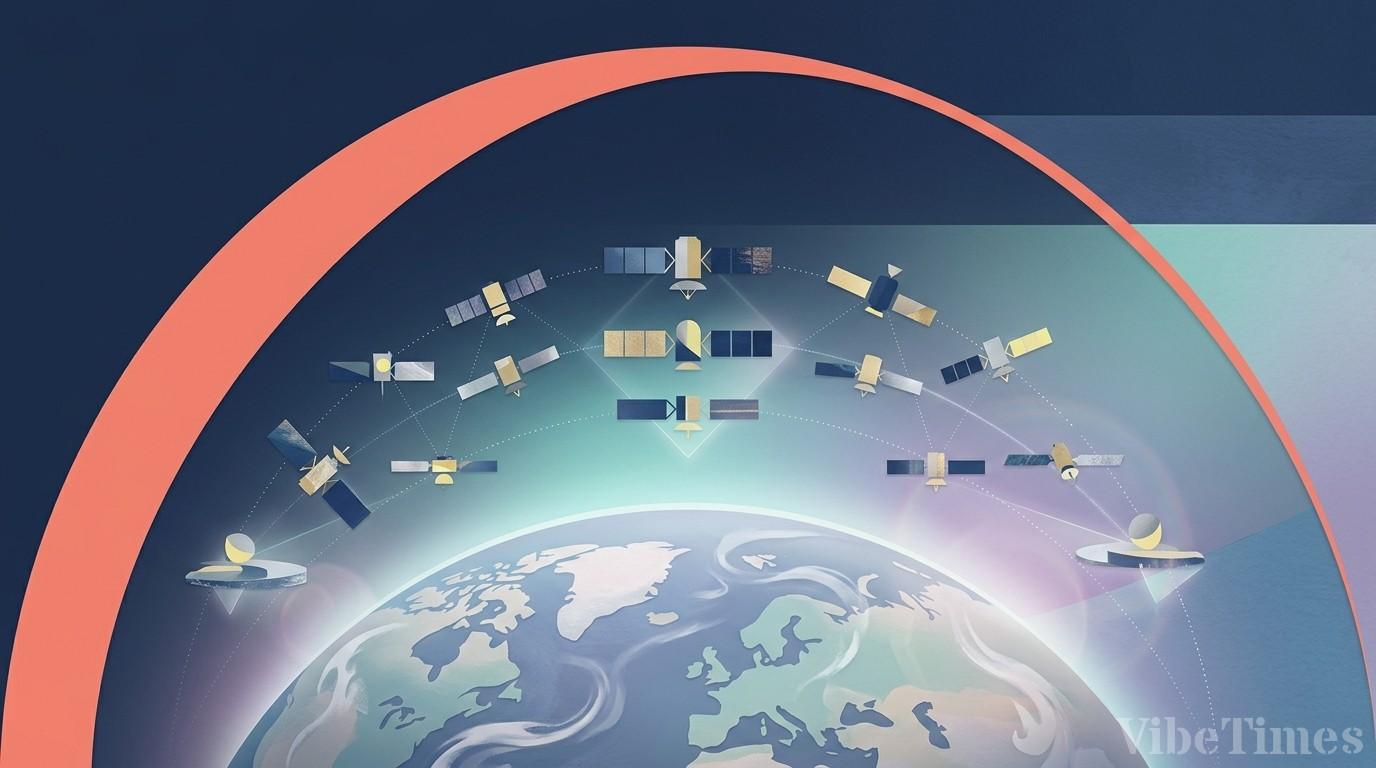
Hanwha is embarking on the development of a Very Low Earth Orbit (VLEO) satellite constellation.
Satellites, after being launched from Earth, perform missions in four orbital zones: VLEO (100-400 km), Low Earth Orbit (LEO, 400-2,000 km), Medium Earth Orbit (MEO, 2,000-35,786 km), and Geostationary Orbit (GEO, 35,786 km). These distinctions are based on physical characteristics and convention rather than official designation by an international organization. Developing VLEO satellites allows for significantly higher resolution satellite imagery and video compared to conventional orbits due to their proximity to Earth. As a result, leading space nations like the United States, China, and Europe are focusing R&D efforts on VLEO for intelligence gathering, surveillance, and reconnaissance. However, the VLEO environment faces significant technical challenges, including intense atmospheric drag that requires continuous thrust and fuel to maintain altitude, and material corrosion caused by atomic oxygen, leading to a shorter lifespan than typical LEO satellites.
The Hanwha Group plans to invest a total of 55 trillion won by 2040 in the aerospace and AI industries, aiming to build an integrated space infrastructure based on proprietary launch vehicle and satellite technology. As part of this initiative, Hanwha Aerospace will invest approximately 23 trillion won in the space launch vehicle sector.