2024 Investment Failances in Your 20s and Initial Rules of Action

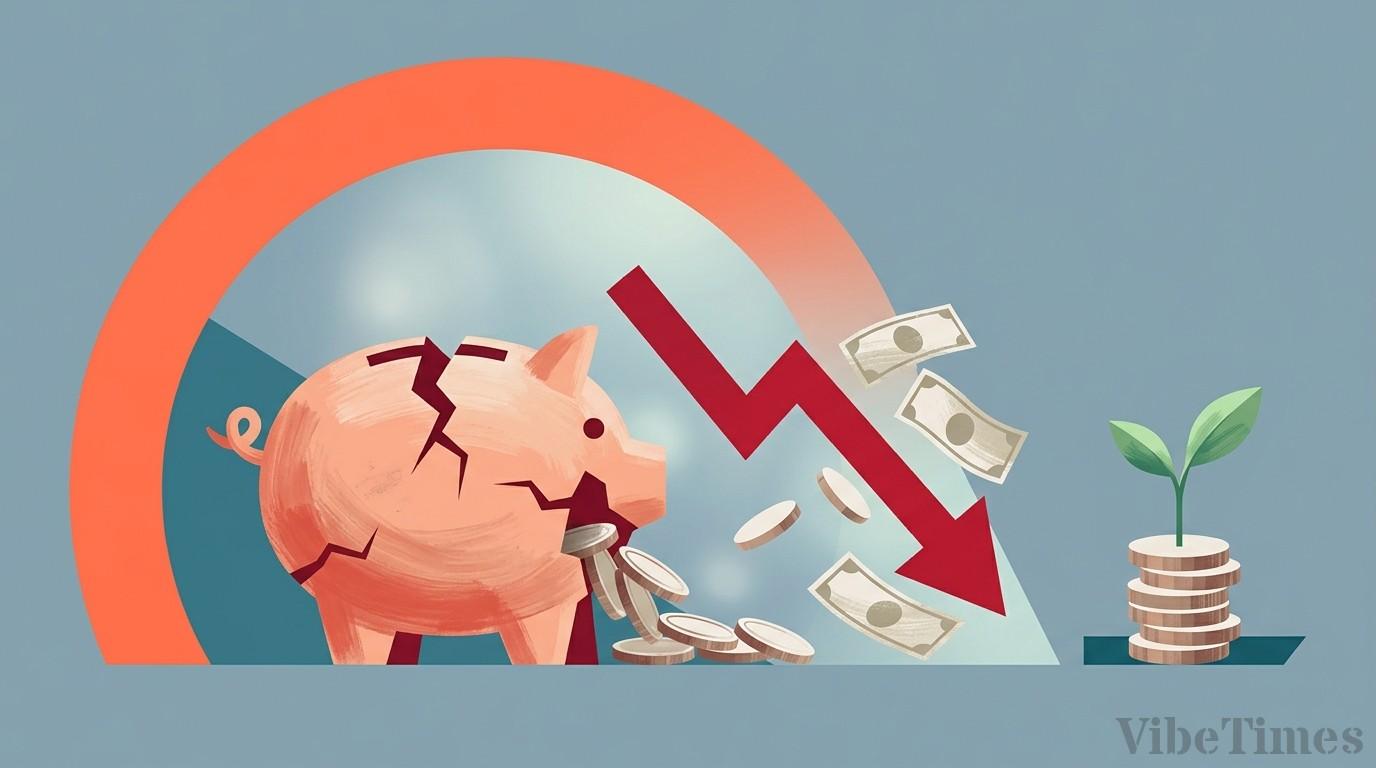
The era of the "COVID-19 bull market" (2020–2021), where everything you bought went up, is over. With high interest rates persisting and market volatility increasing with every policy shift by the U.S. Federal Reserve, investors in their 20s who act on courage alone without understanding the principles are the first to lose their capital. We analyze representative failure types and outline five initial rules of conduct to reduce trial and error.
The Changed Investment Environment and Why Investors in Their 20s Are Collapsing
From 'Unconditional Rise' to 'High-Point Uncertainty'
2020–2021 were years when ultra-low interest rates and liquidity supply drove a market where stocks and coins rose together. However, 2024 is an uncertain phase where benchmark interest rates remain high or only the timing of cuts is anticipated. High interest rates have adjusted the prices of cost-heavy assets like real estate, and an environment of sharp ups and downs continues with every Fed announcement. Such a market easily induces novice investors seeking short-term gains to misjudge their entry timing.
The Trap of Provocative SNS Content and FOMO
YouTube and Instagram are overflowing with provocative content like "Make 100 million on a 1 million won salary." The psychology that 'everyone else is making money so I must too'—the so-called Fear Of Missing Out (FOMO)—leads to pre-emptive investment without verification. It is a structure where gambling positions are established before understanding the principles.
Representative Failure Cases and Loss Structures
Coin Gambling with Leverage
Greed for short-term profits with small capital, when combined with leverage (borrowed money), accelerates losses. Even after the Terra-Luna crisis in 2022, the altcoin market has seen severe polarization, with numerous cases confirming losses of 80–100% of principal due to delisting or value collapse. Stocks manipulated by market forces tend to rise by absorbing circulating supply and then fall from the peak; individuals buy at the top and become trapped as liquidity vanishes. Experts advise limiting virtual assets to under 10% of total assets and avoiding leverage derivatives.
Unconditional Dollar-Cost Averaging Ignoring High Interest Rates
It is a typical failure to trust only the conventional wisdom that "DCA is always good," leaving 4–5% annual savings deposits alone while maintaining DCA in stock funds with negative returns. It is irrational to risk a -10% stock loss while giving up a 5% risk-free return. Securing cash flow is a priority in a high-interest-rate period.
Trading Recommended Stocks Without Financial Statements
Without learning how to read financial statements and relying on YouTubers or chat room recommendations, you stand defenseless against information asymmetry. The pattern of holding on ("holding") after a post-purchase decline, only to sell at a loss later, repeats itself. Without the habit of setting stop-loss prices and adhering to them at the selling point, losses continue to mount.
5 Initial Rules to Reduce Trial and Error
Divide Funds and Separate Spending Money from Investment Money
First, the 1/n rule. If you divide your holdings into 3–4 parts, such as [Cash/Deposits 30% + Safe Assets/ETFs 30% + Growth Stocks/Coins 30% + Risk Management 10%], the entire portfolio is not destroyed even if one asset collapses. Second, never invest lump sums needed within a year. You must deposit at least 3–6 months of living expenses as an emergency fund in high-interest deposits or MMDAs to gain psychological leeway for investing.
Split Buying, Utilizing Deposits, and Study
Third, time-zone splitting. If investing 3 million won, buy it split over 3 months at 1 million won per month. This reduces the risk of all-in at the peak and lowers the average purchase price during a decline. Fourth, actively use fixed deposits/savings that offer over 3.5–4% annually as of 2024. If you have no investment experience, it is better to spend the first year building resilience with deposits. Fifth, read one investment classic or take one financial statement lecture before investing. Losing 1 million won in fees and taxes is small, but losing 1 billion due to wrong knowledge is fatal.
Mindset for Long-Term Survival
'Defense Against Capital Erosion' Comes Before the 'Big Hit'
The biggest enemy for investors in their 20s is not volatility itself, but capital erosion—losing the principal and being unable to recover. One must first design position sizing that determines the potential loss size rather than the return rate. The failure group relies on loans and credit cards for debt-investing, goes all-in on a single stock, and depends on community rumors. In contrast, the success group diversifies into ETFs, stocks, and deposits with spare funds, examines disclosures and performance, and strictly observes stop-loss levels.
Learn Market Sensing with Small Bets
The cheapest way to pay for failure is to go through mock investing to understand your own tendencies and to learn market sensing with small amounts before putting in real assets. Keeping a trading journal that records entry price, target price, and stop-loss price reduces emotional trading. The habit of following initial rules will likely determine the long-term survival rate of investors in their 20s.