Legislative Report: 22nd National Assembly Budget Deliberations and Education Policy Standoff

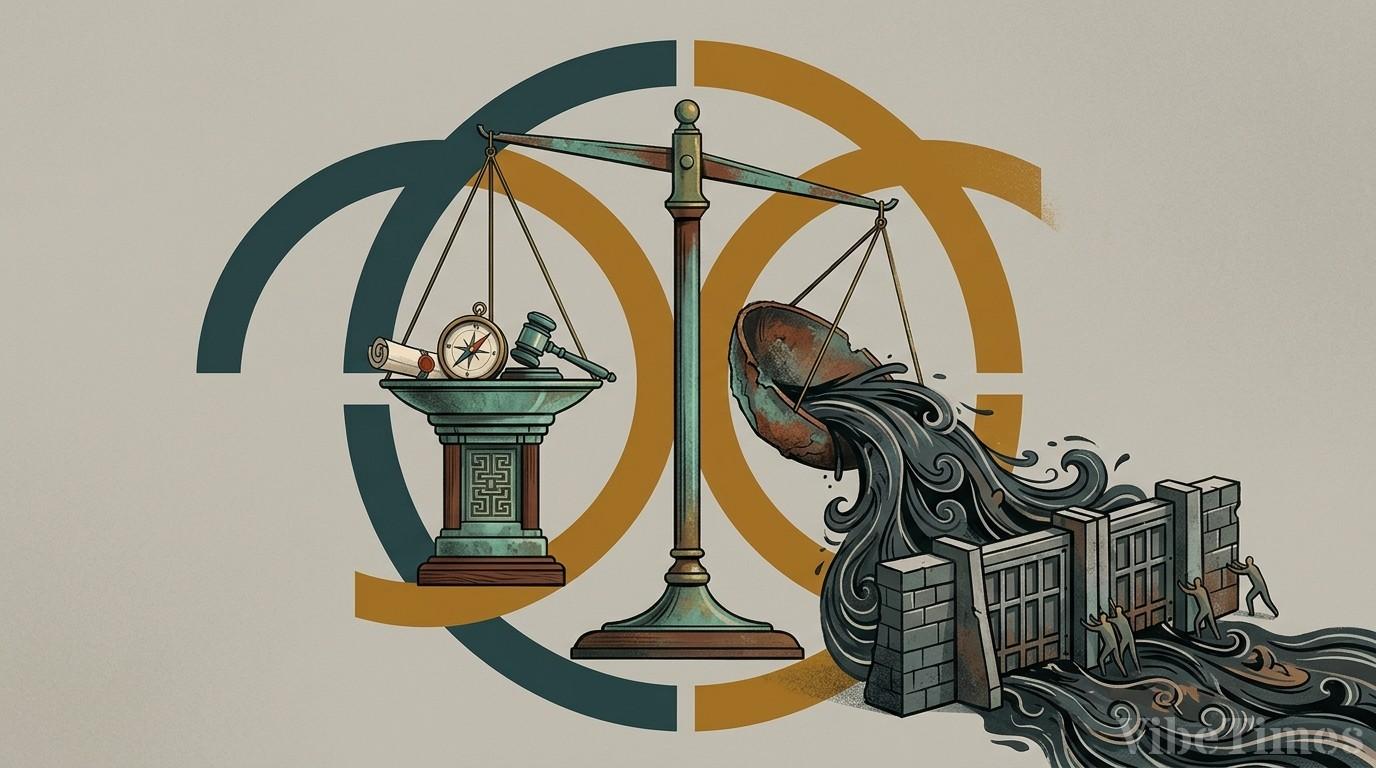
22nd National Assembly Budget Deliberations Intensify Amid Education Policy Clashes
As of August 6, 2026, the National Assembly of South Korea, in its 22nd session, is witnessing a fierce policy competition between the ruling and opposition parties focused on securing budgets for public welfare and normalizing public education. The activities of lawmakers on the Special Committee on Budget and Accounts are particularly noteworthy. Rep. Jung Ye-jin of the Cho Kuk Innovation Party, as a member of the Special Committee on Budget and Accounts, is scrutinizing the appropriateness of the government's budget proposal and analyzing fiscal efficiency during the settlement process. Rep. Park Eun-ju of the same party, who also serves on both the Special Committee on Budget and Accounts and the Education Committee, is urging for the effective execution of education budgets. These moves are interpreted as a strategic deployment by the opposition party to defend education and public welfare budgets amidst the government's tight fiscal policy.
Within the Education Committee, there are strong calls for fundamental reform of the public education system. Rep. Park Beom-in of the Cho Kuk Innovation Party has proposed the enactment of a special law for the normalization of public education and is pushing for legislation to prevent infringements on teachers' rights, a long-standing issue in the education field. Rep. Park emphasized that legislation to protect teachers' rights is not merely about securing recourse but a crucial task for restoring the damaged educational ecosystem. In response, Rep. Uhm Ki-hwan of the People Power Party has begun reviewing legislation related to expanding educational support, promoting welfare policies from the ruling party. Rep. Uhm is focusing on enhancing policy reception at the grassroots level by holding continuous on-site meetings to hear from educators. While both ruling and opposition parties are advocating for education innovation, significant differences in opinion regarding budget allocation and specific implementation plans suggest upcoming legislative challenges.
Institutional Pressure for Reduced Privileges and Strengthened Ethics Codes
Legislative efforts demanding the reduction of National Assembly members' privileges and increased political accountability are also taking shape. Rep. Yoon Geum-ju of the Cho Kuk Innovation Party urged self-correction efforts within the political sphere by discussing measures to strengthen the National Assembly members' code of ethics and reduce privileges in the Steering Committee. Rep. Yoon has proposed legislation to significantly strengthen regulations prohibiting politicians from pursuing personal gain through amendments to the Political Funds Act, aiming to address systemic loopholes. Of particular note is the push to propose a constitutional amendment to formally abolish the immunity from arrest for National Assembly members. This is seen as an intent to exclude lawmakers' vested interests not just through legislative changes but also at the constitutional level. This trend is recognized as an essential path to regaining public trust, aligning with demands for greater transparency across the political spectrum.
Voices on foreign policy are also leading to specific resolution proposals. Rep. Yoon Geum-ju joined in proposing a resolution urging the halt of the marine dumping of contaminated water from Fukushima, elevating environmental and safety issues to a core political agenda. This is analyzed as an attempt by the opposition party to define environmental security as a key element of public welfare and pressure the government's response. Concurrently, through her work on the Education Committee, Rep. Yoon strongly called for the eradication of private education cartels and presented institutional improvement plans for the normalization of public education. These multifaceted legislative activities are assessed as an effort by the opposition party to secure political initiative through alternative legislation, moving beyond mere criticism.
Prelude to Routine Conflicts Over Judicial System Reform and Digital Regulation
Amendments to the Criminal Procedure Act, which shake the foundations of the criminal justice system, have emerged as the most contentious issue in politics. The New Reform Party has sharply criticized the proposed amendment, which aims to abolish the prosecutor's supplementary investigation rights, calling it a collapse of the criminal procedure system. In contrast, complementary legislation spearheaded by the Democratic Party of Korea has settled on maintaining the full referral process, where all cases are transferred to prosecutors after police investigation, for crimes against vulnerable groups such as children, the disabled, the elderly, and sexual offenses – the so-called seven major crimes. This is interpreted as a necessary measure to minimize investigative gaps in crimes targeting vulnerable populations. President Lee Jae-myung's detailed questioning of the prosecutor's direct investigation authority under the revised Criminal Procedure Act during the Ministry of Justice's work report also appears aimed at resolving uncertainties in future judicial system operations.
In international trade, conflicts with the United States over the Online Platform Act (OnPlatform Act) have surfaced. The government has sought to alleviate U.S. concerns by explaining in a rebuttal sent to the U.S. House Judiciary Committee that discussions on the domestic OnPlatform Act are currently suspended. Previously, the U.S. had issued a critical report, arguing that the South Korean government's platform regulations amounted to excessive investigations targeting its companies like Coupang. The government is emphasizing that the National Intelligence Service's request for cooperation from Coupang employees was voluntary, dedicating all efforts to a response aimed at reducing diplomatic friction. Separately, the Federation of Korean Small and Medium Business welcomed the proposed amendment to the Fair Trade Act, which mandates the disclosure of platform commission fees and payment settlement deadlines, stating it would be the starting point for mutual growth. This is a critical juncture requiring a delicate balance between protecting the industrial ecosystem and international trade norms.
Internal Divisions within the Ruling Party and Uncertainty in Legislative Leadership
The recent dissenting votes within the ruling party during plenary session votes are expected to influence the future legislative landscape. In the vote on the partial amendment to the Public Health Control Act, passed on July 23, 2026, the People Power Party was divided, with 38 votes in favor and 7 against. Lawmakers such as Kim Hee-jung, Kwak Gyu-taek, Park Soo-min, Seo Il-jun, Seo Ji-young, Park Soo-young, and Park Dae-chul stood in opposition, voicing opinions different from the party's stance. This division suggests that in sensitive, everyday-related regulatory bills, individual lawmakers' regional interests or policy convictions are taking precedence over the party's consensus.
A similar pattern was observed in the amendments to the Korea Rural Community Corporation Act and the Resource Recycling Act. In the vote on the amendment to the Korea Rural Community Corporation and Farmland Management Fund Act on June 18, 2026, 10 lawmakers from the People Power Party cast dissenting votes. Dissenting votes occurred among both senior and freshman lawmakers, including Kim Jang-gyeom, Yoo Sang-beom, Kang Seon-young, and Kang Min-guk, revealing flaws in the party leadership's vote control. The amendment to the Act on Saving and Recycling of Resources also saw 8 lawmakers, including Yoo Sang-beom, Kim Mi-ae, and Shin Dong-wook, voting against it, diverging from the party's official position. These internal party defections could weaken the ruling party's cohesion in processing future contentious bills and diminish their bargaining power in negotiations with the opposition. Moving forward, the National Assembly, amidst the grand narratives of budget processing and judicial system reform, will see the cohesiveness within each party and sophisticated legislative strategies as key variables determining success or failure.
