Reading the Economy with AI, Ep. 6: Warehouses with 1 Million Robots and the Data Race

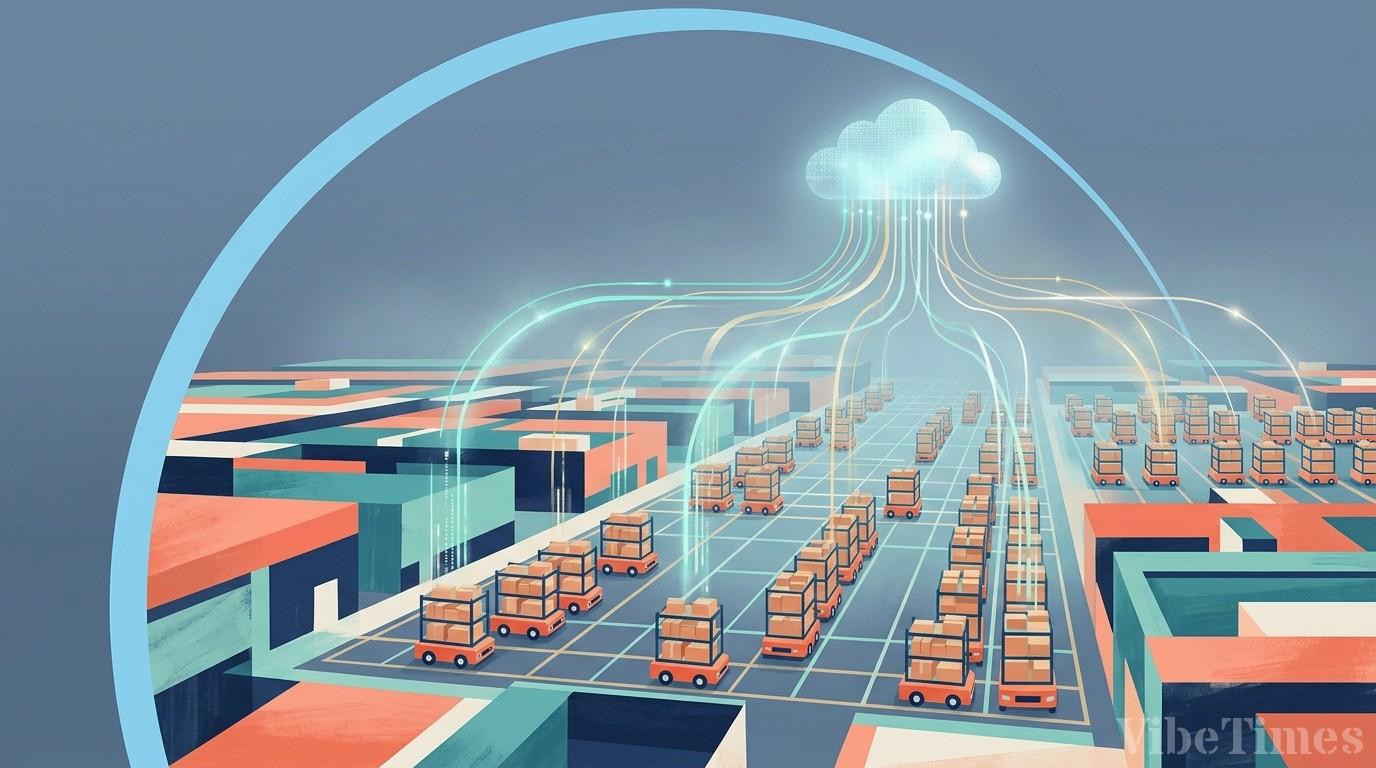
Amazon, the world's largest shopping mall, deployed its one-millionth robot across more than 300 logistics facilities in June 2025 and is utilizing artificial intelligence (AI) to intelligently control them, thereby increasing logistics speeds. Although Amazon introduced various robots starting with mobile shelf robots in 2012, efficiency issues arose as thousands of robots moved within limited spaces. To resolve this, the company recently introduced 'DeepFleet,' a generative AI-based model that views the entire logistics center as a single city and manages the movements of robots in an integrated manner. Amazon stated that DeepFleet can improve robot movement efficiency by 10%. This figure does not simply mean that individual robots are 10% faster; rather, its essence is a system effect that increases overall processing capacity by reducing collisions and congestion within the same facilities and space. This demonstrates that warehouse competitiveness is shifting from robot hardware performance to operating algorithms that move numerous robots simultaneously. However, 10% is the target set by Amazon.
In the delivery race that begins before an order is placed, the economic efficiency of AI logistics is most pronounced in pre-order demand forecasting. By analyzing region, season, events, price, and purchasing patterns, AI places products that are expected to sell at locations closer to customers in advance, thereby reducing inventory travel distances, emergency restocking, and issues related to stockouts and overstock. In its Q2 2025 earnings report, Amazon explained that the regional accuracy of its AI-based demand forecasting improved by 20%. Using this prediction, Amazon placed popular items near demand regions to increase delivery speeds, and by 2026, it expanded this into a supply chain service offering integrated inventory pools and predictive functions to external business sales channels. If predictions are accurate, costs decrease; if incorrect, unsold goods accumulate in regional warehouses while stockouts occur in other regions.
Amidst this, companies with higher shipping volumes gain higher prediction accuracy by experiencing a wider variety of products, regions, and unexpected situations. As accuracy rises, more orders can be processed within the same facilities. Lower costs and faster delivery attract more orders, creating a virtuous cycle where data accumulates. This structure acts as a new barrier to entry for latecomers. Even if robots and AI software can be purchased, it is difficult to upgrade models without sufficient orders and operational data. Small and medium-sized sellers using large platform logistics networks become dependent on the platform for fees, inventory, and customer data in exchange for fast delivery.
Domestic logistics companies are also combining automation with AI. CJ Logistics announced that productivity increased by 55% compared to existing processes at its smart fulfillment center, where unmanned transport robots bring goods to workers. AI vision picking robots recognize products of different shapes using 3D images and deep learning, processing an average of 600 items per hour, while the packaging system reduced empty space in boxes by an average of 36%, the company reported. A hurdle to domestic adoption is the verification of performance.