Cost Analysis of Opening Small-Scale Kids' Cafes Without Large Facilities

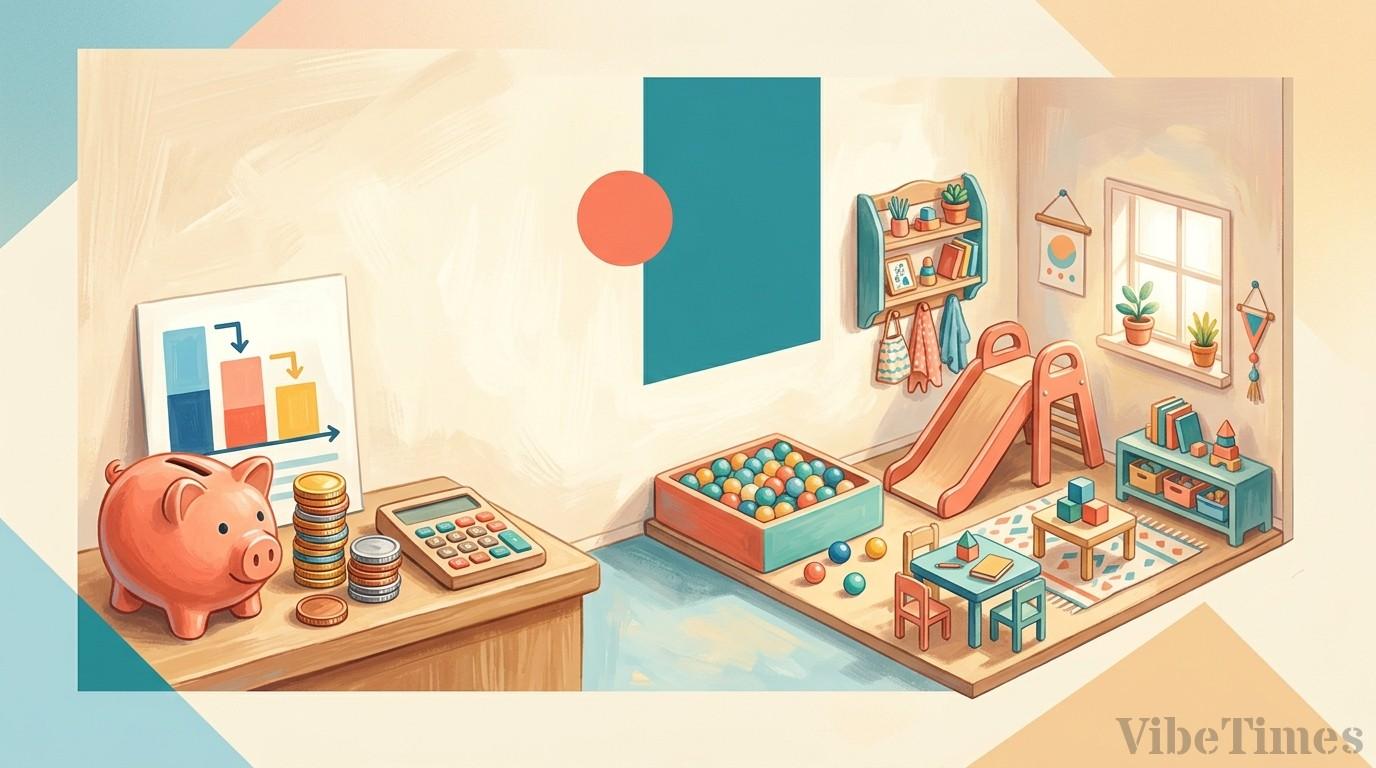
A small kids' cafe of just over 15 pyeong (approx. 50 sqm) can open its doors with an initial investment of 50 million won.
Compared to the average startup cost of 700 million to 1 billion won for large kids' cafes (based on 70 pyeong), this is only one-tenth of the cost. As the economic slowdown persists, parenting trends among families with one or two children are shifting. Models where parents and children make small crafts together or play in sensibly designed spaces—such as workshop-style, kidult-style, or weekend farm-style—are rapidly replacing large playground-centered stores. The key to the cost structure is self-management, where the owner directly operates the counter and experience programs.
From Large Facilities to Small-Scale Models
The Trap of 10 Million Won in Monthly Fixed Costs
In the past, large kids' cafes exceeding 100 pyeong had to be located in prime commercial areas to secure space. Consequently, monthly fixed costs (rent plus staff) exceeded 10 million won, leading to immediate deficits if customer demand dropped. Recovering the investment also took a burdensome 3 to 5 years.
The concept behind the small-scale model is different. Instead of competing on floor space, it sets a cap on rent first and moves to residential shops, officetels, or alleyway markets rather than prime commercial zones. Shops ranging from 10 to 30 pyeong can be secured for a monthly rent of 300,000 to 800,000 won, significantly reducing the burden of variable costs.
Content for Parents and Children is the Key to Success
Recently successful small-scale stores fall largely into three categories. The first is the workshop-combined type, where parents drink coffee while children experience Jenga, Lego, or baking; 15 to 20 pyeong is sufficient. The second is the kidult type, which includes adult-oriented sand art or Lego blocks. The third is the weekend farm or theme type, featuring wooden playgrounds or specific themes operated by reservation.
The commonality is the absence of large playground equipment. By eliminating the cost of electric rides, which cost over 10 million won per unit, budgets can be focused entirely on interior design and props, drastically lowering facility investment compared to large stores.
Breakdown of Initial Investment Based on 15 Pyeong
From 50 Million Won Minimum to 100 Million Won Standard
The structure becomes clear when breaking down costs for a standard 15-pyeong workshop-style cafe. The deposit (key money) is 15 million to 30 million won when using residential shops or villas (2nd floor or higher), with the 2nd floor being 30–50% cheaper than the 1st. Interior construction costs 15 million to 30 million won, and play equipment such as bean bags, block tables, and small slides costs 10 million to 25 million won. Since play equipment accounts for the largest share, excluding large machinery lowers the total cost.
Adding play props and costumes (3–5 million won), administrative costs for business registration and fire inspections (1–3 million won), and initial website/PR (around 2 million won) brings the total startup budget to approximately 50 million won for the minimum model and 80 million to 100 million won for the standard model.
Two Costs You Shouldn't Cut
Safety-related costs should not be reduced. Shock-absorbing mats of a certain thickness are a legal obligation; if accidents occur due to saving on this cost, insurance claims become impossible. Before signing a lease, you must verify via the building register that the business use is permitted and check if fire alarms and sprinklers are mandatory.
Business registration is filed with the local district office under categories like general restaurants or gaming establishments (rather than entertainment bars). It is safer to leave the safety inspection of playground equipment to professional firms. The administrative agency fee of 1–3 million won can be viewed as insurance that lowers the probability of failure.
Monthly Maintenance of 1 Million Won and a 1.5-Year Payback Strategy
Zero Labor Costs Change the Profit Structure
The monthly fixed costs for small-scale self-operations are surprisingly low. Combining rent (300,000–500,000 won), utilities (300,000 won), injury liability insurance (100,000–200,000 won), and props/consumables maintenance (200,000–300,000 won) totals just over 1 million won. This contrasts sharply with large stores that spend over 3 million won monthly solely on labor. By not hiring staff, revenue translates directly into profit. With stable sales, the investment recovery period is shortening to 1 to 1.5 years in many cases.
Admission Fees Alone Are Insufficient
It is difficult to cover rent with a single admission fee structure of around 10,000 won per person. Therefore, small stores focus on package products costing 20,000–30,000 won that combine workshop experience passes or one-day classes. Adding kidult figures and snacks/drinks aimed at parents' waiting time doubles the average spend per customer, allowing even a 10–15 pyeong store to achieve monthly sales of 5 to 7 million won.
Outlook and Considerations
Location and Marketing Determine Success
The location does not have to be on the first floor. The 2nd or 3rd floor of a building with an elevator is sufficient, but securing parking space for guardians' cars is essential. Marketing proceeds via Naver blogs, Instagram, and local 'mom cafes' (online parenting communities). For reservation-based theme models, visual staging that photographs well determines repeat visits.
One must not forget that the starting point for startup success is clarity of purpose. Even for a 50 million won small store, if it is removed from nearby demand clusters like daycares or preschools, the sales base collapses. Counting the number of households within the floating population before counting the commercial district seems to be a survival condition for low-budget startups. As high prices persist, the growth of experiential small-scale models with minimized costs is expected to continue for the time being.