Household Loan Management Target Doubled from 1.5% to 3%

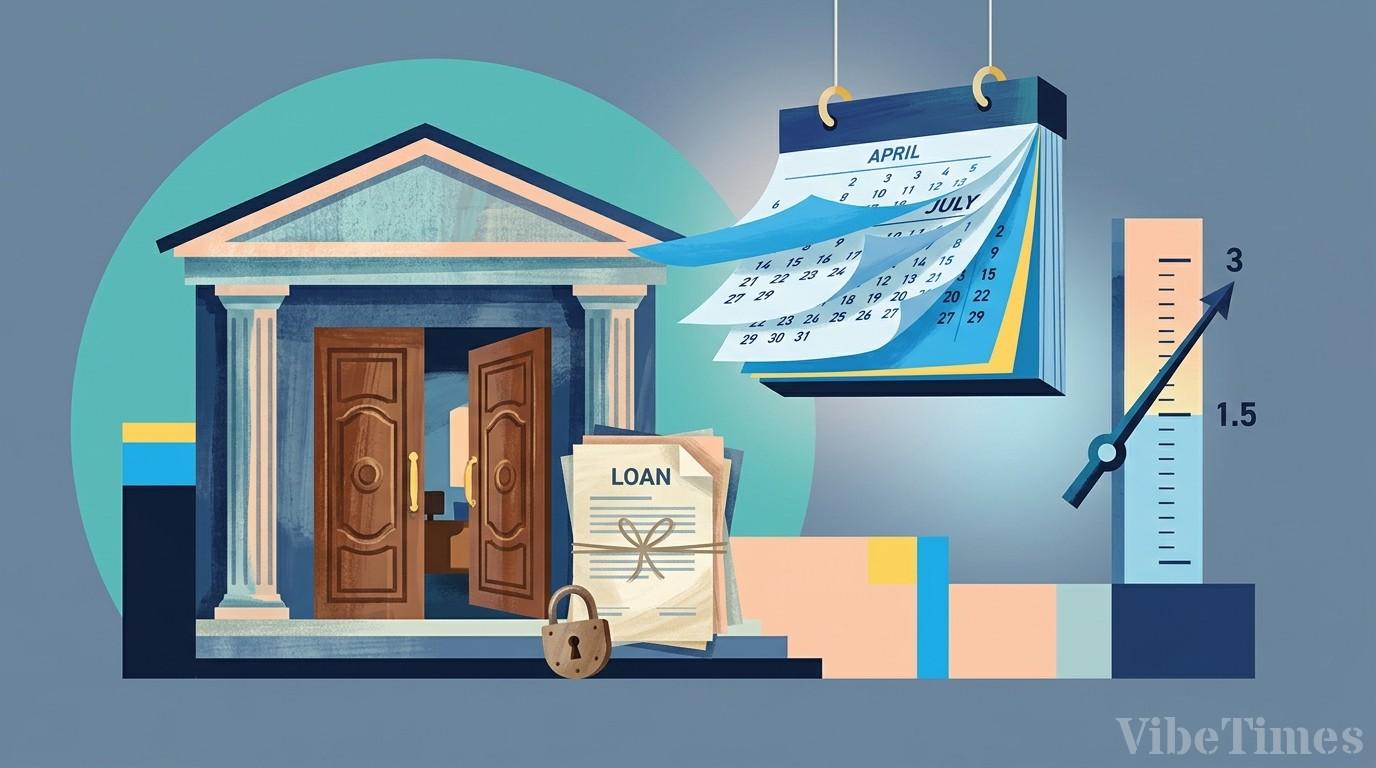
Financial authorities have doubled this year's household loan growth target from 1.5% to 3% in order to expand housing supply and reduce the financial burden on ordinary citizens and the youth. This move comes against the backdrop of a surge in household debt to record highs.
According to the Bank of Korea, household credit balance at the end of the second quarter stood at 2,019.8 trillion won, an increase of 25.9 trillion won over three months, surpassing the 2,000 trillion won mark for the first time. Of this, household loans by banks rose by 24.9 trillion won to 1,891.3 trillion won, nearly double the increase of the previous quarter.
In the process of adhering to aggregate volume management, banks' lending criteria were frequently adjusted. A tally of public measures by 17 banks—including the five major banks (KB Kookmin, Shinhan, Hana, Woori, and NH Nonghyup), regional banks, and internet banks—reveals that household lending standards were changed a total of 73 times this year. Shinhan, Hana, and Woori Banks changed their standards 10 times each, KB Kookmin Bank 9 times, and NH Nonghyup Bank 8 times. These changes involved lowering mortgage loan limits, suspending sales of specific products, and repeatedly halting loan brokerages or non-face-to-face applications.
In reality, Shinhan Bank halted applications via loan brokers, then resumed them, only to close the window again within days as allocated limits were quickly exhausted. KB Kookmin Bank has been limiting refinancing (mortgage switching) and repayment loans for other banks' debt, as well as blocking subscriptions to Mortgage Credit Insurance (MCI) and Mortgage Credit Guarantees (MCG) since June. Last month, it also lowered the limit for home-purchase mortgage loans to a maximum of 300 million won, regardless of region.
The increase in the aggregate target does not mean lending windows will immediately widen. Authorities began discussions on allocating additional quotas to each bank starting on the 19th. While new lending capacity across the financial sector is estimated at approximately 260 trillion to 300 trillion won, additional quotas will not be distributed equally as each bank's performance varies this year. Individual bank targets have not yet been finalized.
The usage of this new capacity has already been determined. Authorities plan to prioritize the supply of funds for collective loans—such as moving expenses, interim payments, and balance payments—as well as loans for youths, mid-to-low credit borrowers, and end-users. For example, in the balance payment loans for the DH Bangbae complex in Seocho-gu, Seoul, five major banks tripled their limits from a total of 500 billion won to 1.55 trillion won within two days. Conversely, self-imposed bank regulations, such as KB Kookmin Bank's 300 million won cap on mortgages, remain largely in place. However, the trend of suppressing speculative loan demand remains intact.