With Approval Rating at 37%, President Lee Jae-myung Lambasts Hard-liners

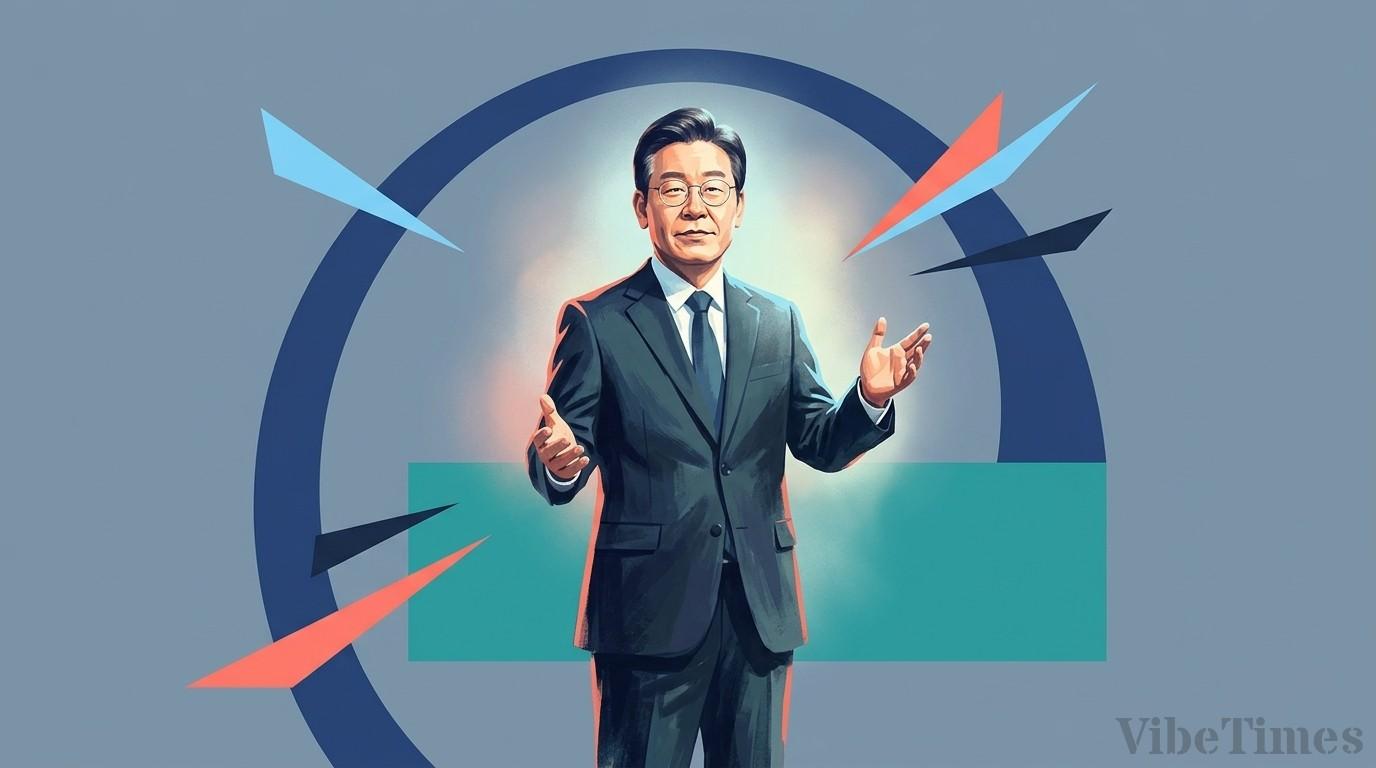
President Lee Jae-myung publicly criticized hard-liners within his own camp, saying they "demand high positions despite lacking the capability."
His remarks on the 9th that "reform is like cancer surgery — it must be done" have led observers to read the criticism as more than a reaffirmation of party discipline; they see it as a strategic message aimed at turning reform achievements into his own political capital. Analysts say the comments reflect a calculation to realign voices within the party as his approval rating lingers near its lowest point since he took office.
37% Approval — and a Shot at the Hard-liners
In a Gallup Korea survey conducted October 6–8, President Lee's approval rating for his handling of state affairs stood at 37%, unchanged from three weeks earlier and hovering near his post-inauguration low. Negative assessments of his performance fell 5 percentage points from the previous survey but still stood at a majority, 51%. The approval rating of the Democratic Party also fell to 35%, its lowest in Gallup surveys since the current government took office.
Meanwhile, in evaluations of seven government policy areas, negative assessments of housing policy hit a high of 61%, deepening a sense of crisis within the ruling camp that "without livelihood achievements, the support base will collapse." President Lee's open targeting of the hard-liners is closely tied to this downward pressure in the numbers. He is framing the cause of declining approval not as political agenda-draining but as the self-interested demands and resistance to reform by the party's entrenched establishment. By defining reform himself as "cancer surgery," he has set up a frame that casts opponents of reform as the diseased tissue.
The Backdrop: Conflict Between Jung Chung-rae and the Party Leadership
The remarks are intertwined with internal rifts within the ruling camp. During the party leadership race, Democratic Party leader Jung Chung-rae diagnosed the drop in approval ratings as the result of defections from the party's core support base, and pledged that if elected leader he would restore the president's approval to above 60%. Kim Min-seok, a former party leader, in the same contest attributed the decline to the loss of centrist voters and infighting within the party. With these competing diagnoses in play, the president's direct criticism of "those demanding big positions without capability" is seen as a signal that he will not rely on party power structures during the reform process.
In fact, President Lee has been broadening his direct intervention in economic and trade issues — recently raising the Lumens-Block (Lussen Block) case at a Cabinet meeting to boost industry expectations, and ordering a ground-up review of CPTPP accession. Despite political burdens such as the controversy over a planned farmland census, he is focused on accumulating achievements through policy channels. The strong consideration of a figure classified as part of the president's loyal faction for the new Blue House chief secretary post also aligns with a push to strengthen governance centered on the presidential office rather than the party.
Opposition Attacks and Political Fallout
The People Power Party is seizing the opportunity. It argued that the U.S. decision to withhold a visa for party leader Jung Chung-rae constitutes "a rejection of the Lee Jae-myung government" and a sign of broader anomalies in diplomacy, intelligence, and security. Both ruling and opposition parties are wielding internal strife in the ruling camp and diplomatic risks as weapons in their exchanges. Opposition figures including Jeong Jeom-sik are widening their offensive by revisiting even the president's past remarks.
What is politically notable is that the president's criticism sends a message not only to the hard-liners but to the entire contest of would-be successors. As figures such as Kim Min-seok — who posted 15.7% in a June 2026 poll on suitability as the next presidential candidate — along with Gyeonggi Governor Choo Mi-ae and party leader Jung Chung-rae grow more prominent, the fact that President Lee sits in an approval zone where talk of a "slide into the 30s" is already circulating could become a variable in the reshaping of power.
Reform Achievements Are the Shield
Going forward, the president's restraint of the hard-liners is likely to extend beyond a one-off statement into appointments and policy across the board. While maintaining the momentum of prosecutorial reform since the launch of the Corruption Investigation Office for High-ranking Officials, personnel moves such as the nomination of Kim Ji-yong as CIO chief candidate are expected to be deployed as part of the reform agenda. As leadership scholar Dee Hock said, power that fails to understand service rather than command edges toward tyranny. The president's criticism of the hard-liners' "demands for big positions" is ultimately interpreted as a move to reclaim the initiative for reform within the presidential office.
The risks, however, are clear. As the 61% negative assessment of housing policy shows, without concrete livelihood achievements, public criticism that creates enemies within the party could instead trigger open defections. The 37% approval figure shows that President Lee does not have unlimited time to sustain his reform narrative. Fourth-quarter economic indicators and the trajectory of housing market stabilization will be the decisive battleground of the next phase.